In late 2025, the Melbourne Metro Tunnel opened to passengers, marking a major expansion of the city’s rail network with the addition of five new underground stations. The Metro Tunnel comprises twin nine-kilometre tunnels running beneath inner Melbourne, creating a new cross-city rail line. Three of Melbourne’s busiest metropolitan train lines now operate exclusively through the new Metro Tunnel, relieving rail congestion and freeing up capacity in Melbourne’s existing City Loop tunnels. If it is ever constructed, the proposed future rail line to Melbourne Airport is also planned to run via the Metro Tunnel.
Construction of the Metro Tunnel commenced in 2017 and, since then, the project has not been without controversy. One issue has been cost escalation, with the budget increasing from an original nominal estimate of $10.9 billion to approximately $15.5 billion.1 The project’s business case, developed prior to the COVID-19 pandemic, also assumed sustained long-term growth in metropolitan rail patronage. However, these projected numbers have since proven much too high, largely due to post-pandemic travel patterns and the rise in working from home, which has significantly reduced commuter rail demand.2
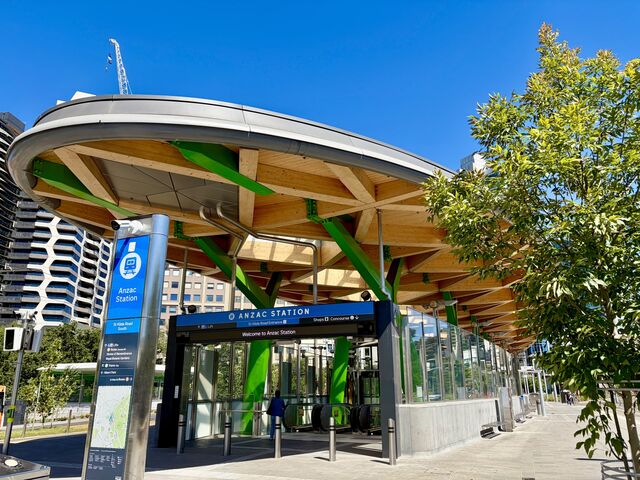
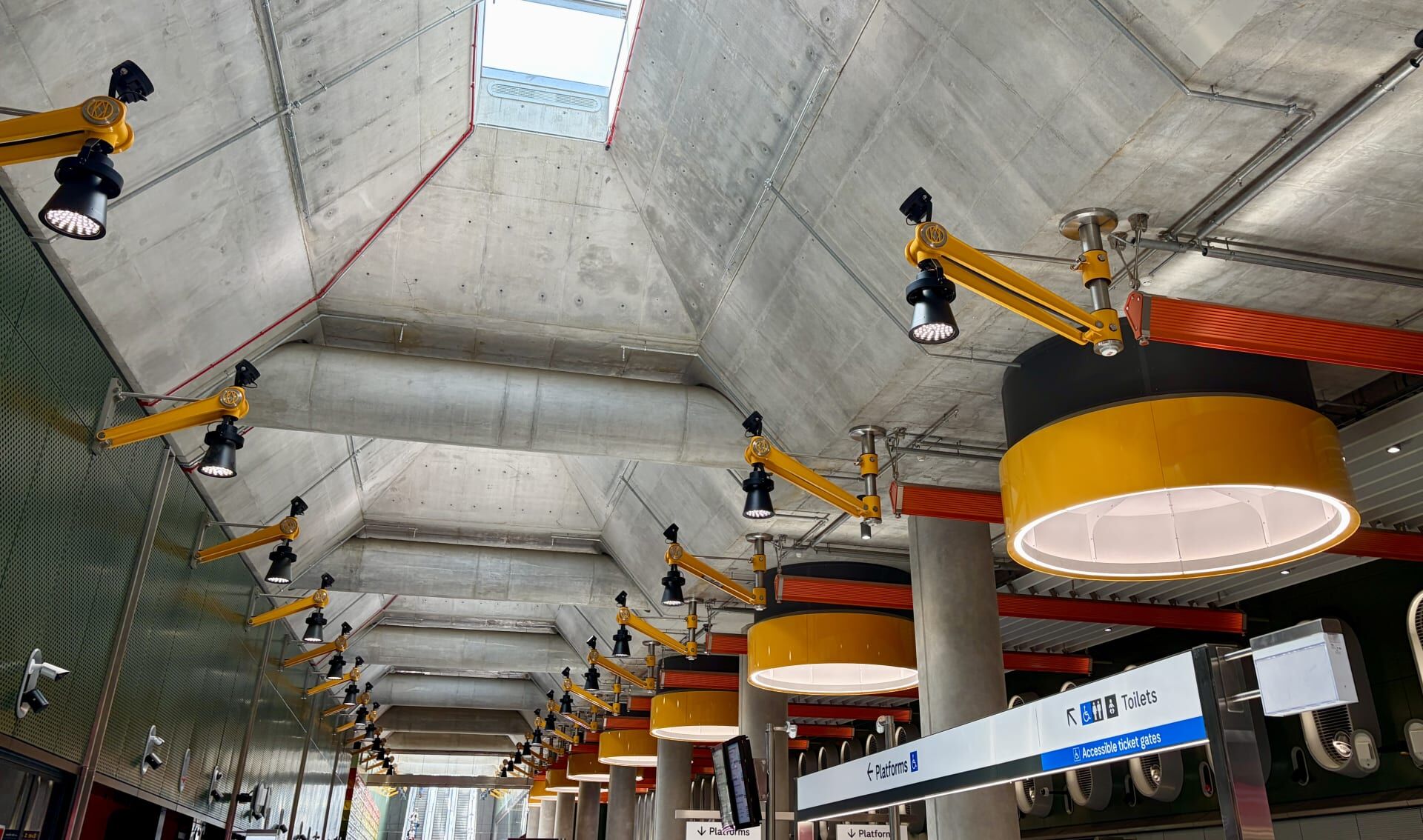
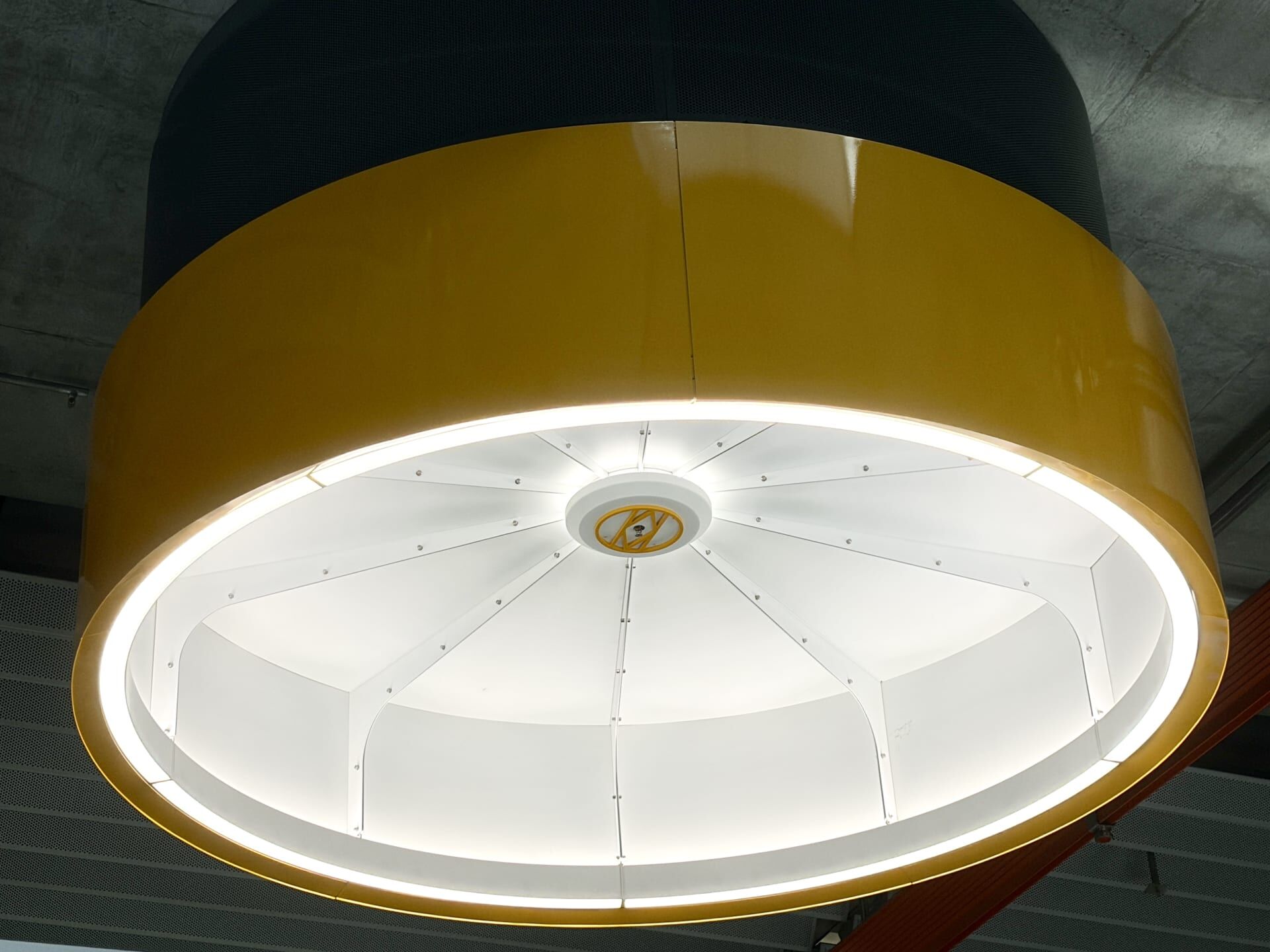
The Metro Tunnel commenced full operation in February 2026, with trains running through the tunnel at frequencies of at least one service every 10 minutes. I visited the tunnel during the “Summer Start” soft launch of services, when trains only ran every 20 minutes and were limited to off-peak periods. My first impressions of the new stations were mixed. On a positive note, the high ceilings and wide platforms are immediately noticeable, and I really loved the exterior architecture of Anzac and Parkville Stations, as well as the grand platform ceilings at Town Hall and State Library Stations. The station designs apparently draw on a style known as ‘British high-tech’—a 1960s style characterised by the use of concrete, steel and glass.3 On the other hand, large advertising screens are extremely prominent across all five stations, far more so than the actual departure boards, which are not even immediately visible.
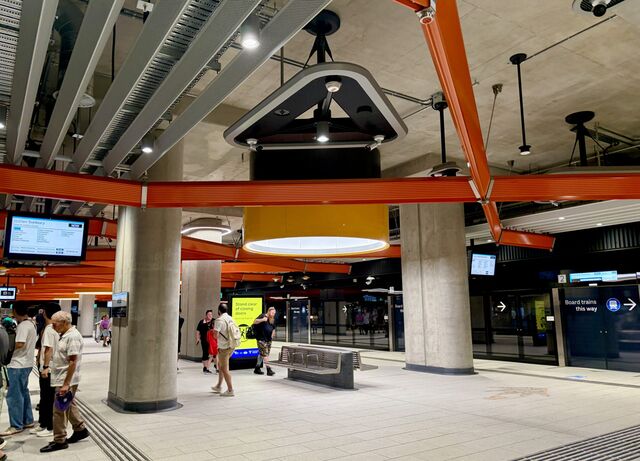
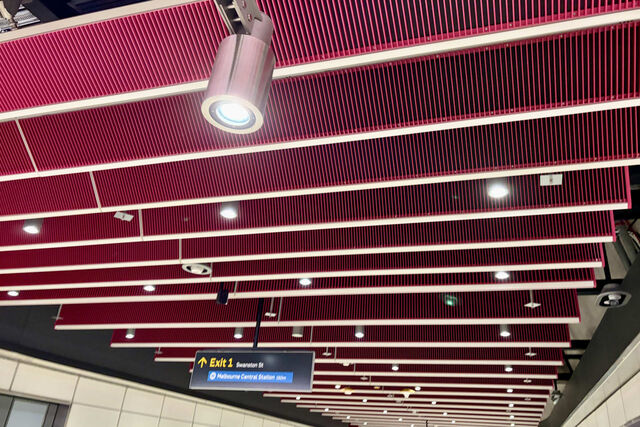
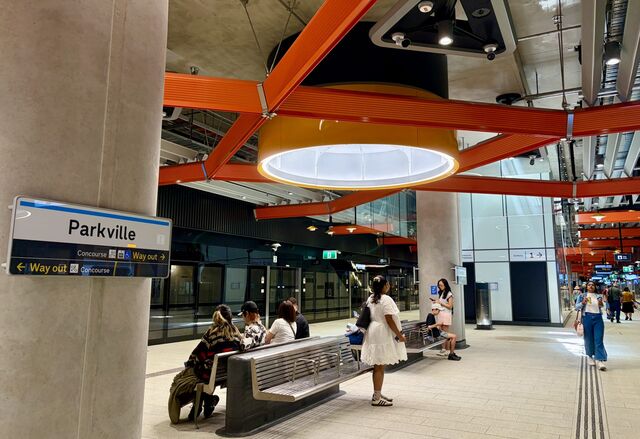
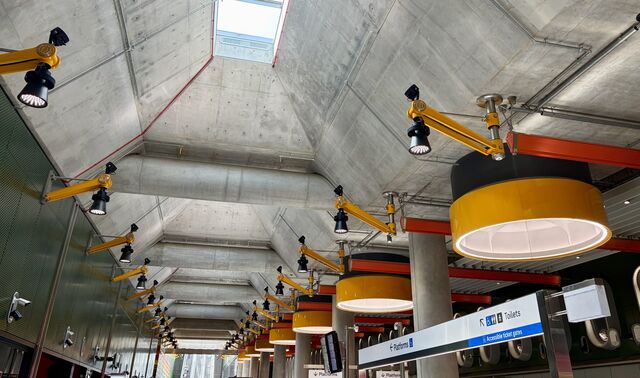
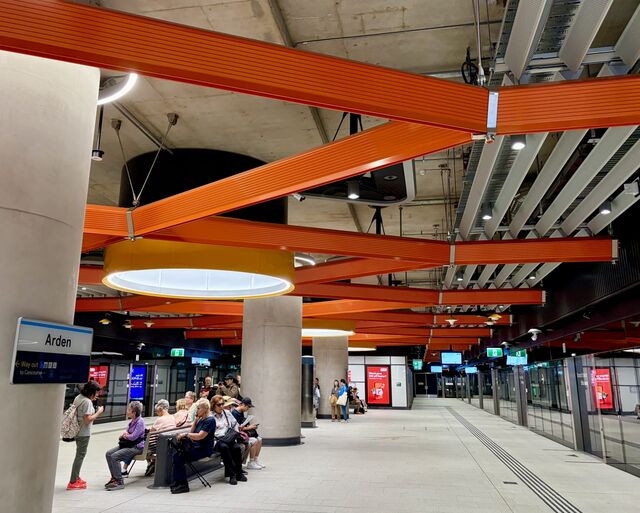
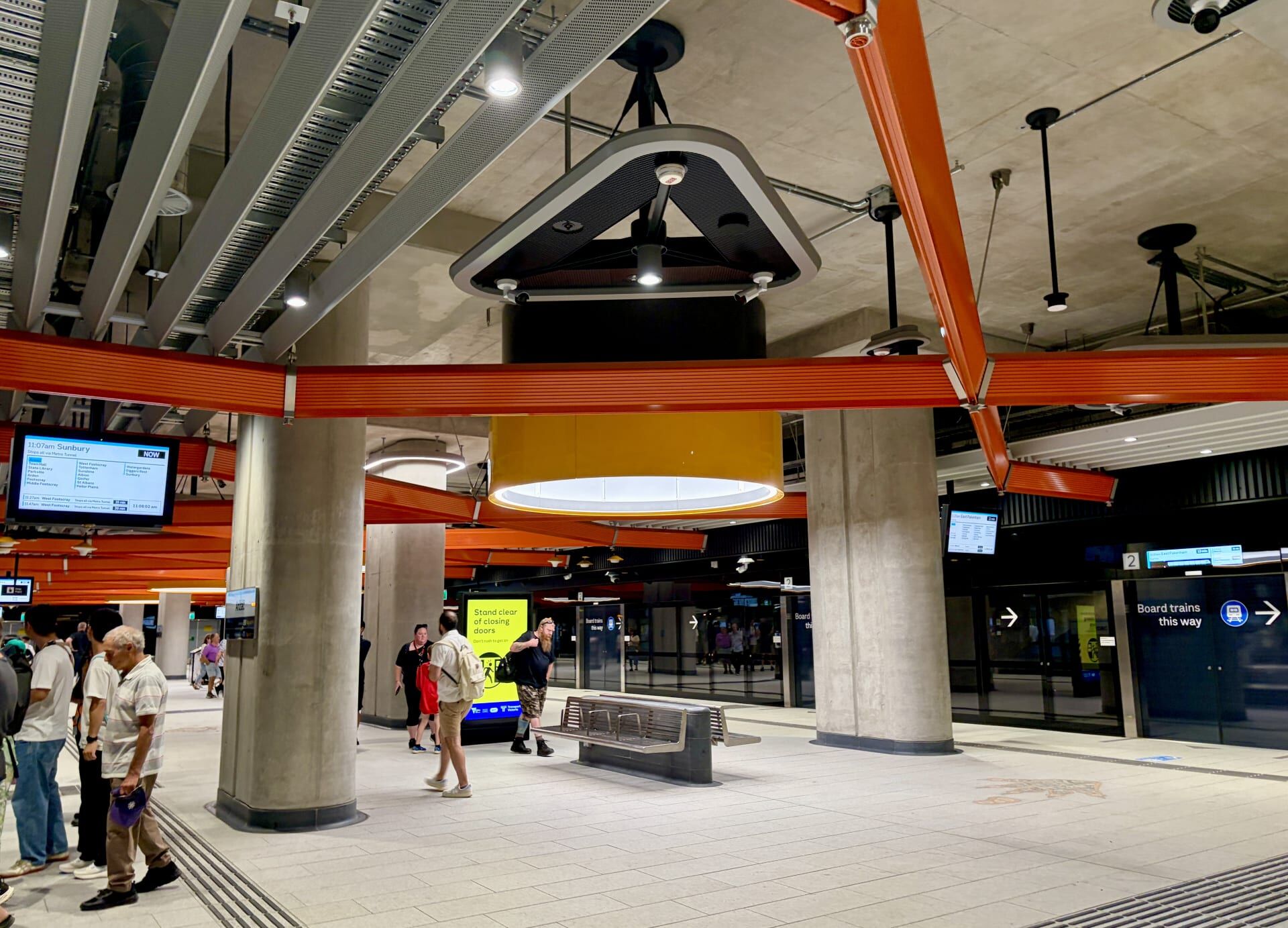
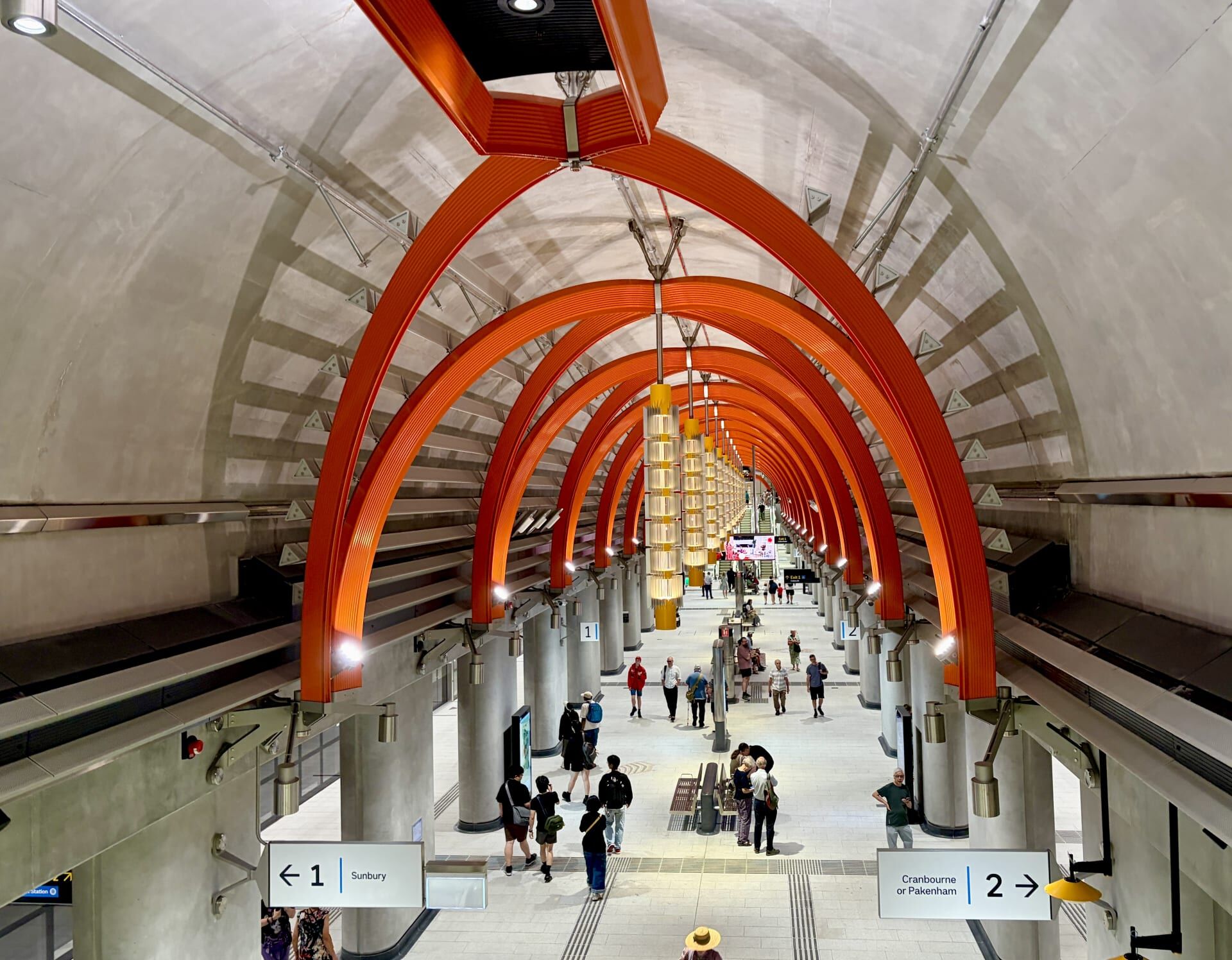
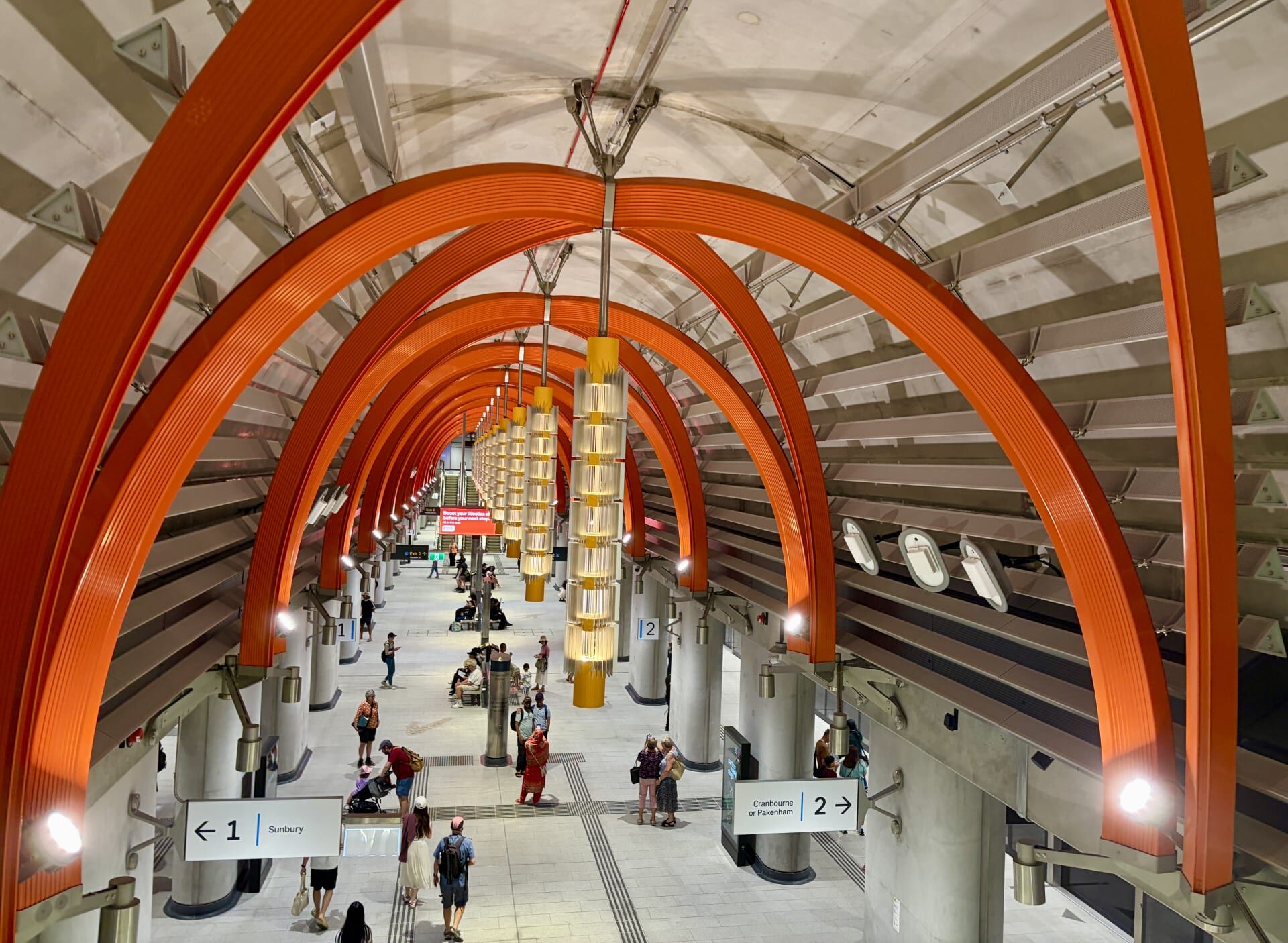
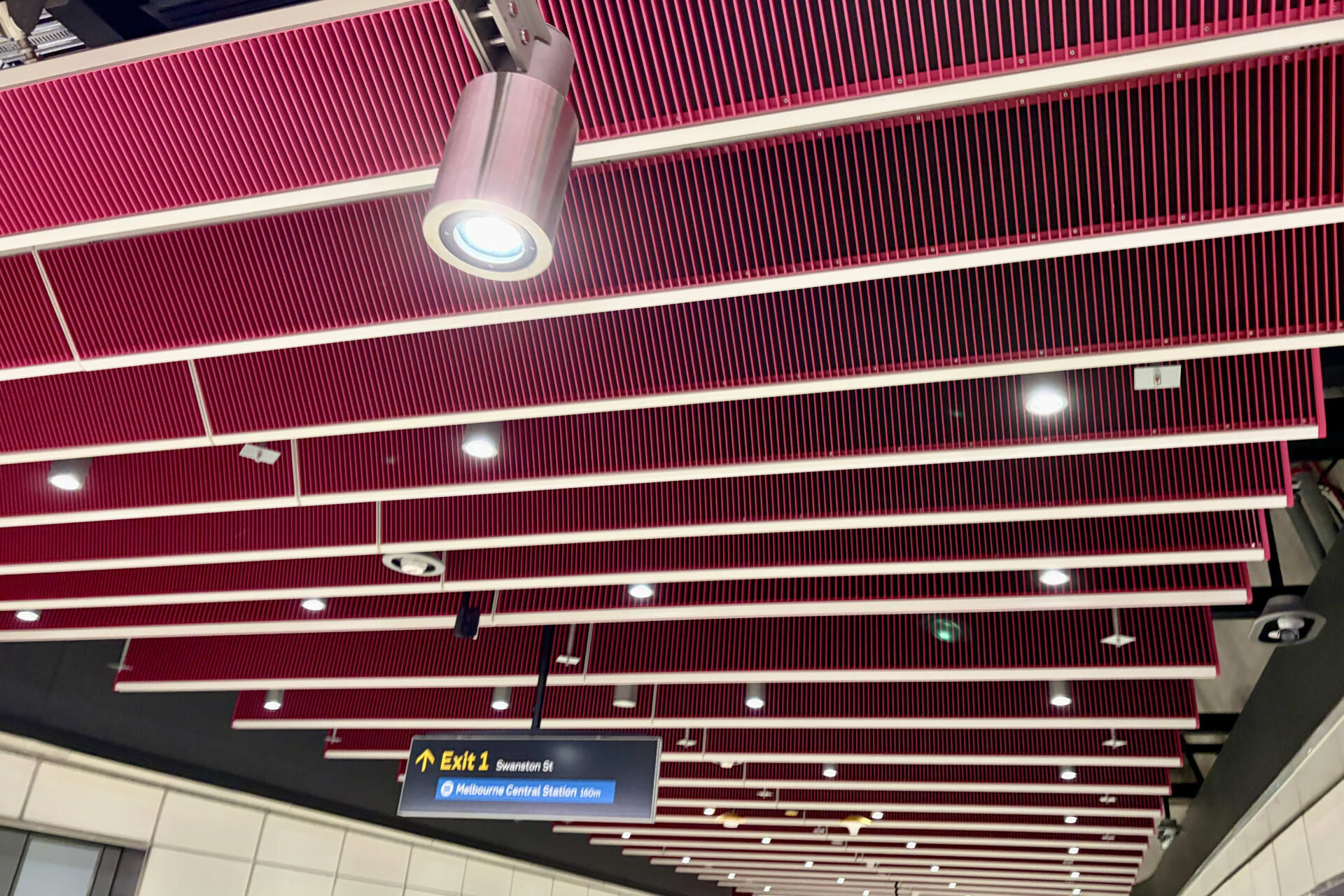
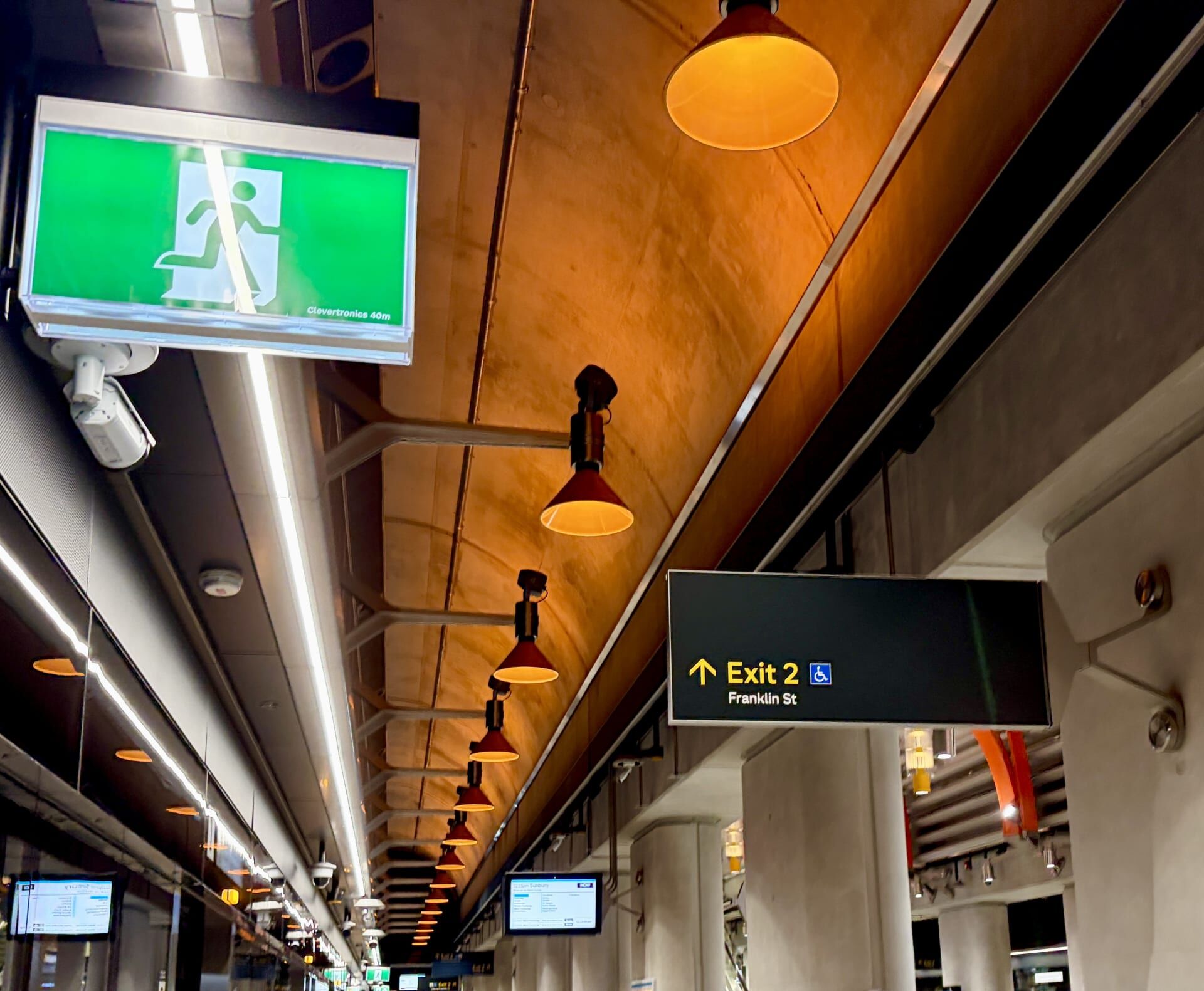
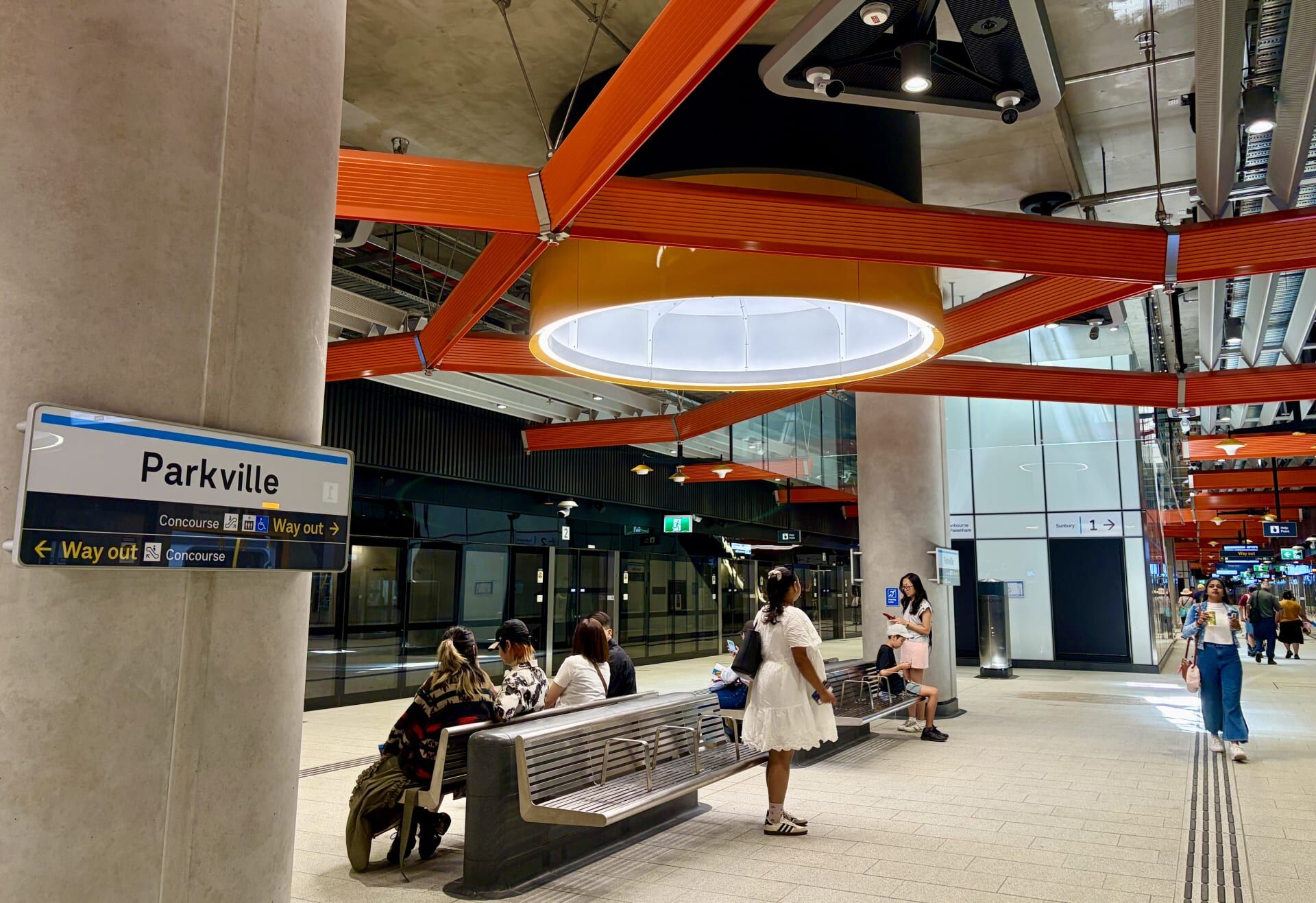
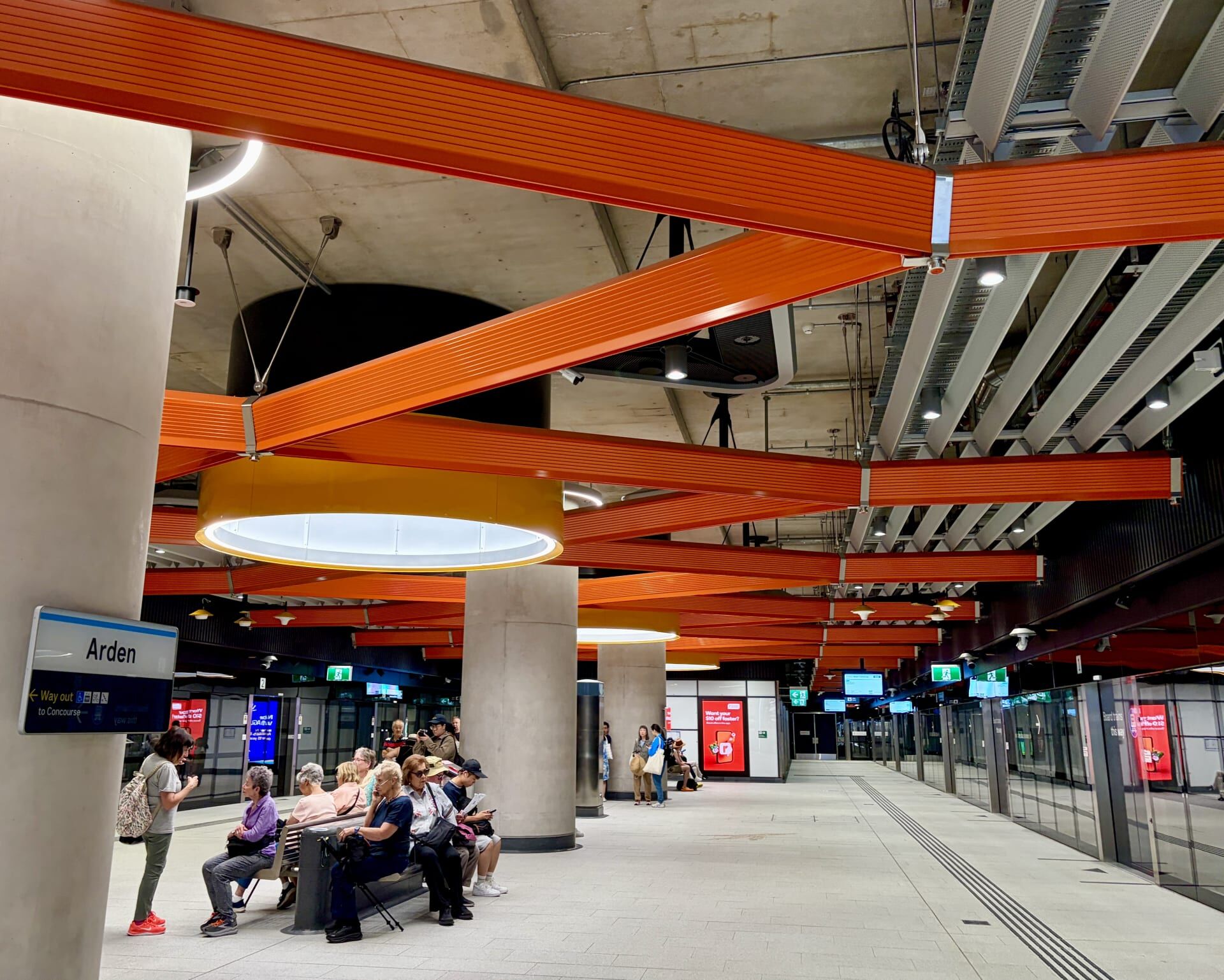
More concerning, however, is the use of colour at these stations. Aside from an obvious green theme at Anzac Station and some blue elements at Parkville Station (neither of which extend these colours to the platform level), the stations often appear virtually identical. As the photos below show, Town Hall and State Library Stations are indistinguishable at platform level, both featuring the same orange design. The remaining three stations also share a near-identical orange scheme, resulting in little visual differentiation across the network. This uniformity is an unfortunate design and wayfinding choice that will likely prove very confusing for passengers who need to quickly identify which station they are pulling into. I was also struck by the sheer scale of surveillance. Reports indicate that a staggering 2,800 CCTV cameras have been installed across the five stations.4
Anzac Station
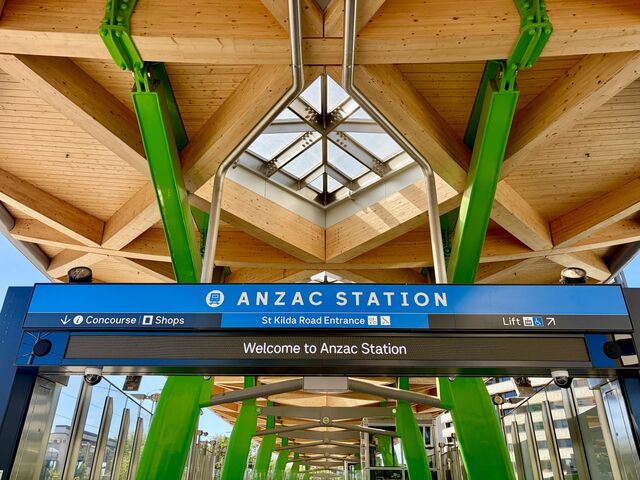
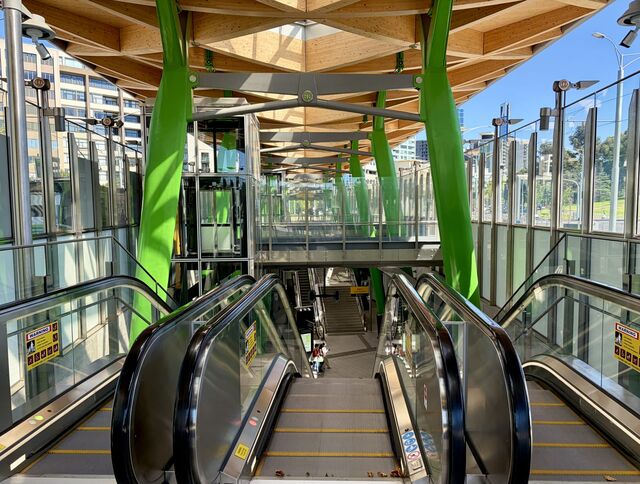
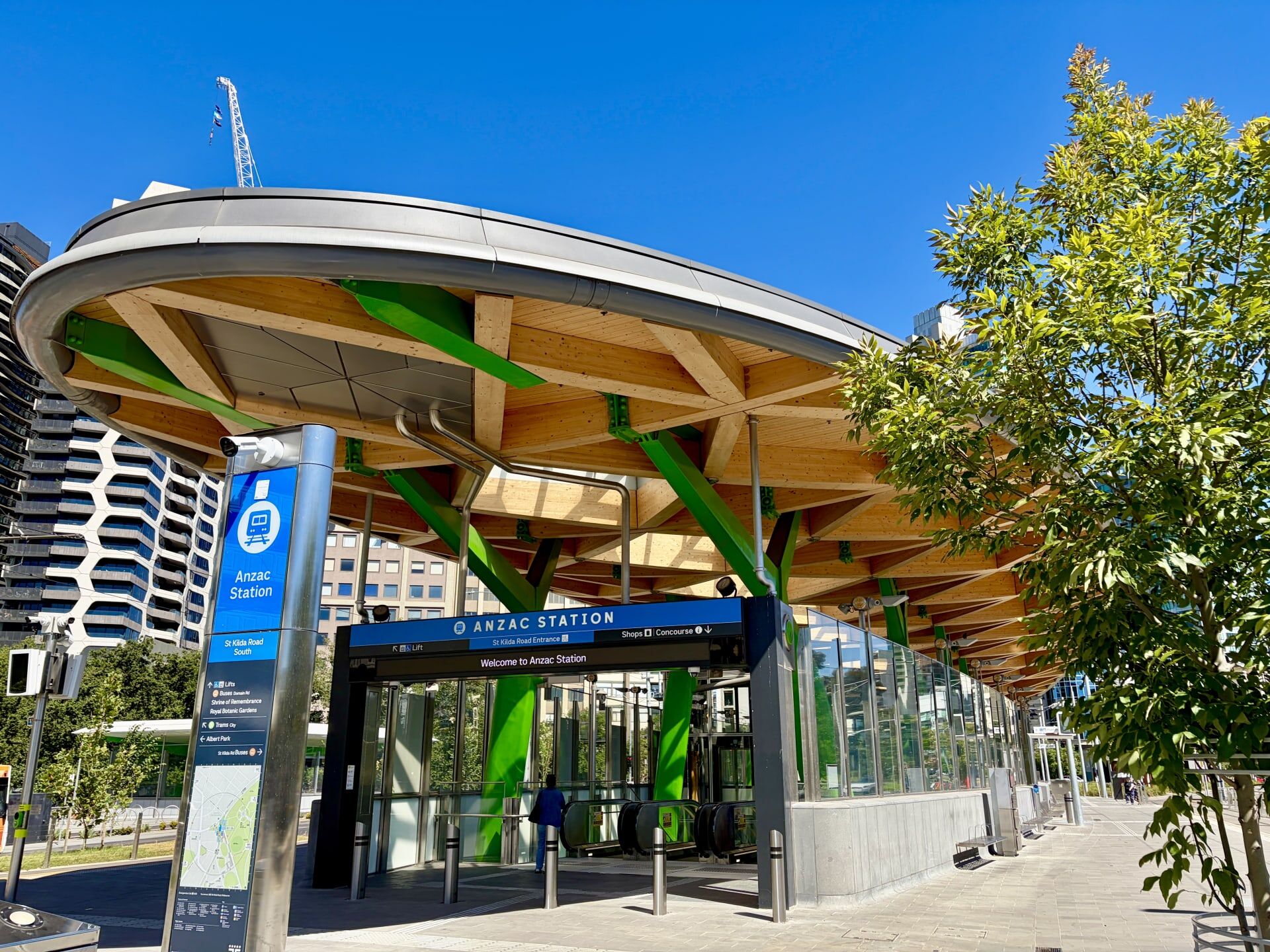
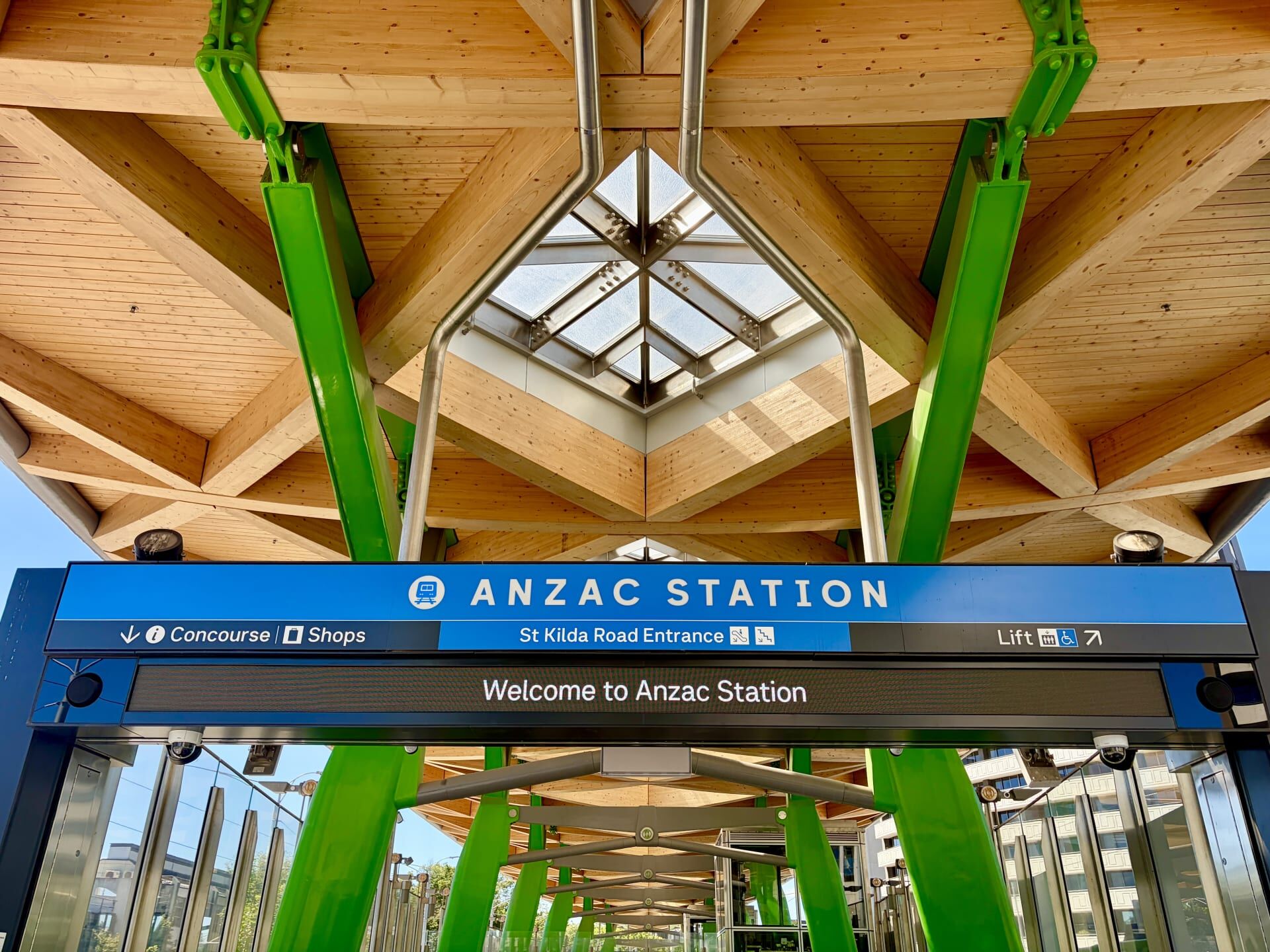
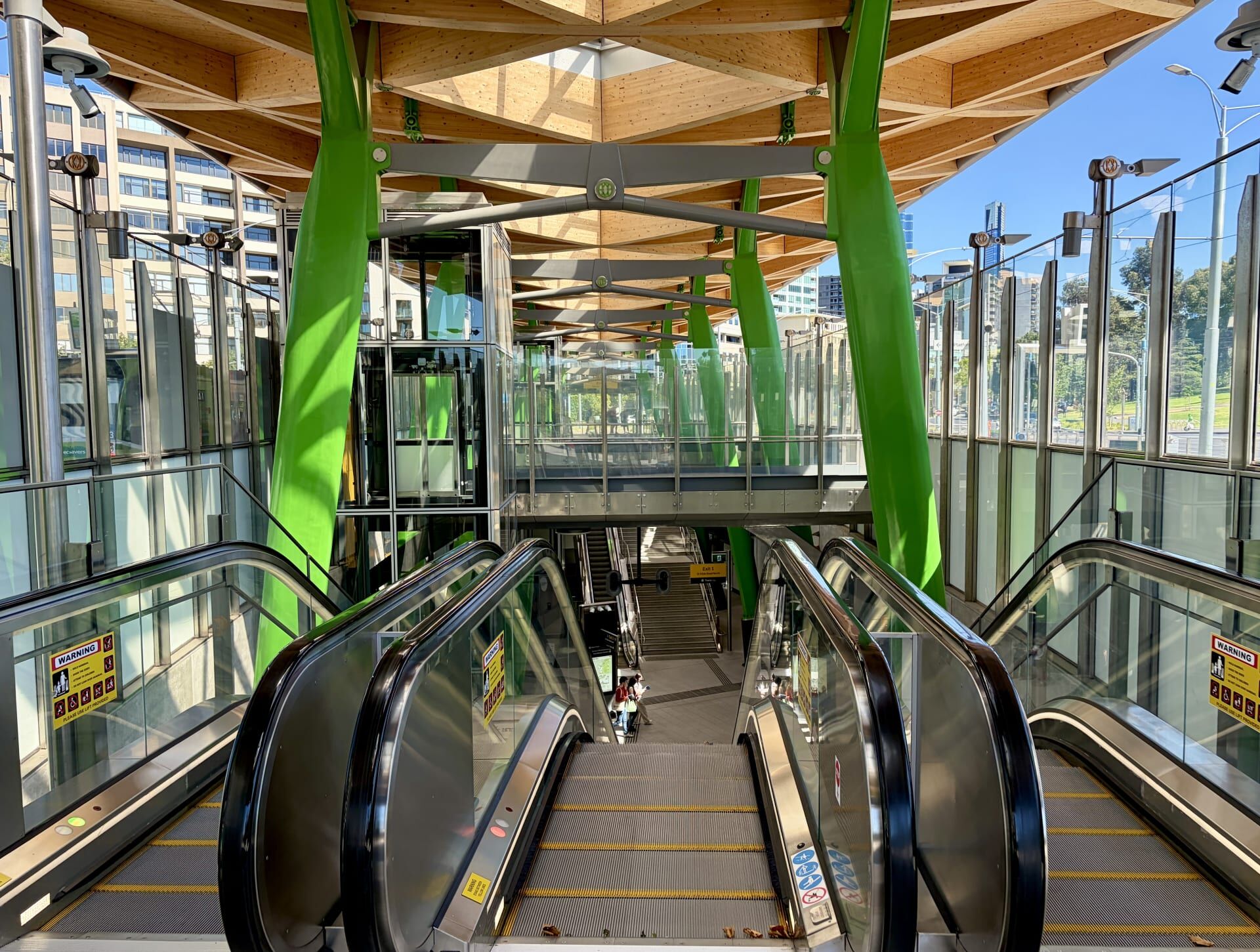
Anzac Station features a striking green timber exterior canopy. It immediately impressed me with its distinctive design and was my favourite of the five new stations. Interestingly, upon its opening, Anzac Station became the southernmost underground railway station in the world.5 The station provides train access to Melbourne’s Royal Botanic Gardens, Shrine of Remembrance, and Albert Park. Its direct tram-to-train interchange is excellent and is Melbourne’s first of its kind, helping to ease congestion along Swanston Street (the busiest tram corridor in the world!) by allowing passengers to transfer seamlessly from the tram to the train.
Town Hall Station
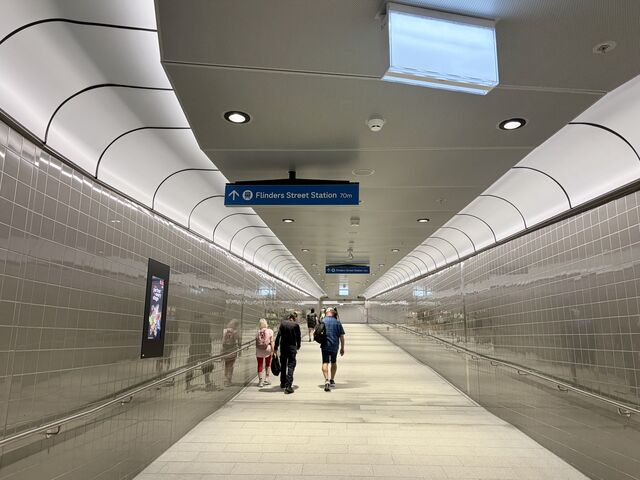
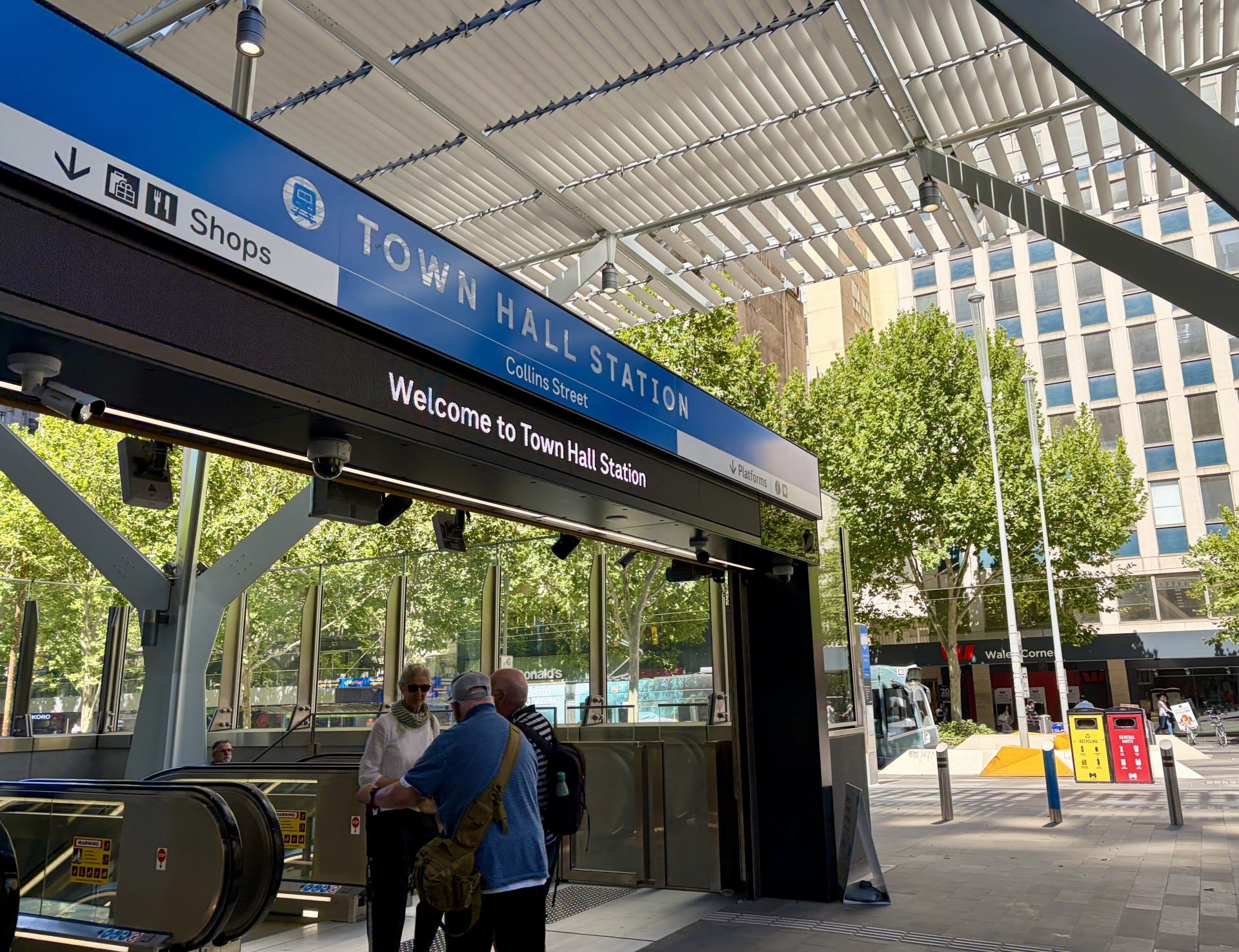
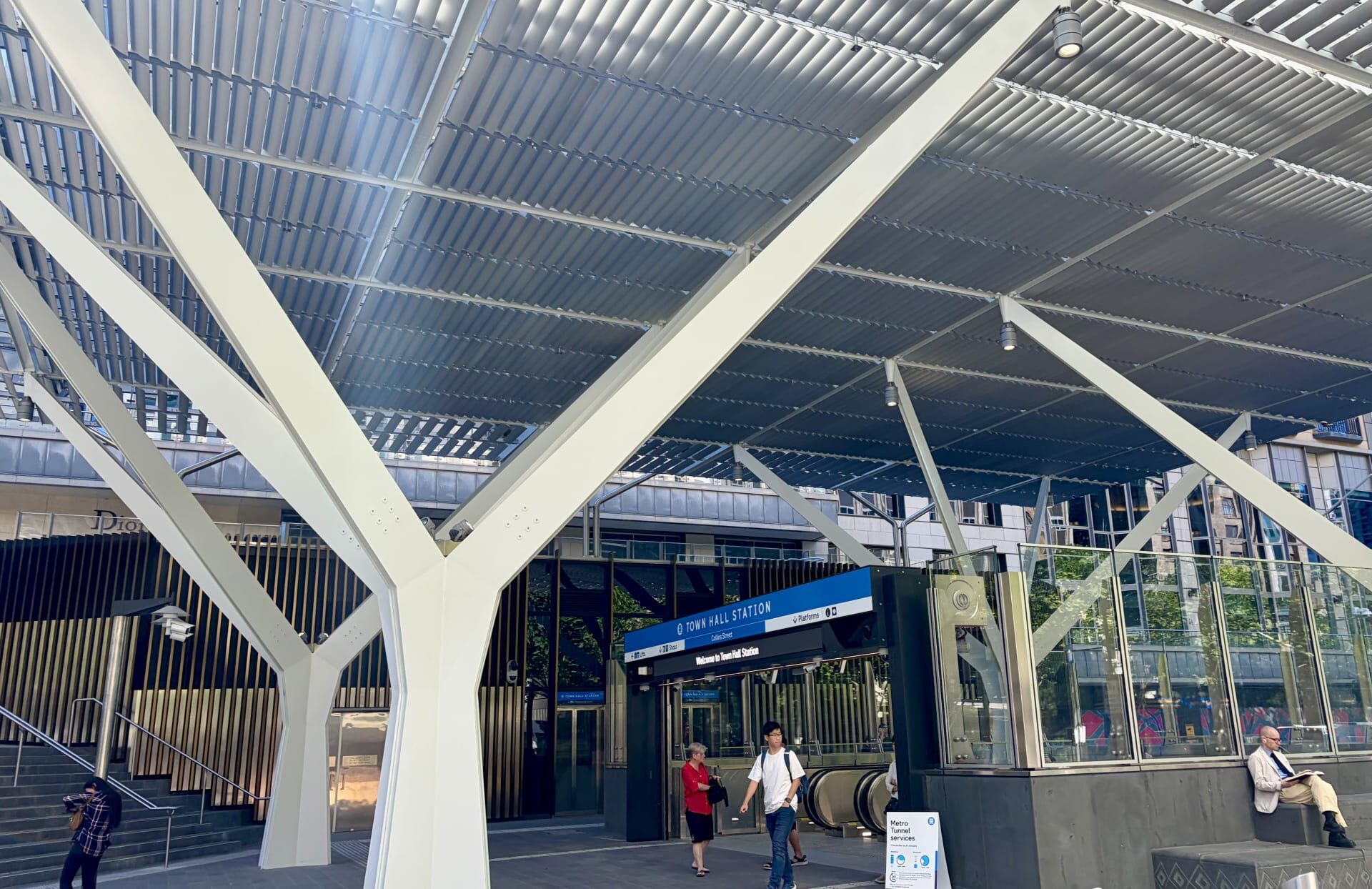
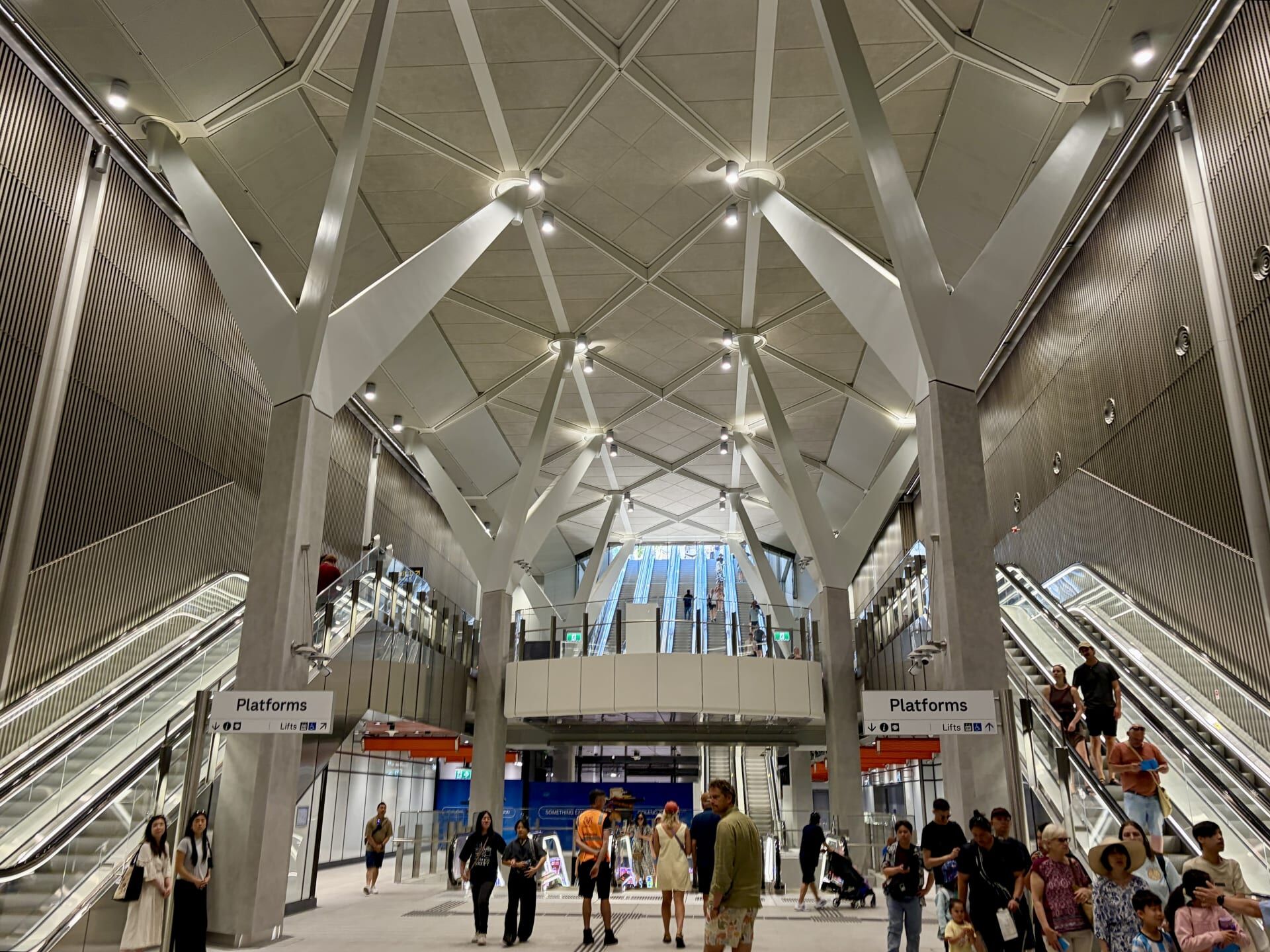
I did not find Town Hall Station particularly impressive from its exterior. Inside, the space opens up dramatically, although I wasn’t a particular fan of the boring grey palette in the station concourse, nor the large advertising screen which greets commuters.
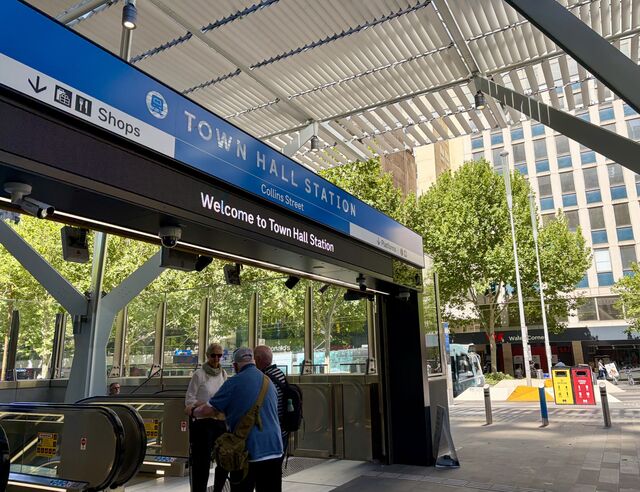
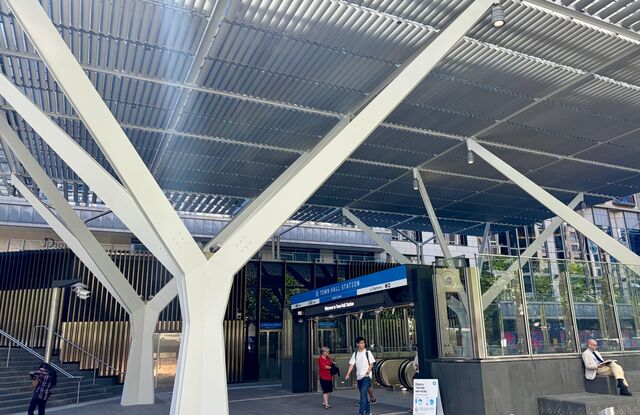
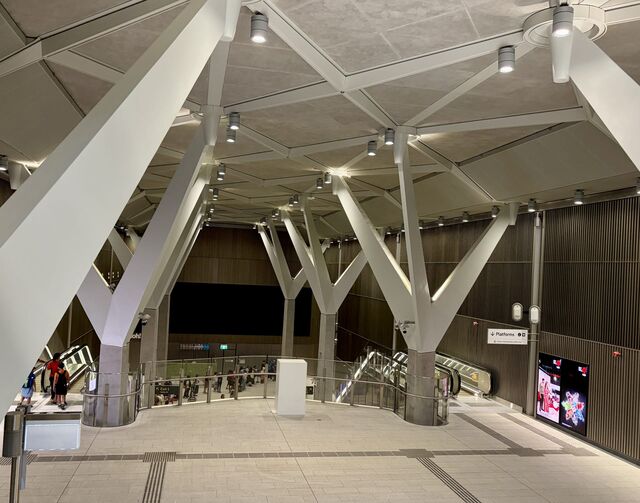
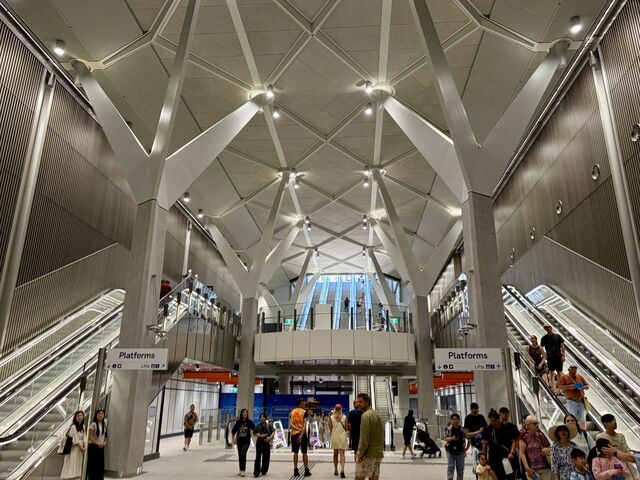
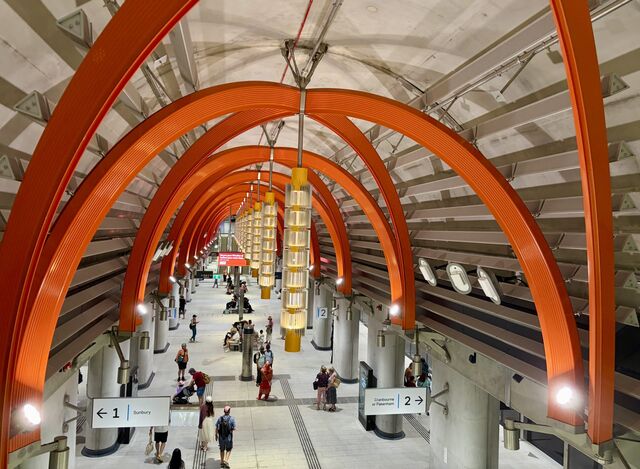
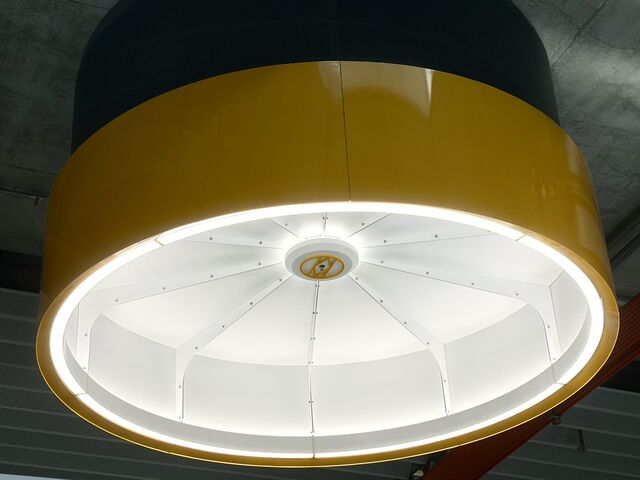
I was very impressed, however, by the soaring 10-metre-high orange arched ceiling above the platforms, which is adorned with chandelier lighting, and gives the station a cathedral-like grandeur.
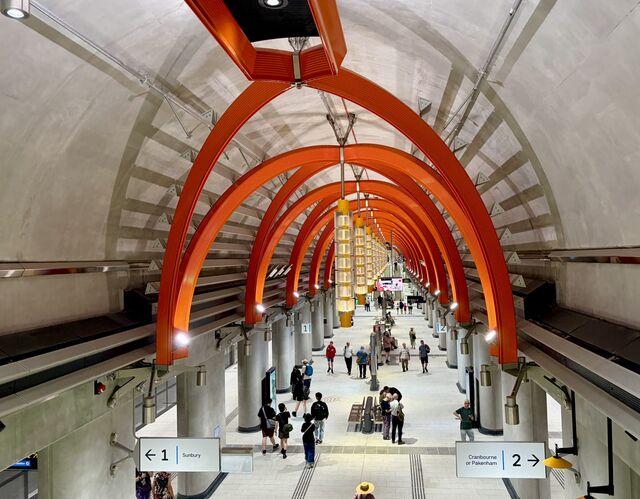
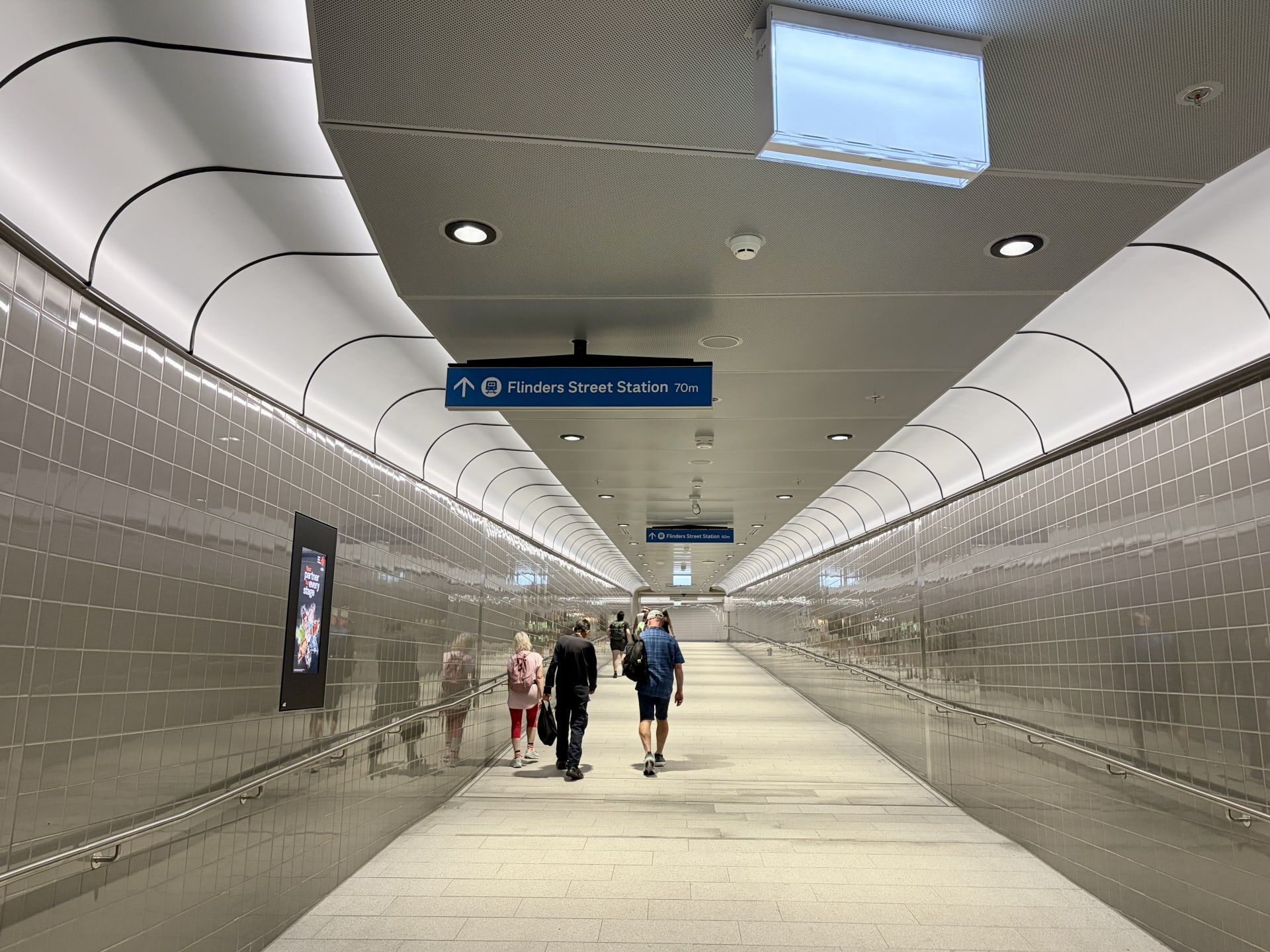
The platforms at Town Hall Station (along with those at the new State Library Station) are 18 metres wide, placing them among the widest underground metro platforms in the world.6 Within the platform alcoves, the concrete ceiling is illuminated with orange light. The station is connected to Flinders Street Station (which is served by the City Loop) via an underground walkway. Interestingly, during construction of Town Hall Station and the nearby State Library Station, which involved a major archaeological excavation, approximately 1,000 human teeth were uncovered. These are believed to have originated from a dentist who operated on Swanston Street from 1898 and whose disposal practices may have been questionable.7
State Library Station
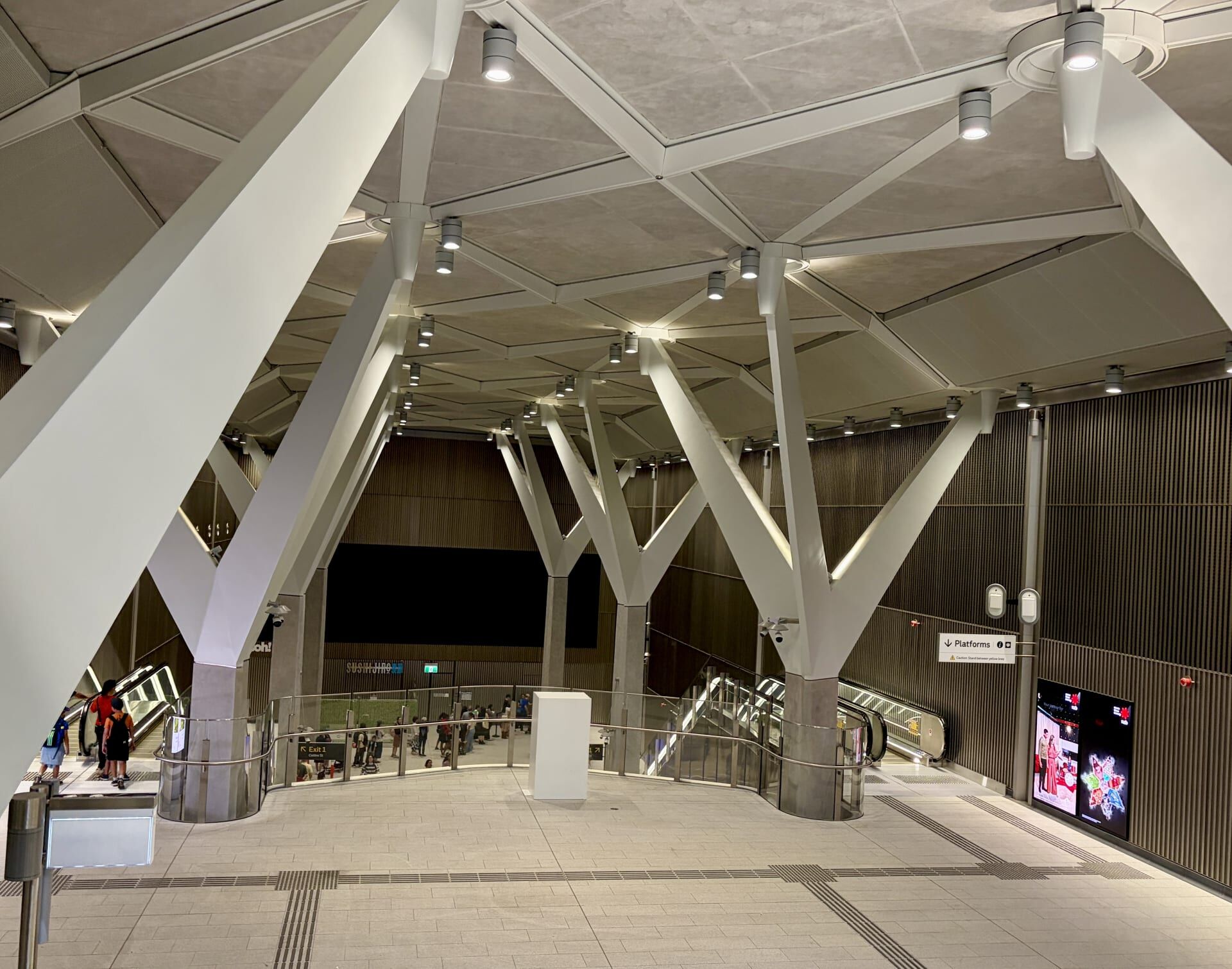
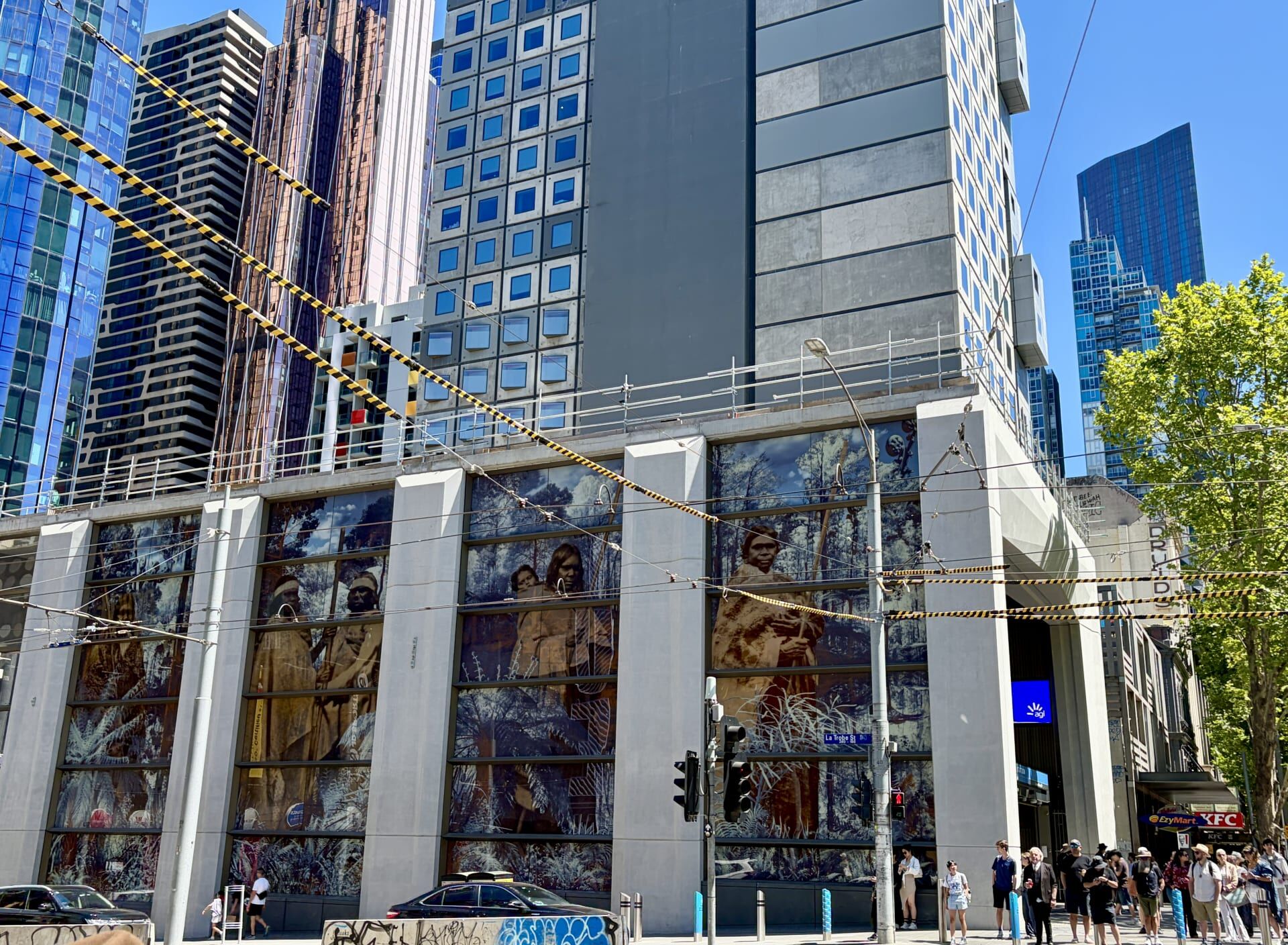
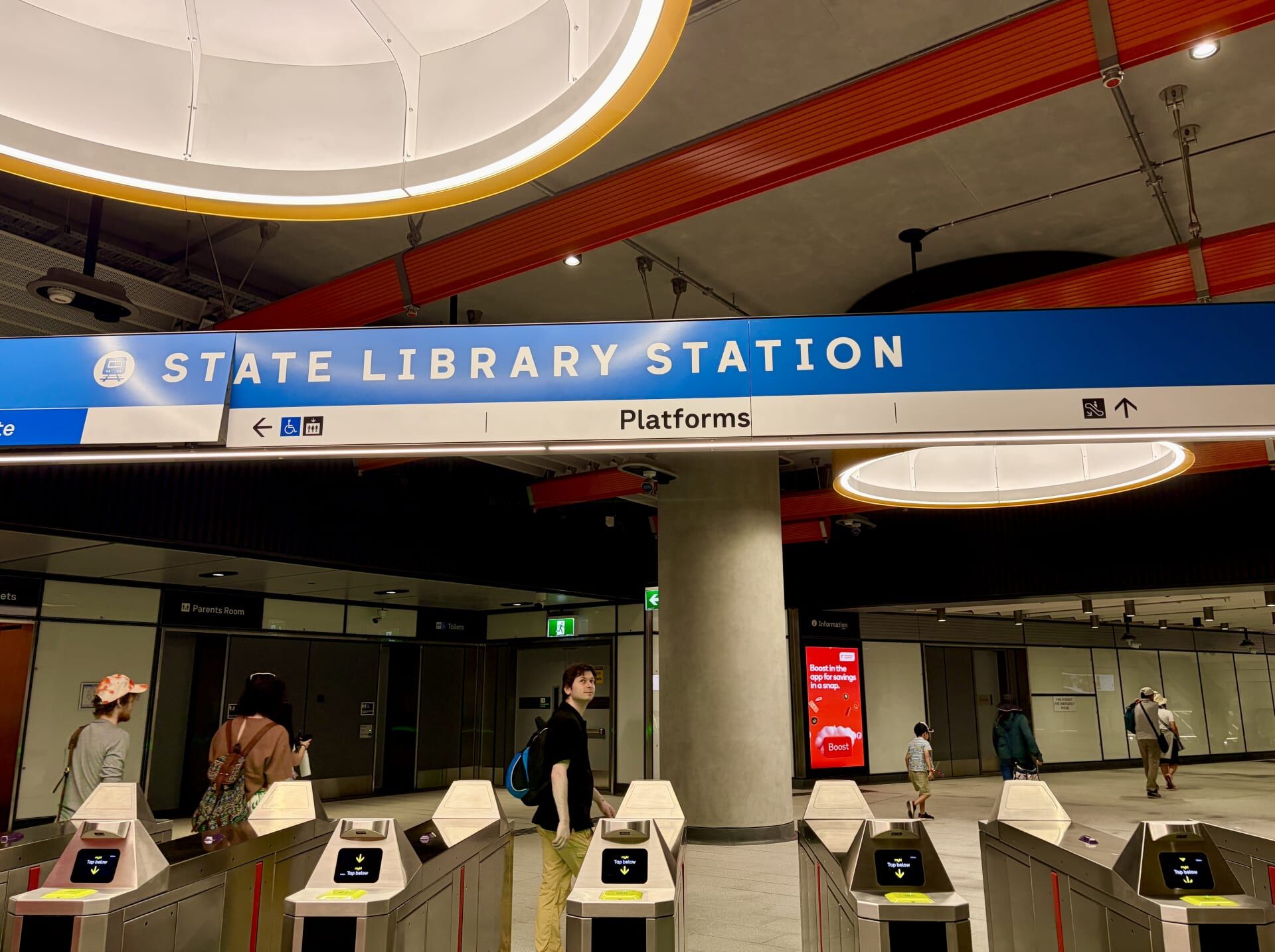
State Library Station provides train access to the State Library of Victoria, RMIT University, and the Queen Victoria Market. I was unimpressed by the exterior of the station which looks like a car park.
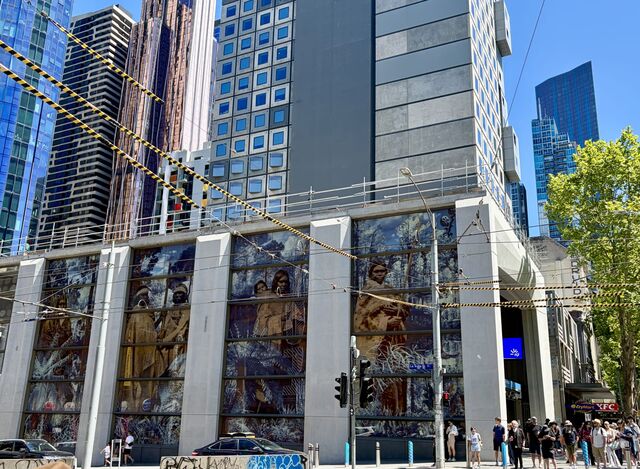
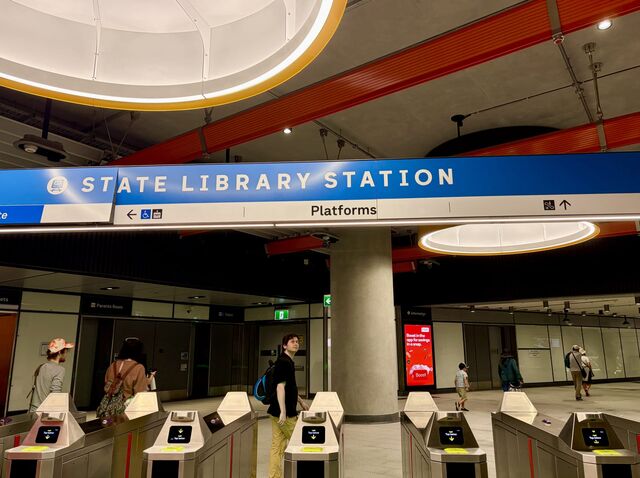
Inside, commuters will find the same visually striking orange arched ceiling above the platforms, although its unfortunate this design has just been lifted straight from Town Hall Station and repeated here with little imagination.
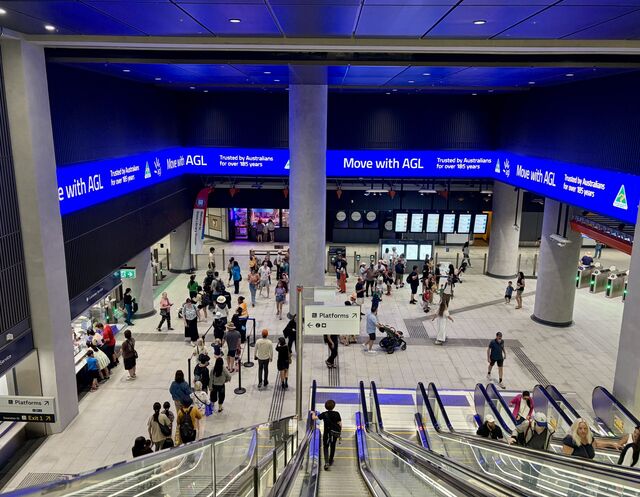
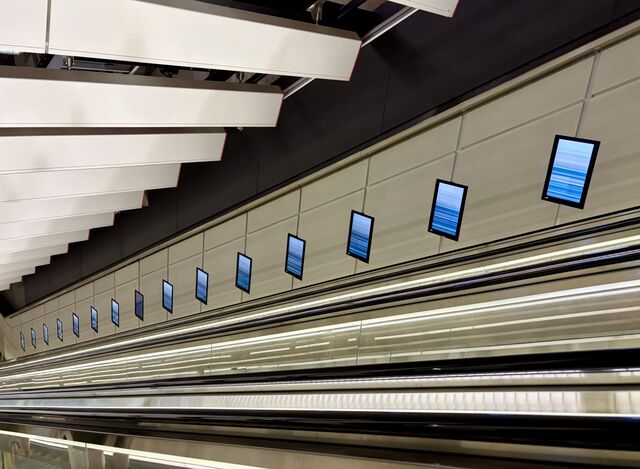
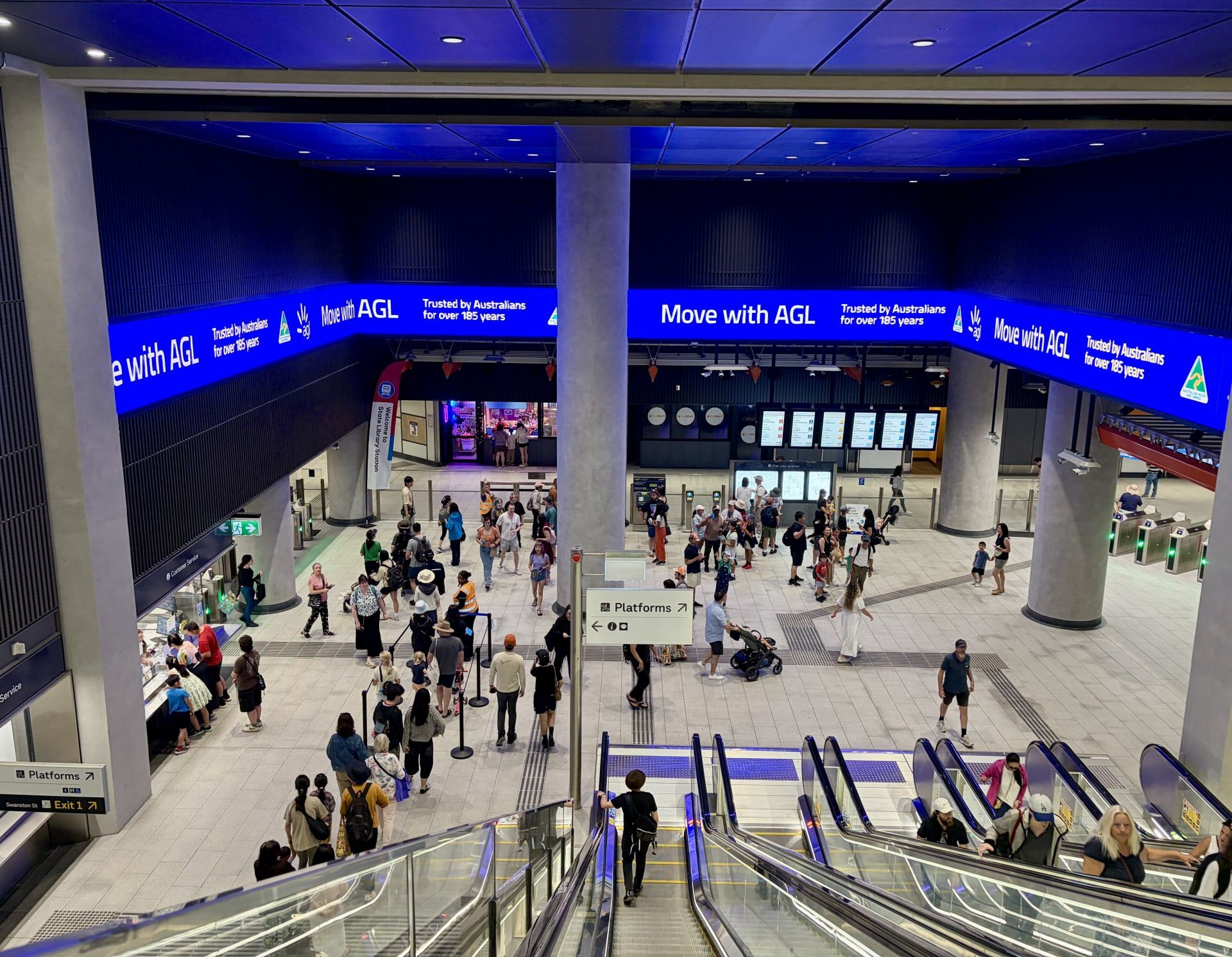
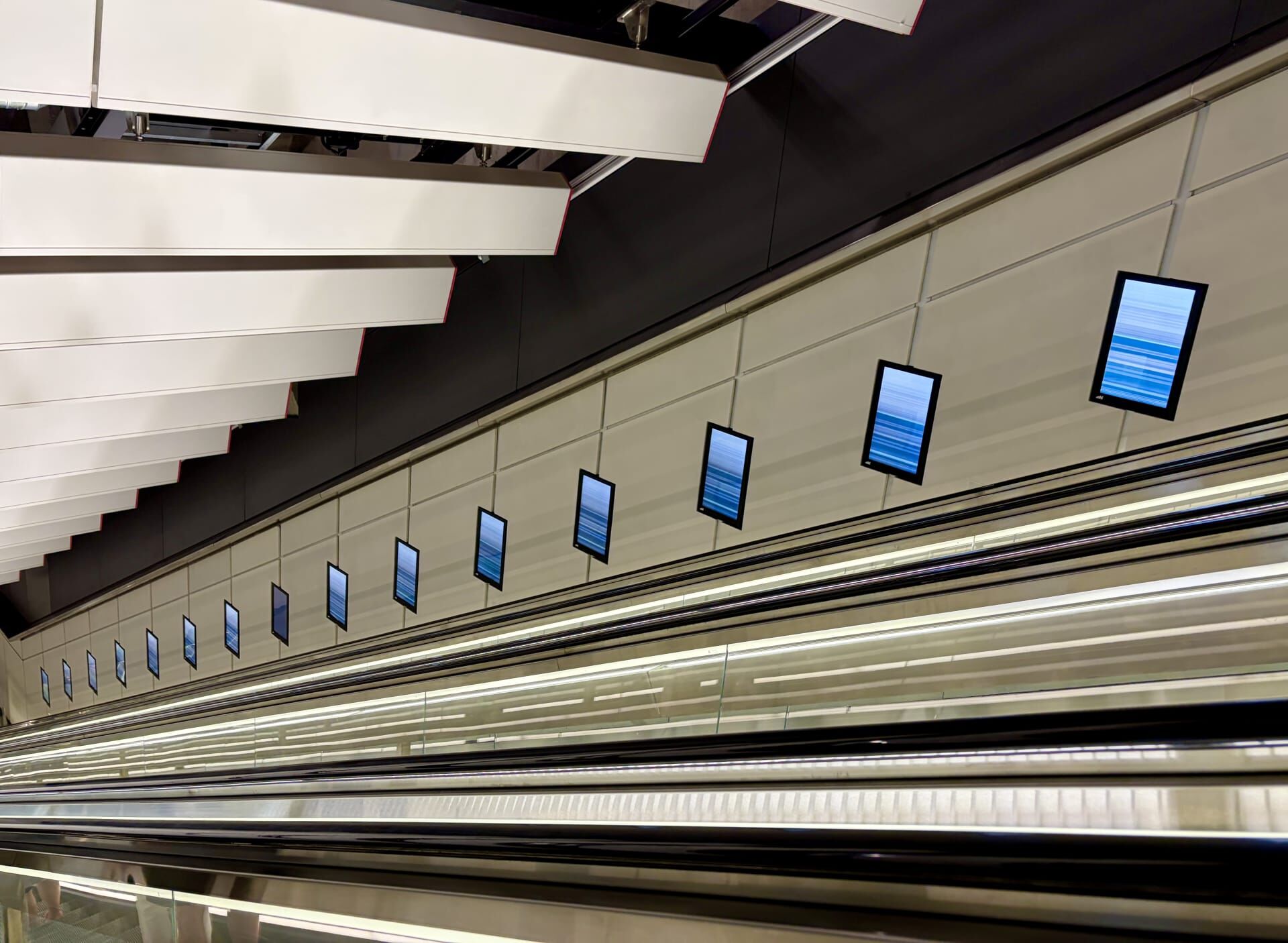
Even worse is the disgusting three-screen wrap-around digital advertisement in the station’s main concourse and the dozens of advertising screens that line the escalators.
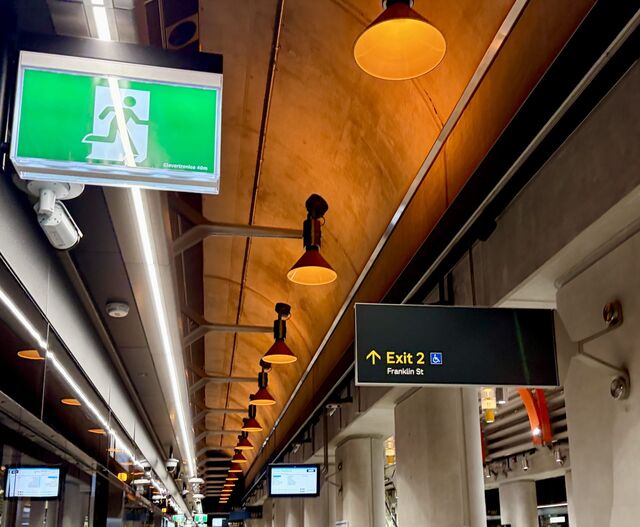
State Library Station is connected to Melbourne Central Station (which serves the City Loop) via a shared concourse, though this link nearly became an embarrassing planning failure. The Victorian Government originally designed the underpass connecting State Library and Melbourne Central Stations as a pedestrian tollway, requiring people who weren’t even using the railway to ‘touch on’ at the ticket gates simply to walk from the State Library precinct to the Melbourne Central shopping centre. Thankfully, this was later fixed, and pedestrians can now walk through the underpass free of charge.
Parkville Station
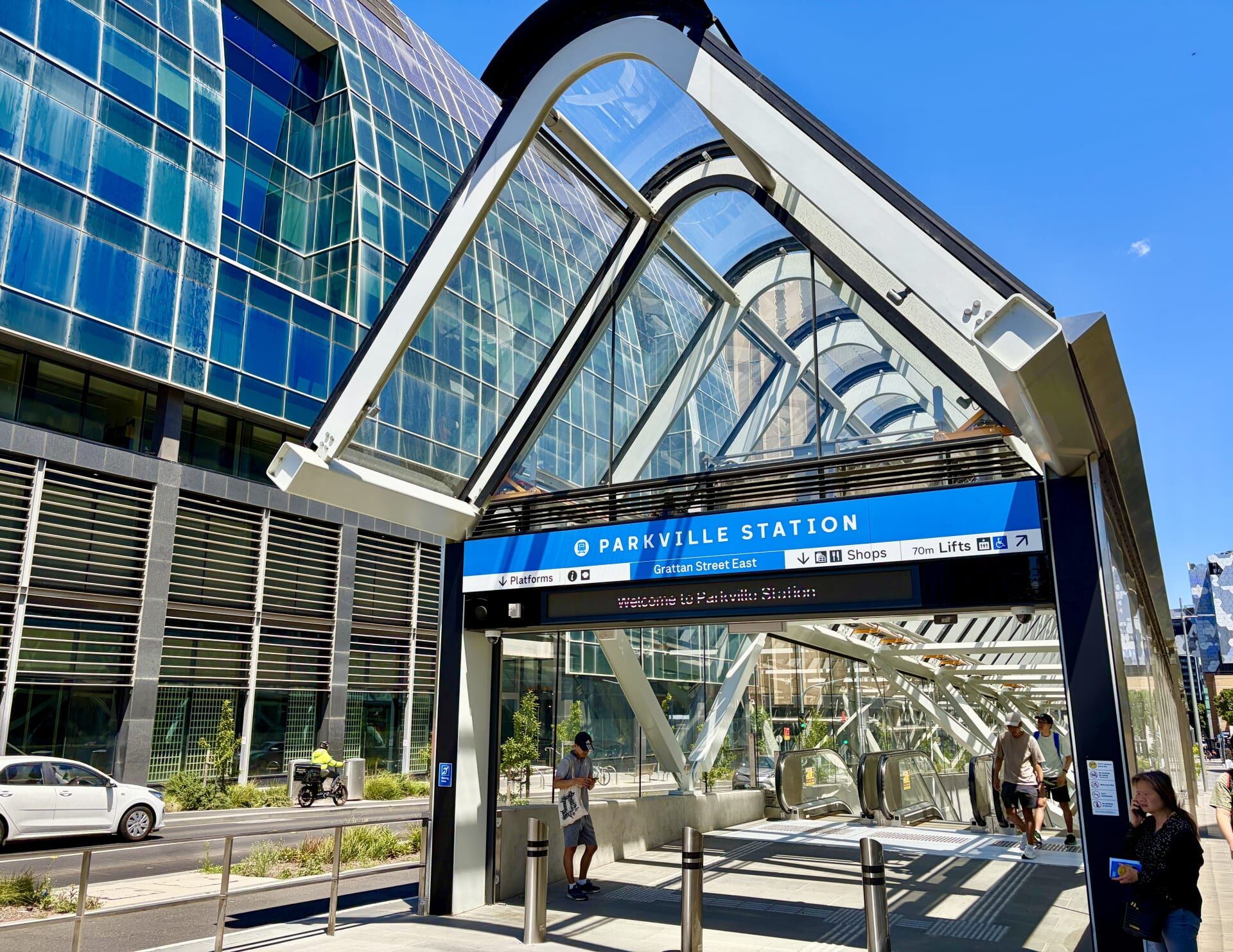
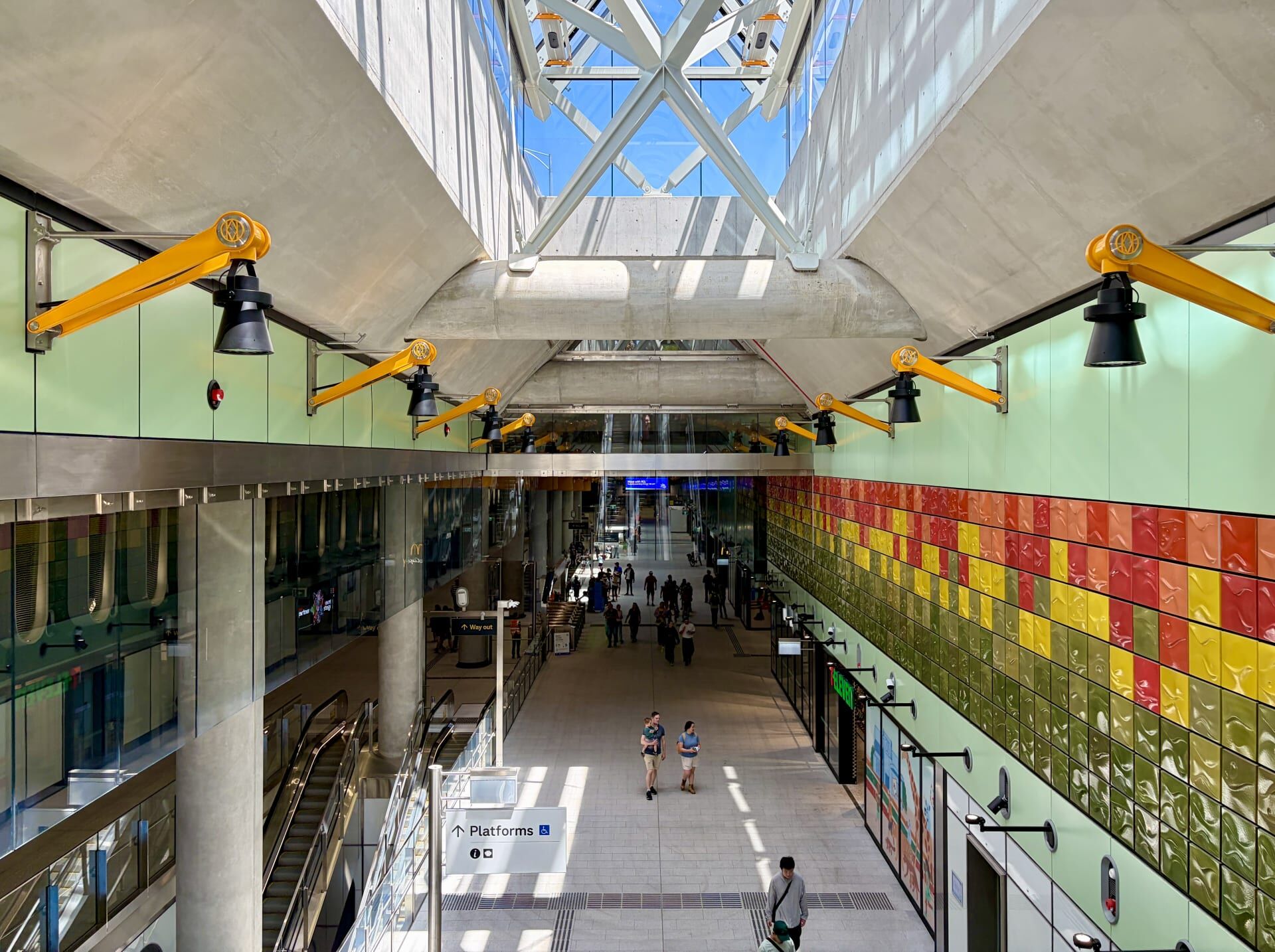
Parkville Station provides direct train access to the University of Melbourne and the surrounding medical precinct. It features a large exterior glass canopy, reminiscent of a conservatory, which I really liked for its modern design and seamless integration with the surrounding cityscape. The extended glass structure allows natural light to filter down into the station concourse.
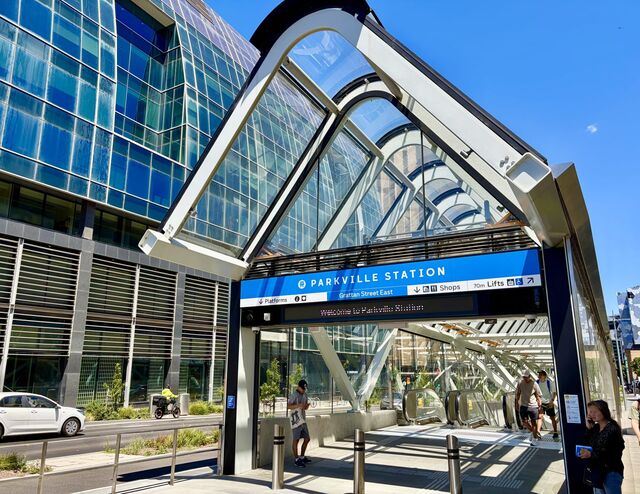
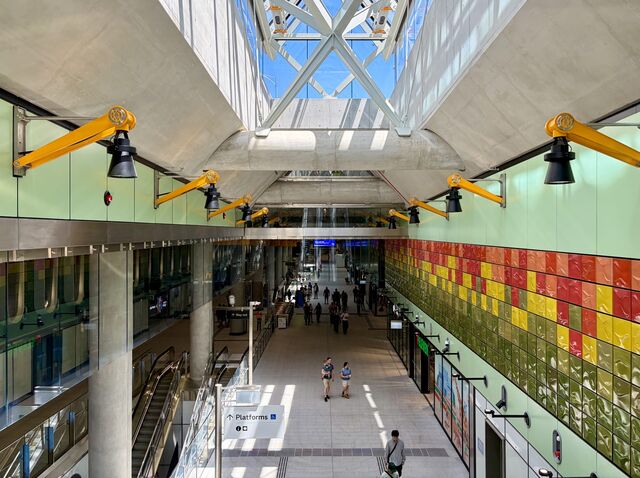
The advertising at this station feels far less visually intrusive than some of the others, with passengers instead greeted by a large Australian eucalyptus-inspired ceramic mural in the concourse. The colourful ceramic tiles were apparently handmade by craftspeople in Japan.
Arden Station
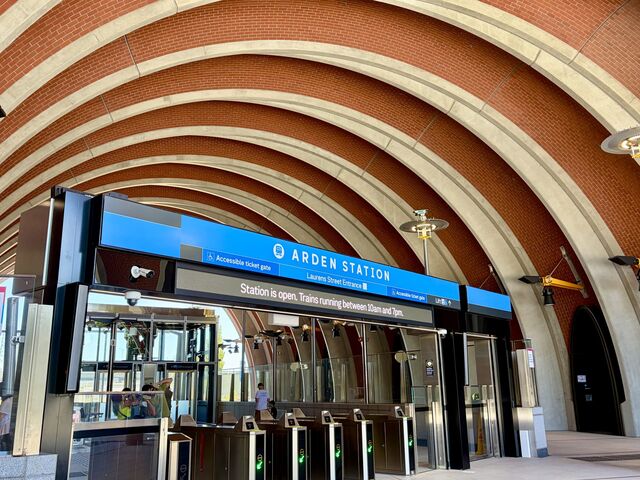
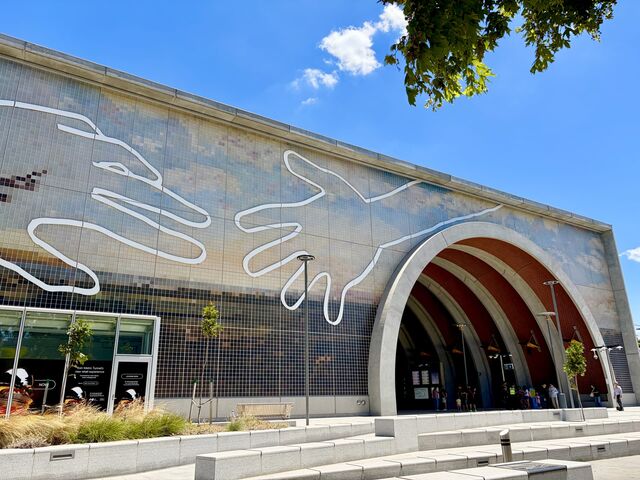
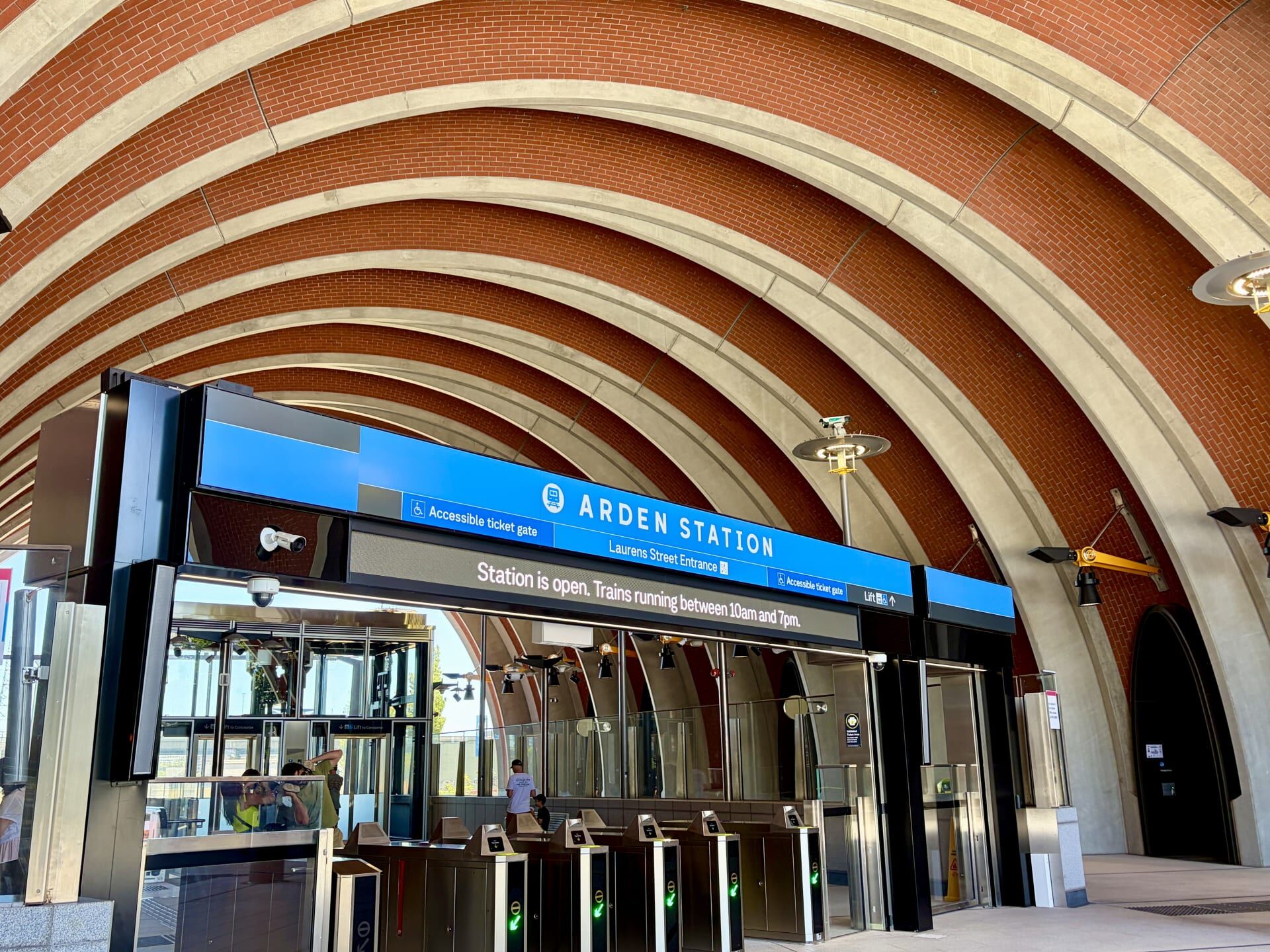
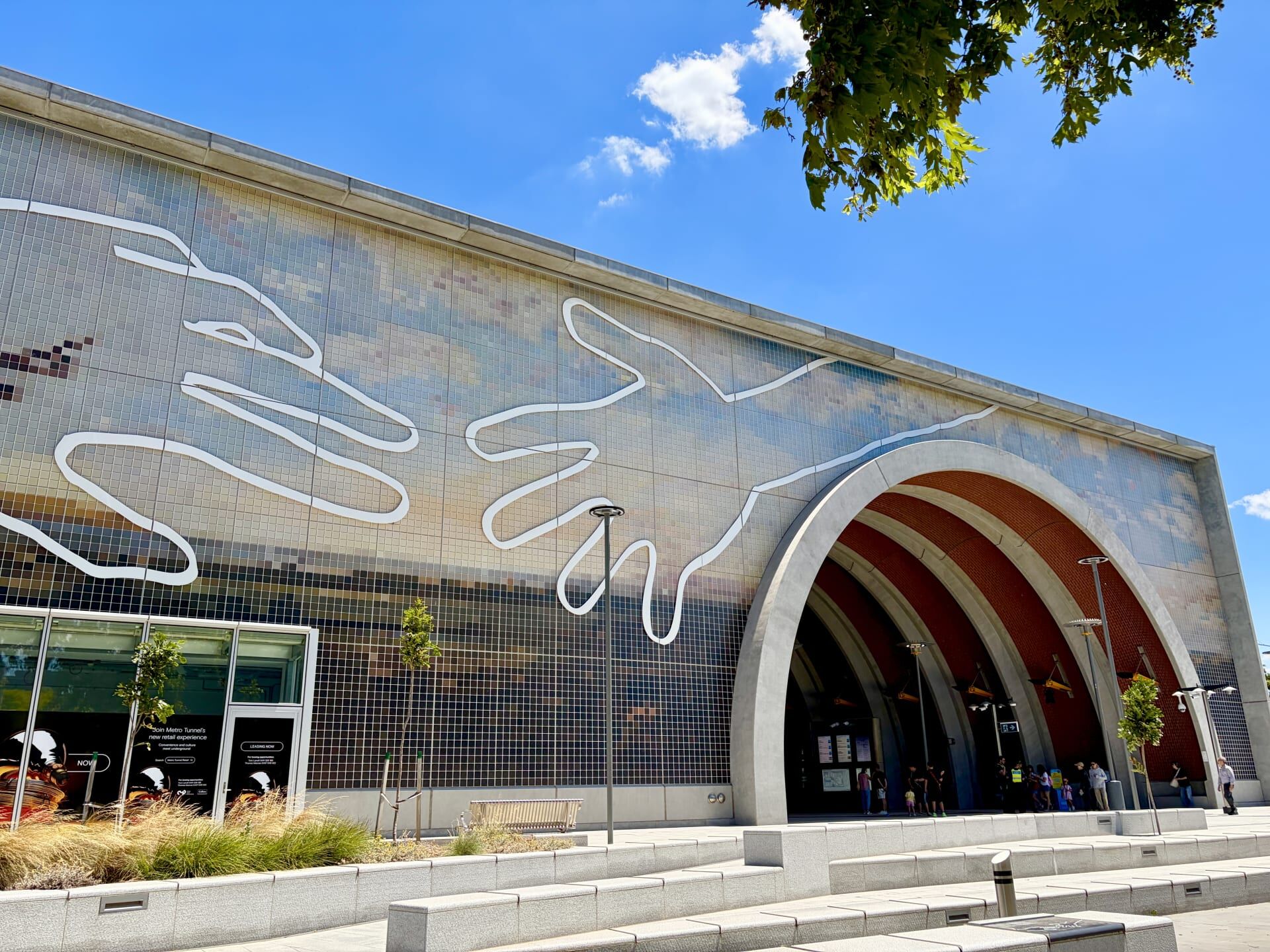
Arden Station feels less modern than the others with its brick-lined, concrete-arched design which is meant to reflect North Melbourne’s industrial past. At platform level, there is nothing to distinguish this station from Parkville or Anzac Stations which feature the exact same orange design. There is almost nothing at Arden Station, at least not at this stage, but it is set to become the centre of a new employment and innovation precinct that will bring thousands of jobs and homes to the area. The Station’s facade features a large artwork titled ‘Come Together’, with two large aluminium hands stretching across the mosaic.8
Miscellaneous
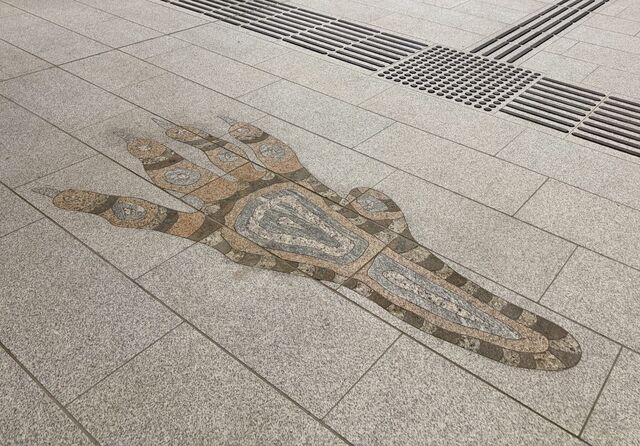
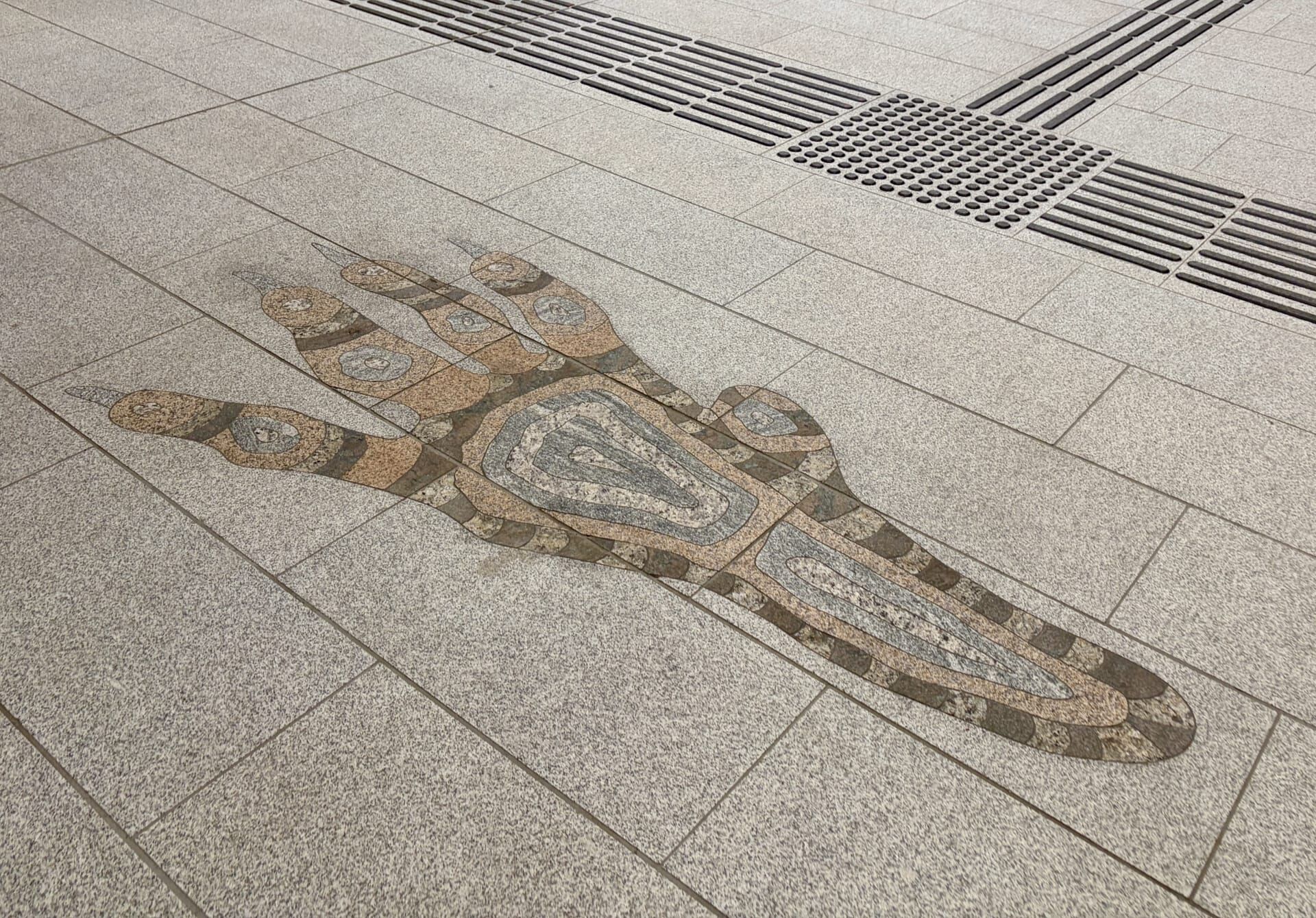
Across the five stations, visitors can see ‘Tracks’: an artwork by a Victorian First Nations artist that showcases native Australian animals. The artwork consists of large floor mosaics made from coloured granite, with 35 of these animal mosaics installed across the five stations.9
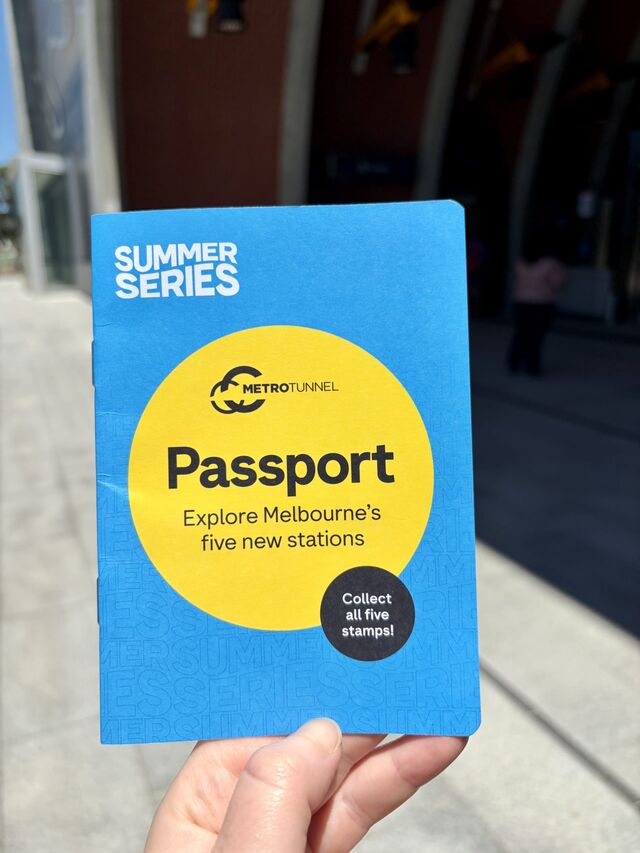
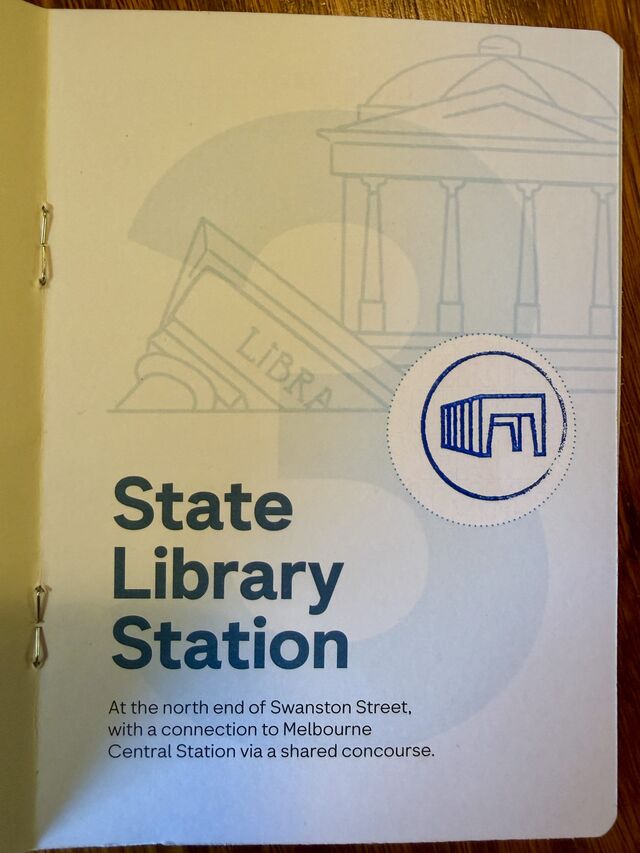
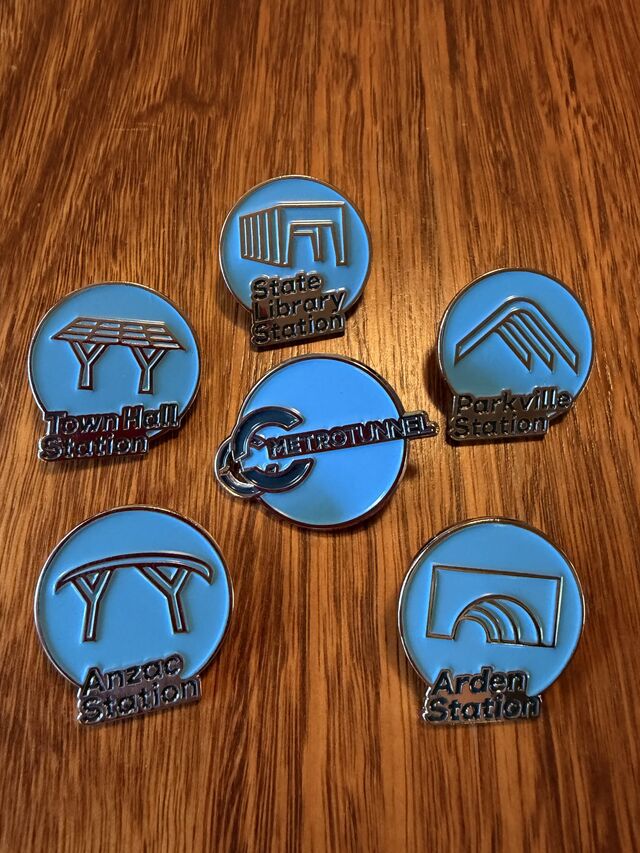
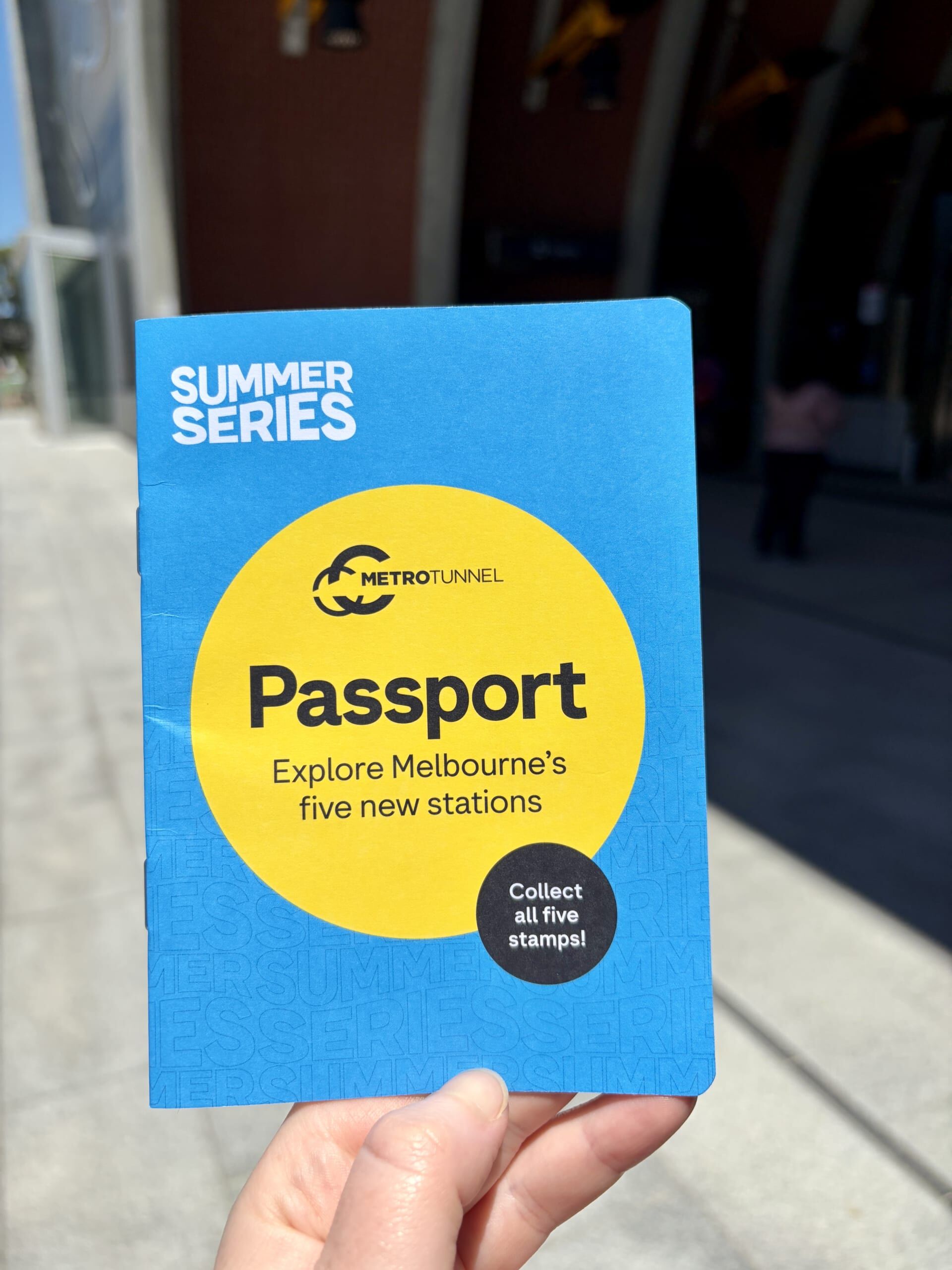
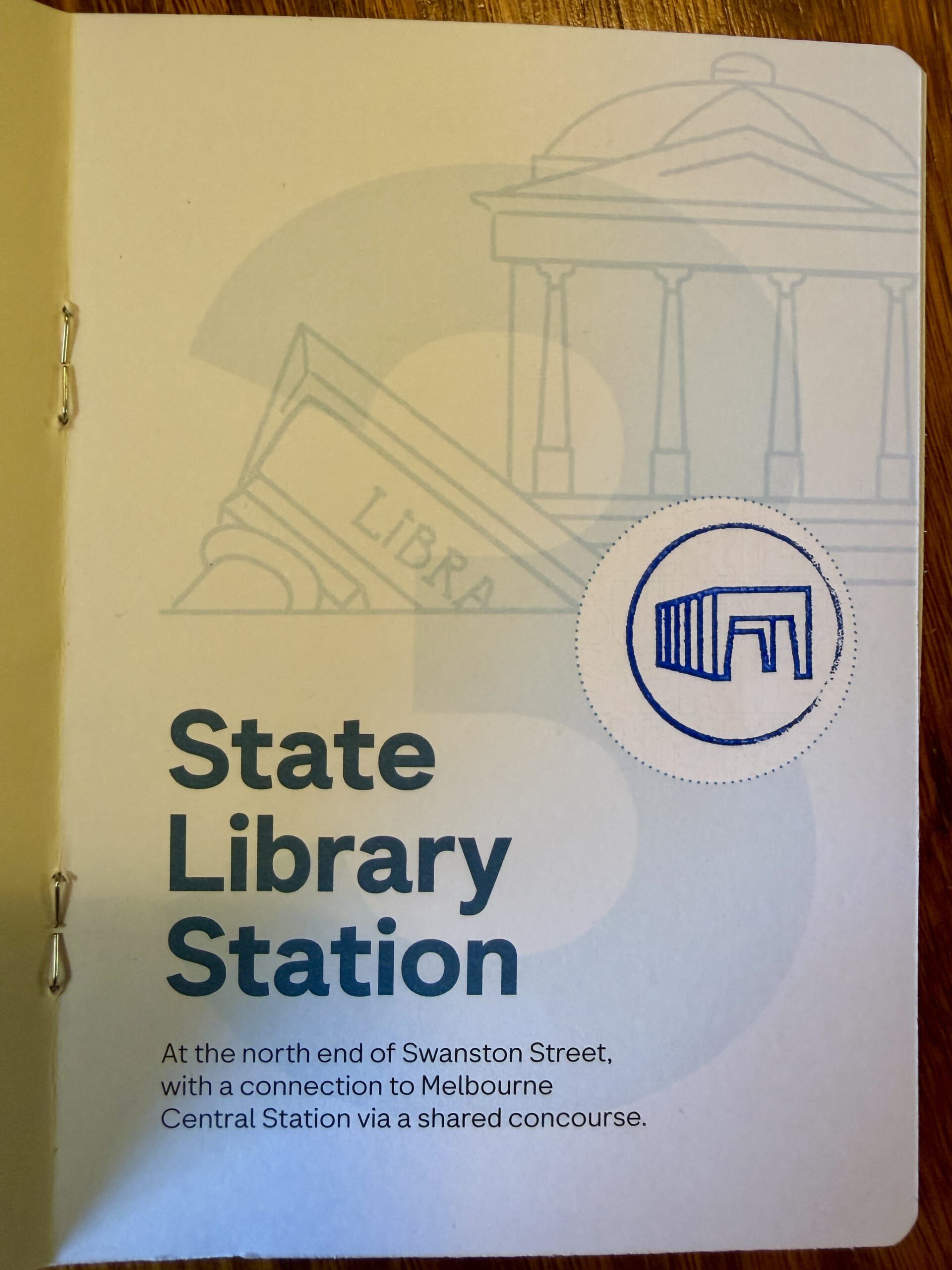
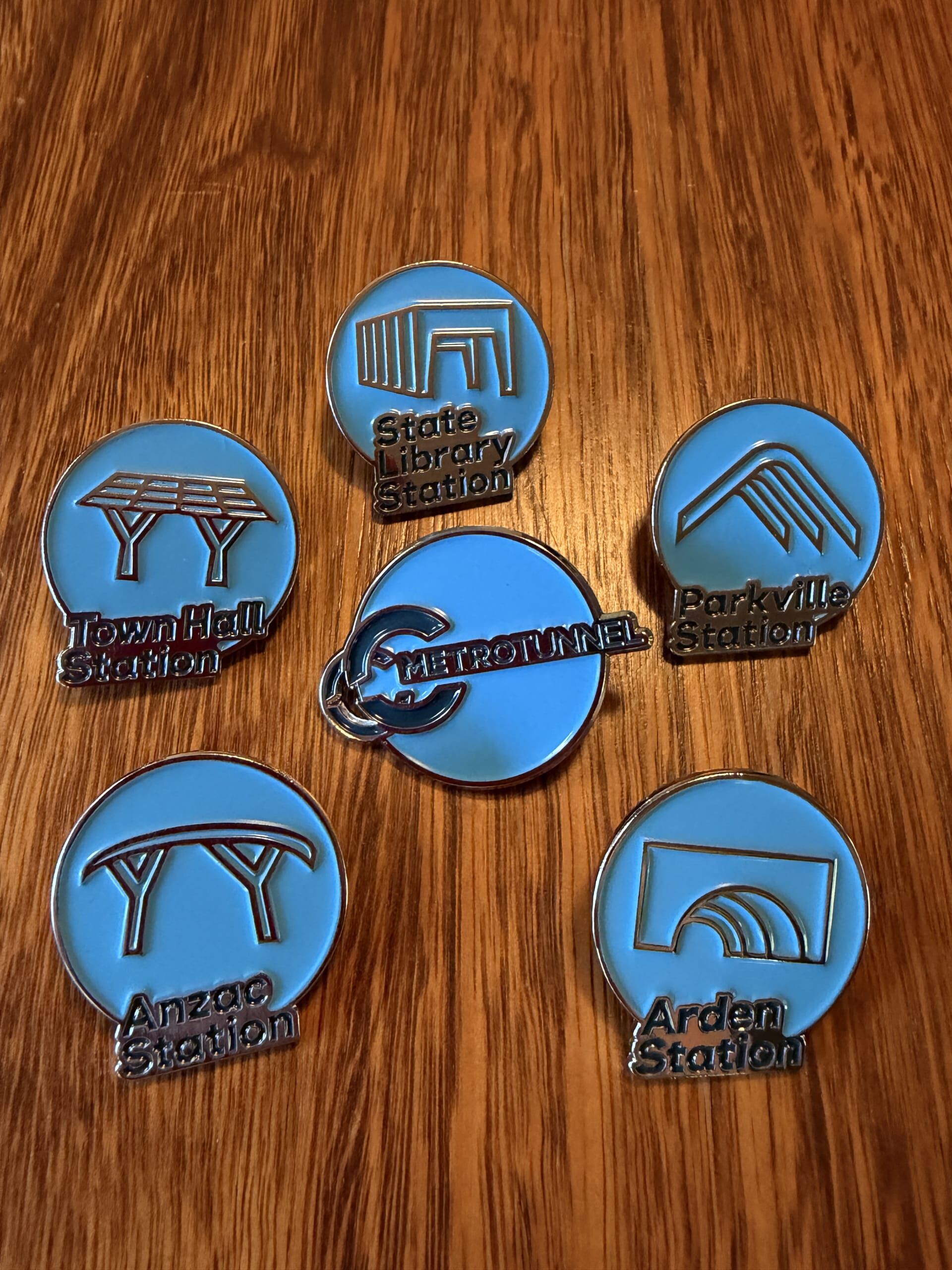
I timed my visit to the Metro Tunnel stations to coincide with the ‘Summer Series’ in January 2026, which celebrated the opening of the tunnel and its new stations. A range of promotional activities encouraged locals to explore the line, including a ‘Passport Challenge’, where participants collected a limited-edition passport and unique stamps at each station to win a set of Metro Tunnel pins. This activity was no doubt inspired by the popularity of Japan’s eki stamps, which I’ve written about here. I was pleasantly surprised by the large number of participants lining up to collect their stamps at each of the new stations.
Isaac Gross, ‘Everyone loves the Metro Tunnel. As an economist, it’s up to me to burst your Munnel bubble’, The Age (10 December 2025). ↩︎
Ibid. ↩︎
Cara Waters, ‘The potato chip and the crypt: Inside the Metro Tunnel’s designs’, Sydney Morning Herald (2 December 2025). ↩︎
Patrick Hatch, ‘The sophisticated tech that will allow Metro Tunnel trains to stop with pinpoint accuracy’, Sydney Morning Herald (7 September 2025). ↩︎
Taitset, ‘Metro Tunnel: My Hottest Takes!’ (YouTube, 6 January 2026). ↩︎
State Government of Victoria, ‘Town Hall Station design’ (Online, 2026); State Government of Victoria, ‘All 5 Metro Tunnel stations finished’ (Online, 2025). ↩︎
State Government of Victoria, ‘Arden Station design’ (Online, 2026). ↩︎
State Government of Victoria, ‘Maree Clarke – Line-wide artwork’ (Online, 2026). ↩︎
‘Summer Series Passport’ book. ↩︎