Switzerland’s Schöllenen Railway is a 3.8 kilometre branch line connecting the alpine villages of Andermatt and Göschenen. It is a railway that I have rarely seen discussed outside Switzerland-specific railway books, which is surprising because it is a short but spectacular train journey.
The railway runs through the Schöllenen Gorge, connecting Switzerland’s north-south Gotthard Railway at Göschenen with the east-west Rhaetian Railway/Matterhorn-Gotthard Railway at Andermatt. It is a rack railway, with the steepest gradient of any section of track on the entire Matterhorn Gotthard Railway network.1 The railway was built between 1913 and 1917, largely in response to the declining importance of Andermatt following the opening of the Gotthard Tunnel in 1882. Before the tunnel opened, Andermatt occupied an important strategic position along the north-south route through the Alps. The new tunnel, however, bypassed the town, leaving it isolated from this important transport corridor. A railway through the Schöllenen Gorge was therefore constructed to connect Andermatt with Göschenen, where passengers could transfer to the Gotthard Railway.2
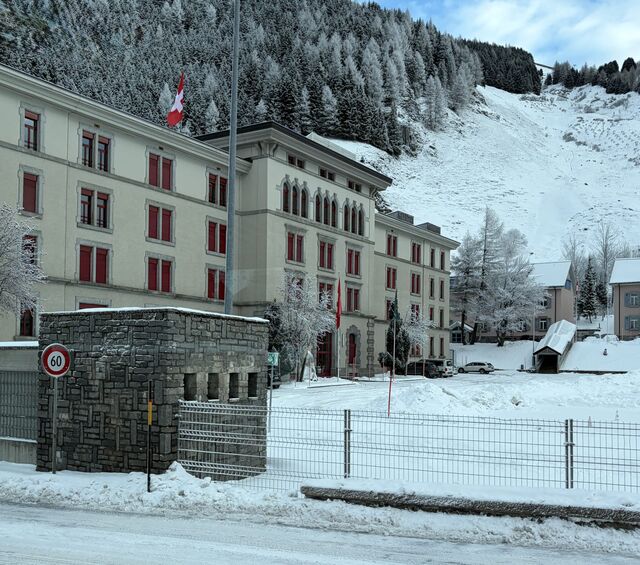
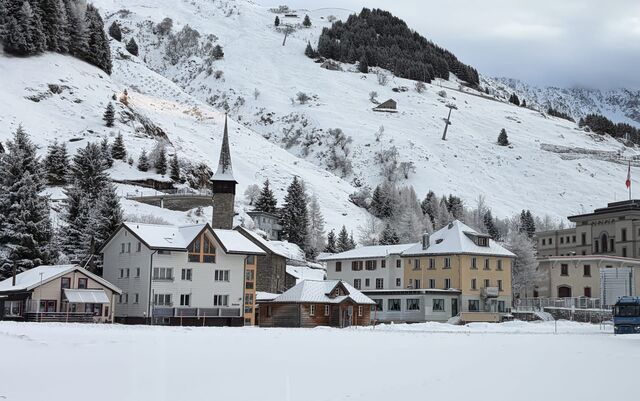
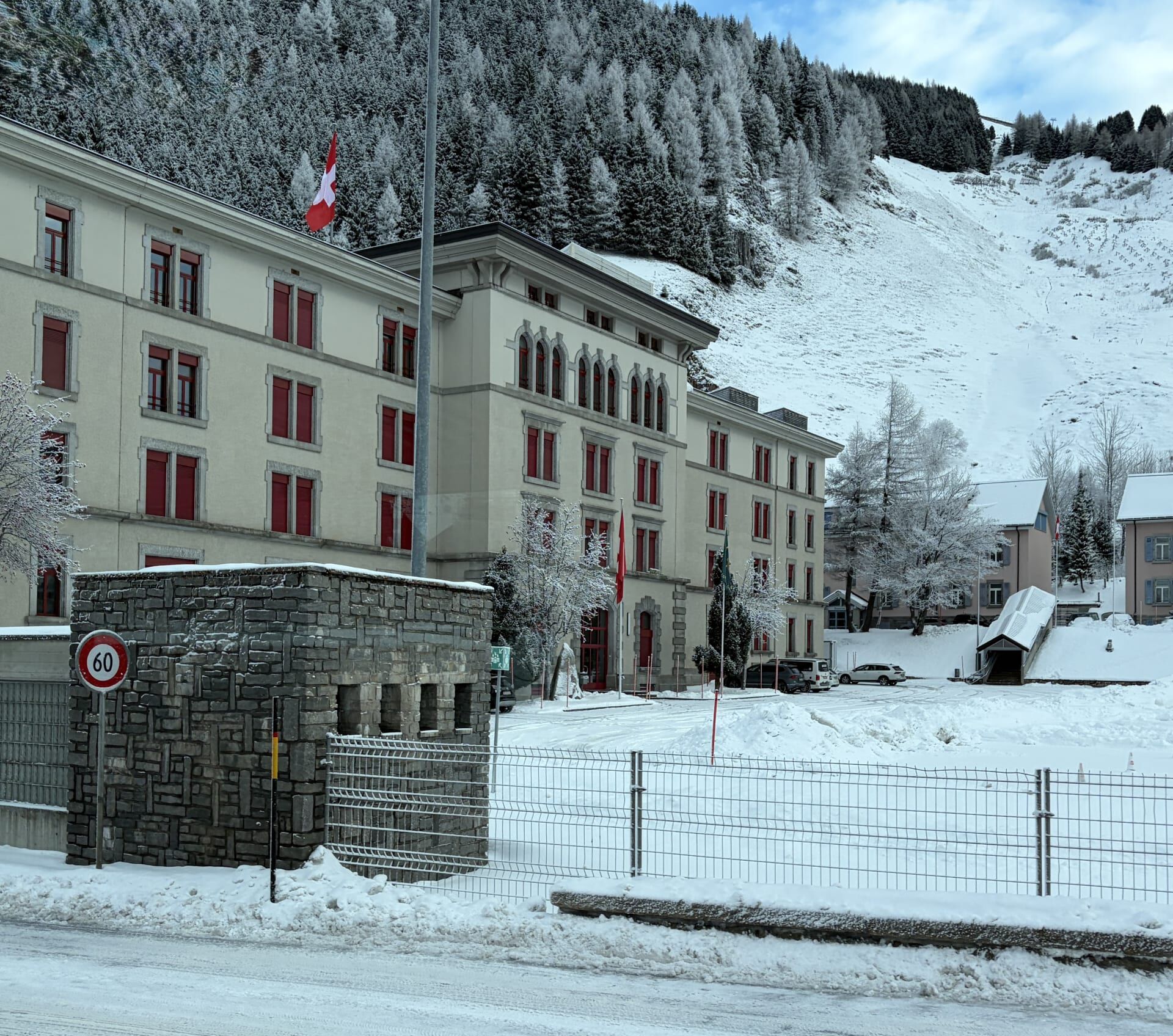
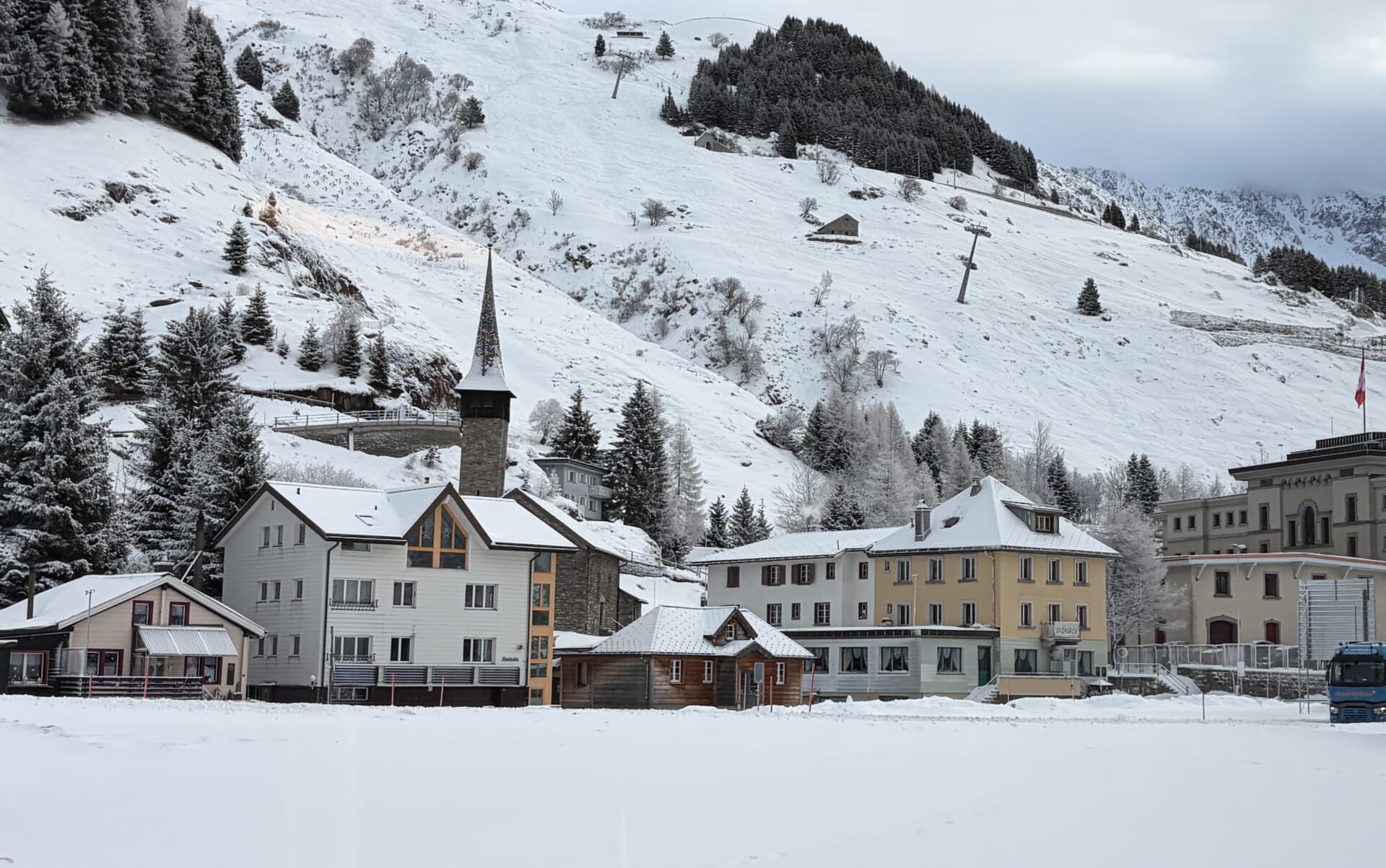
Andermatt
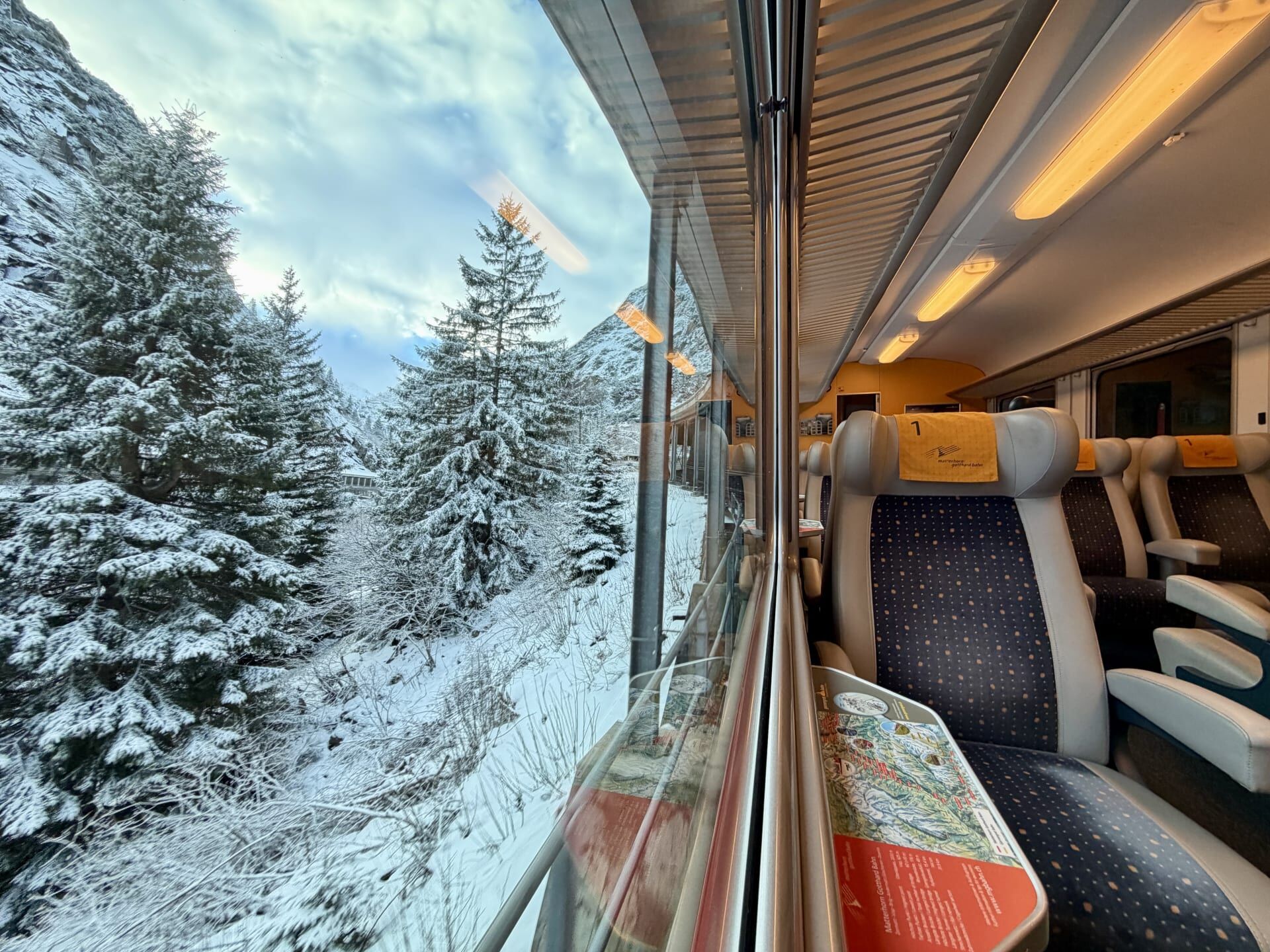
The journey started in Andermatt which I had reached by train from Chur. For the best views when travelling from Andermatt to Göschenen, I recommend sitting on the right-hand side of the train.
Schöllenen Railway
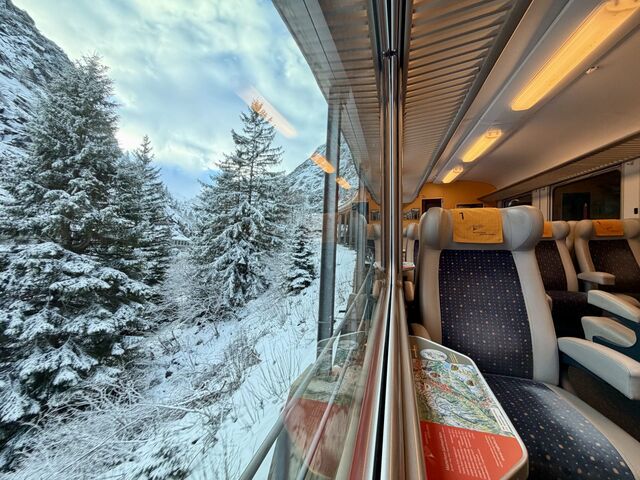
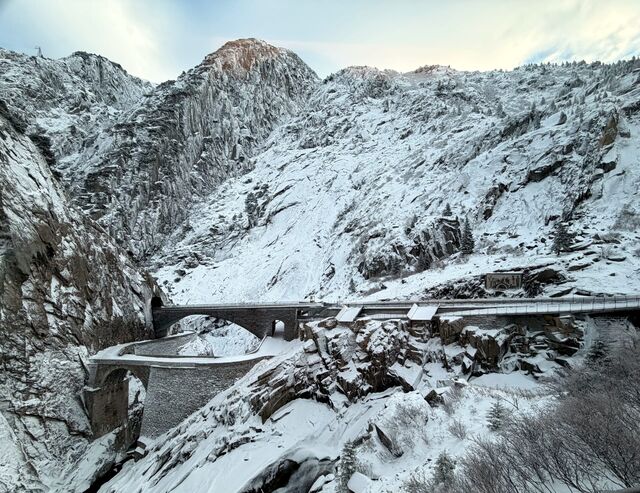
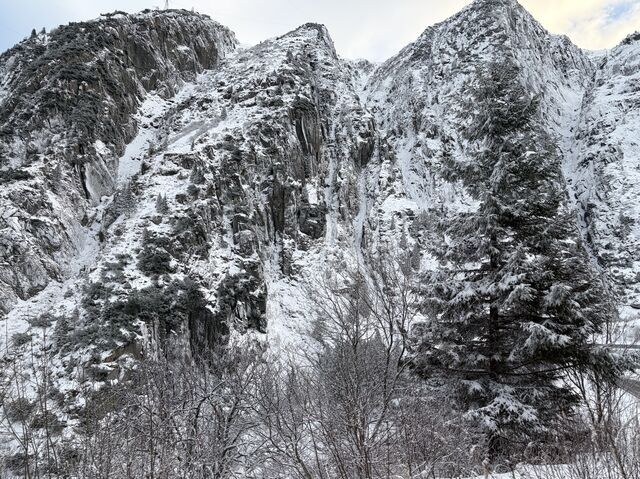
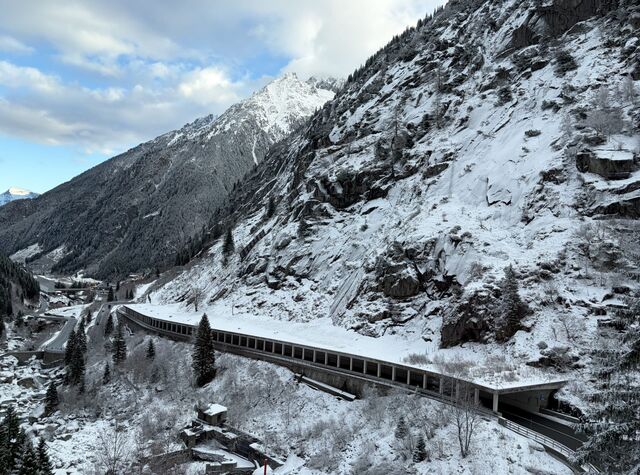
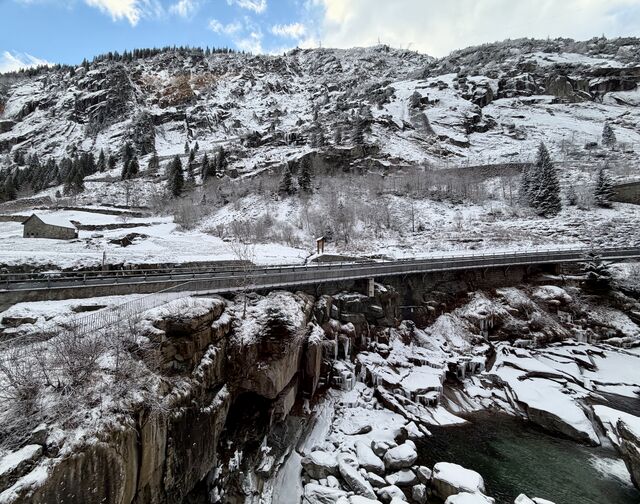
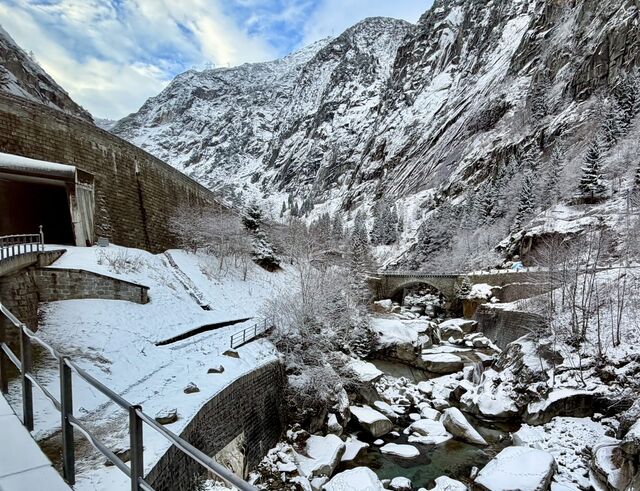
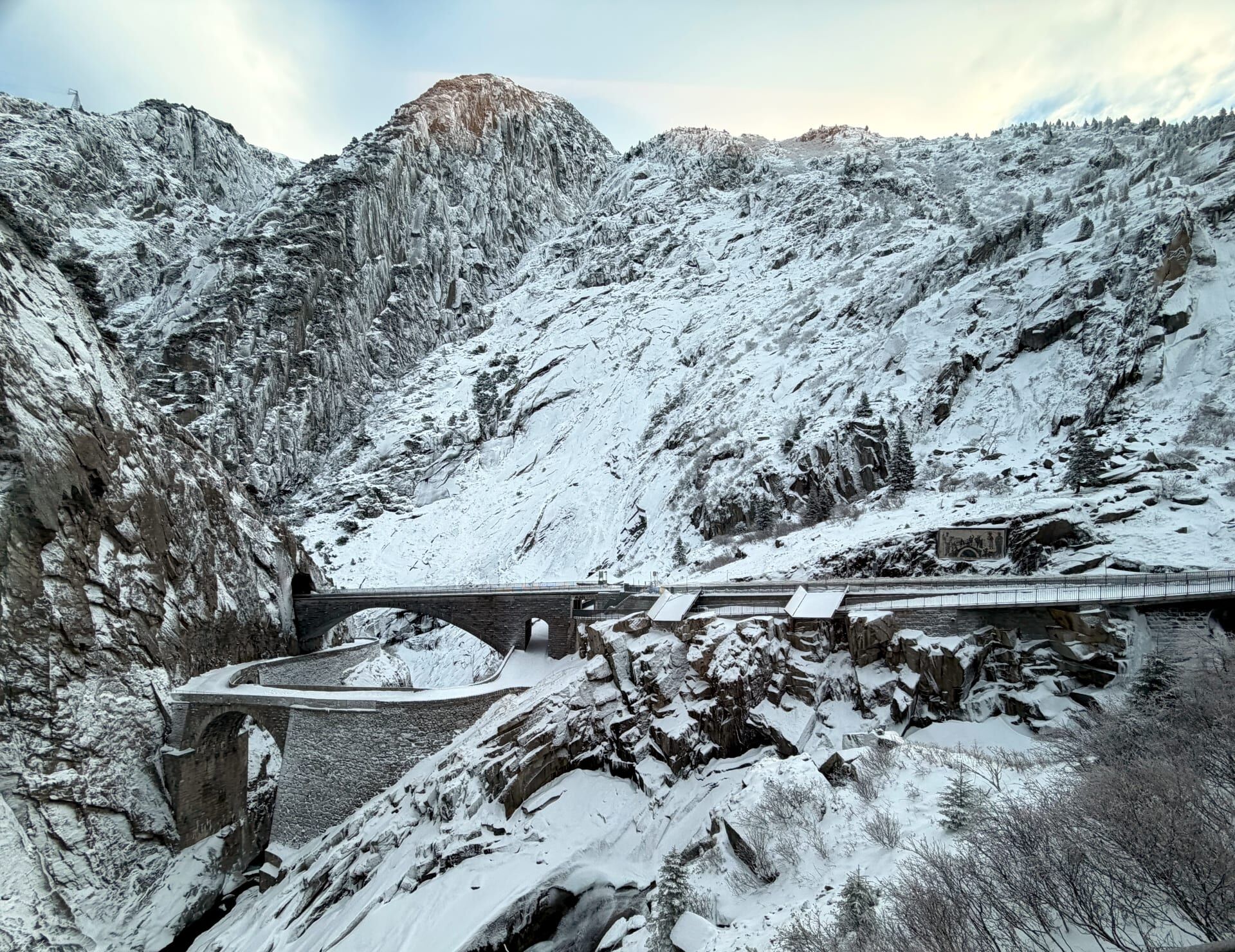
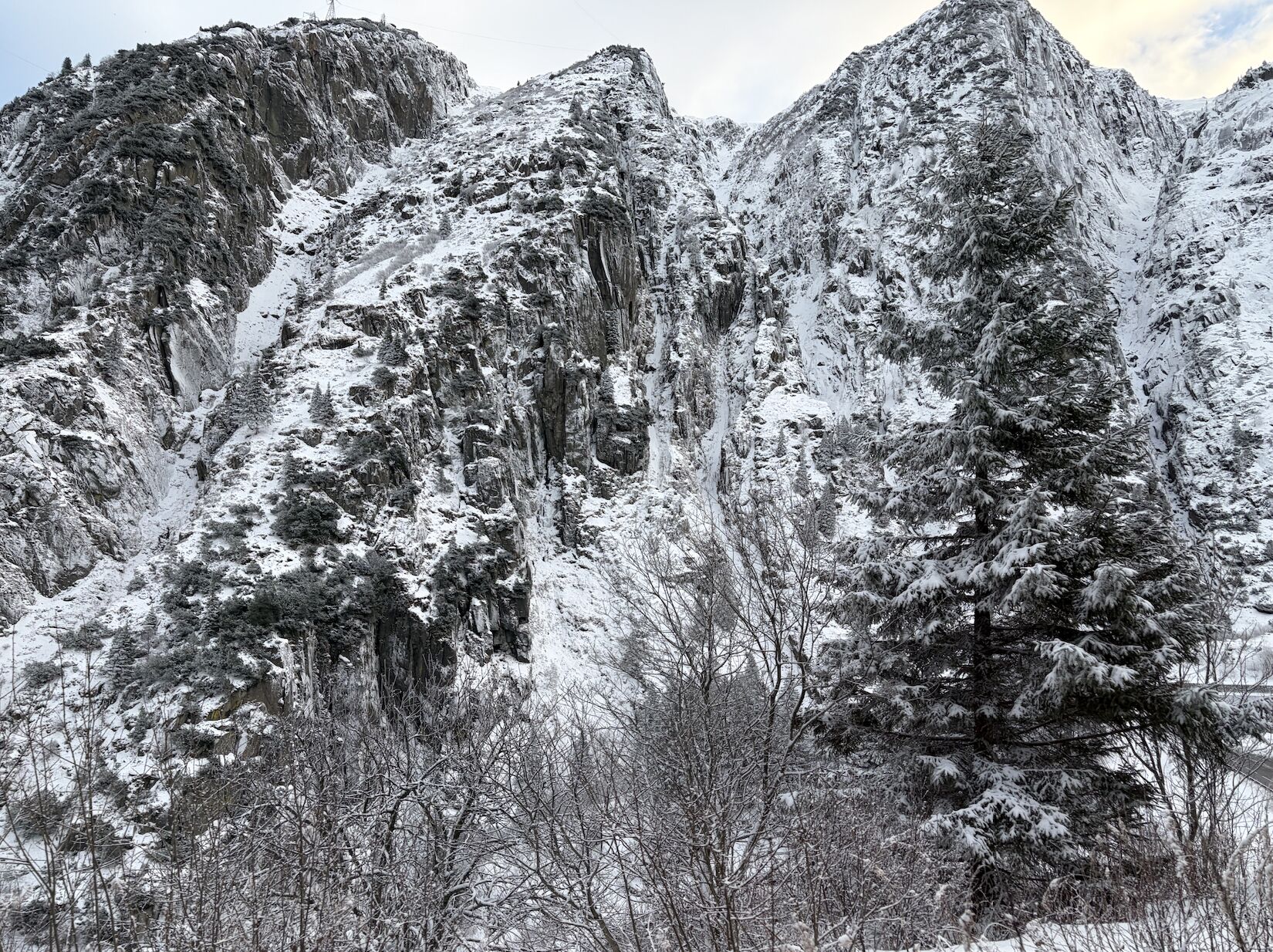
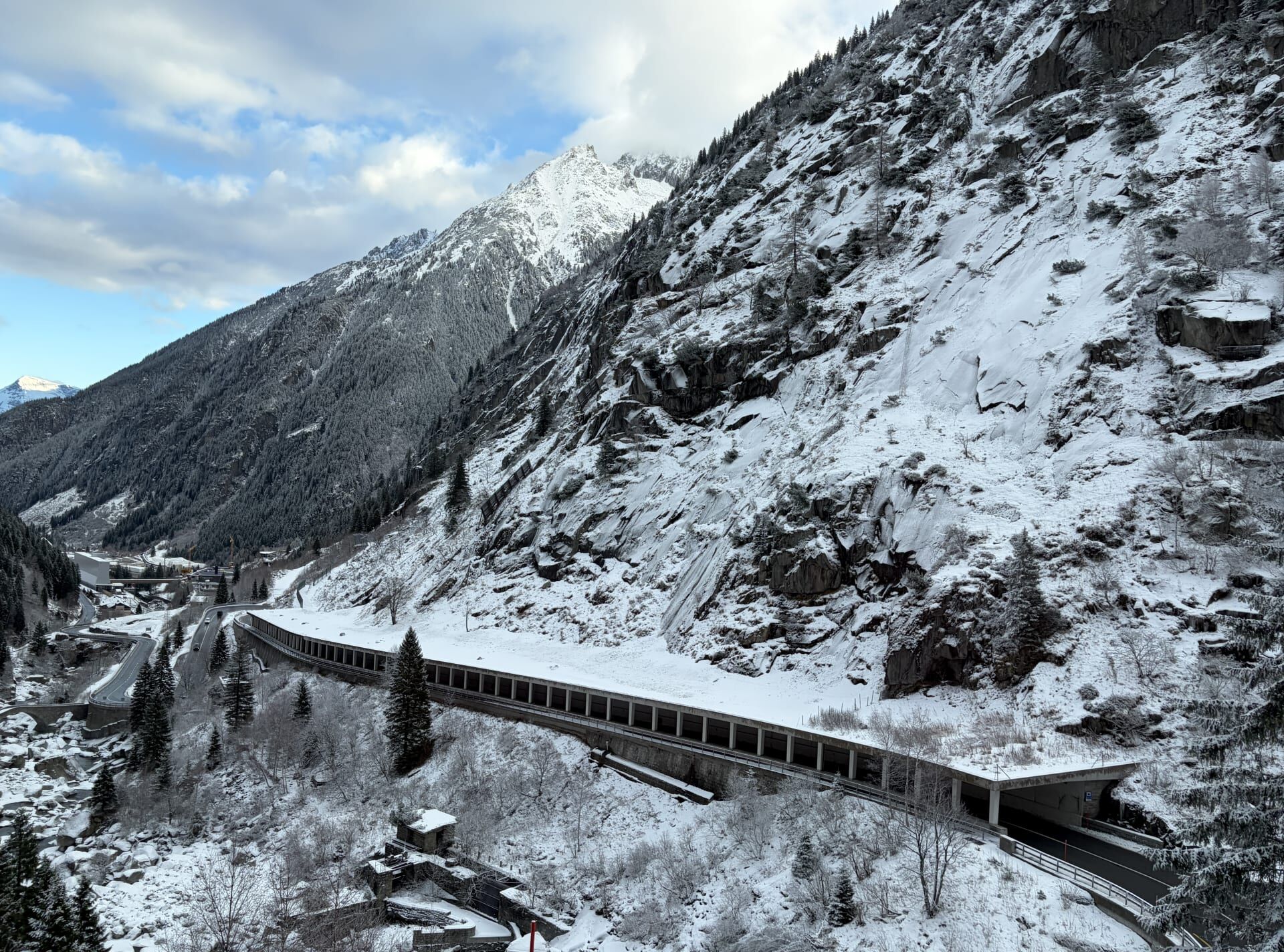
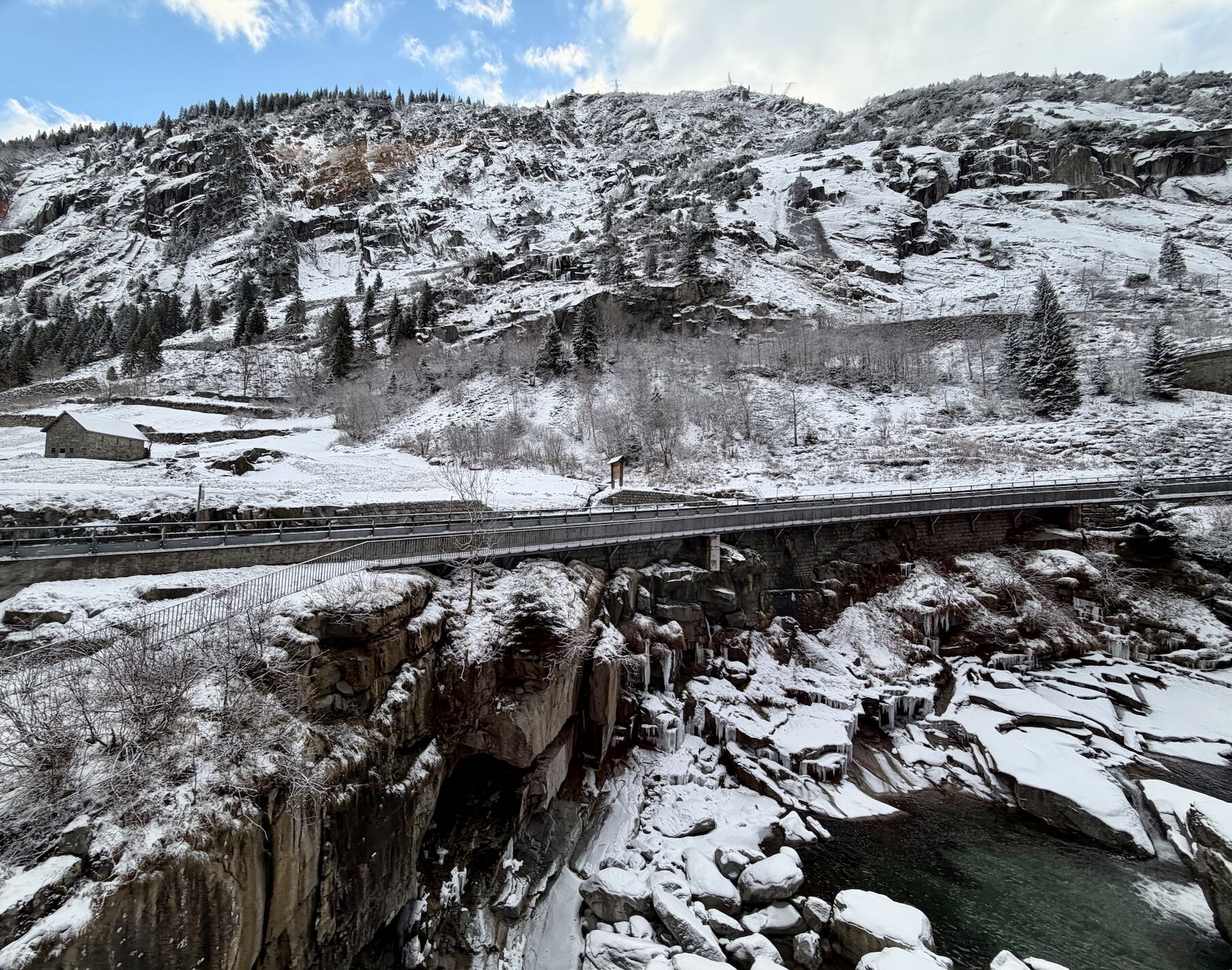
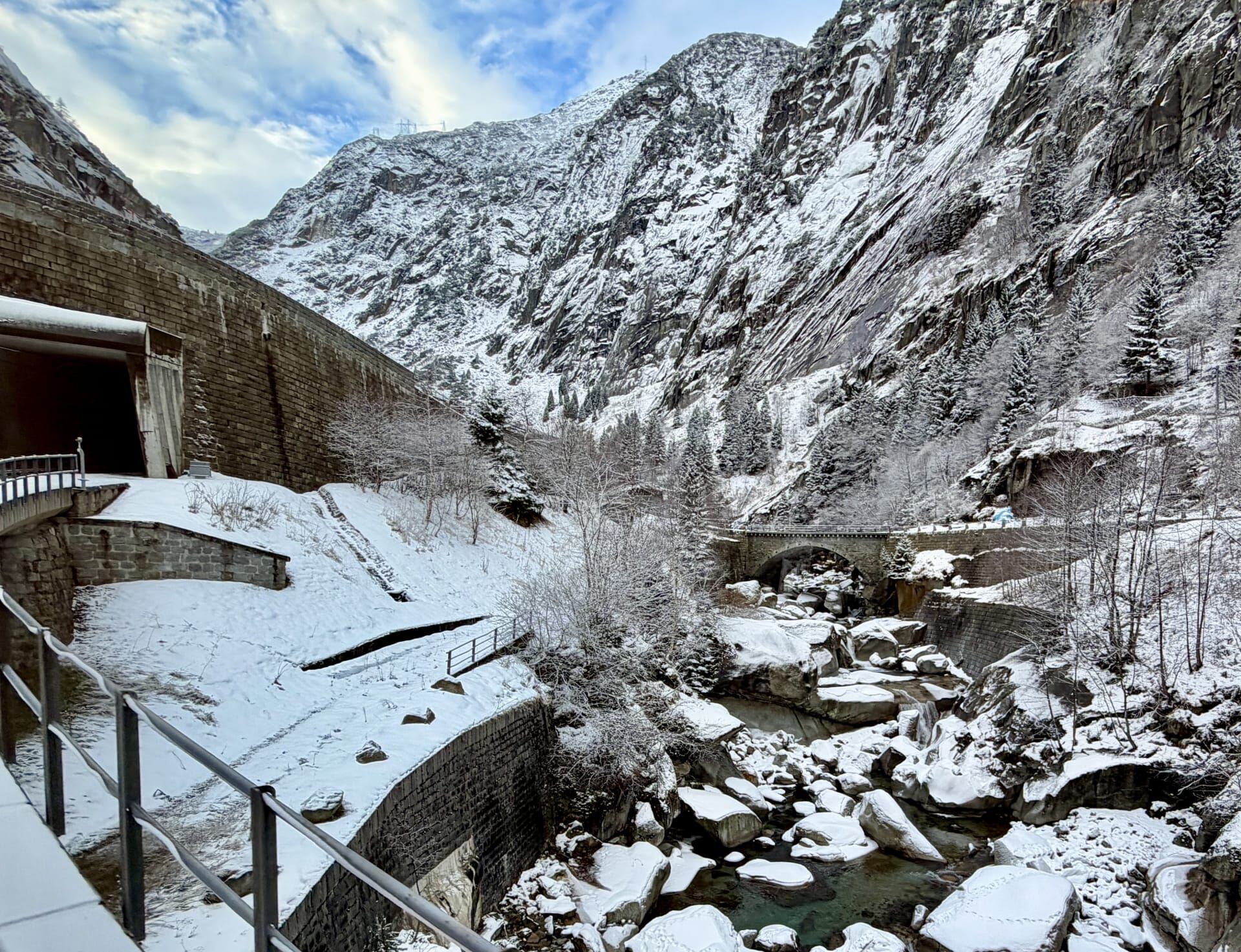
The journey involves a dramatic descent through the narrow Schöllenen Gorge and its towering rock walls. Over 1 kilometre of the railway’s 3.8 kilometre route passes through protective avalanche galleries.3 The most notable landmark en route is the famous Teufelsbrücke (Devil’s Bridge). In medieval times, the treacherous Schöllenen Gorge posed a deadly obstacle for travellers and merchants navigating the Gotthard Pass. According to legend, after repeated attempts by local villagers to build a bridge were thwarted by floods and wild conditions in the gorge, they turned to the Devil for help. In 1230, the Devil agreed to build the bridge in exchange for the soul of the first person to cross it. The villagers, however, outsmarted him by sending a goat across first.4 While the original bridge is long gone, two subsequent bridges have been built in its place, both of which also became known as the Devil’s Bridge.
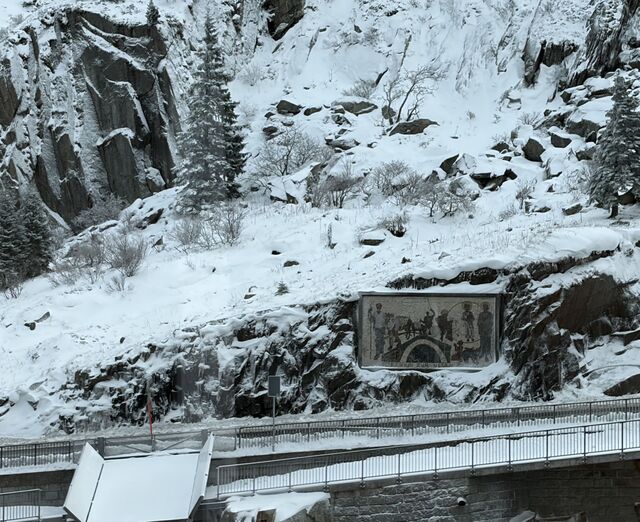
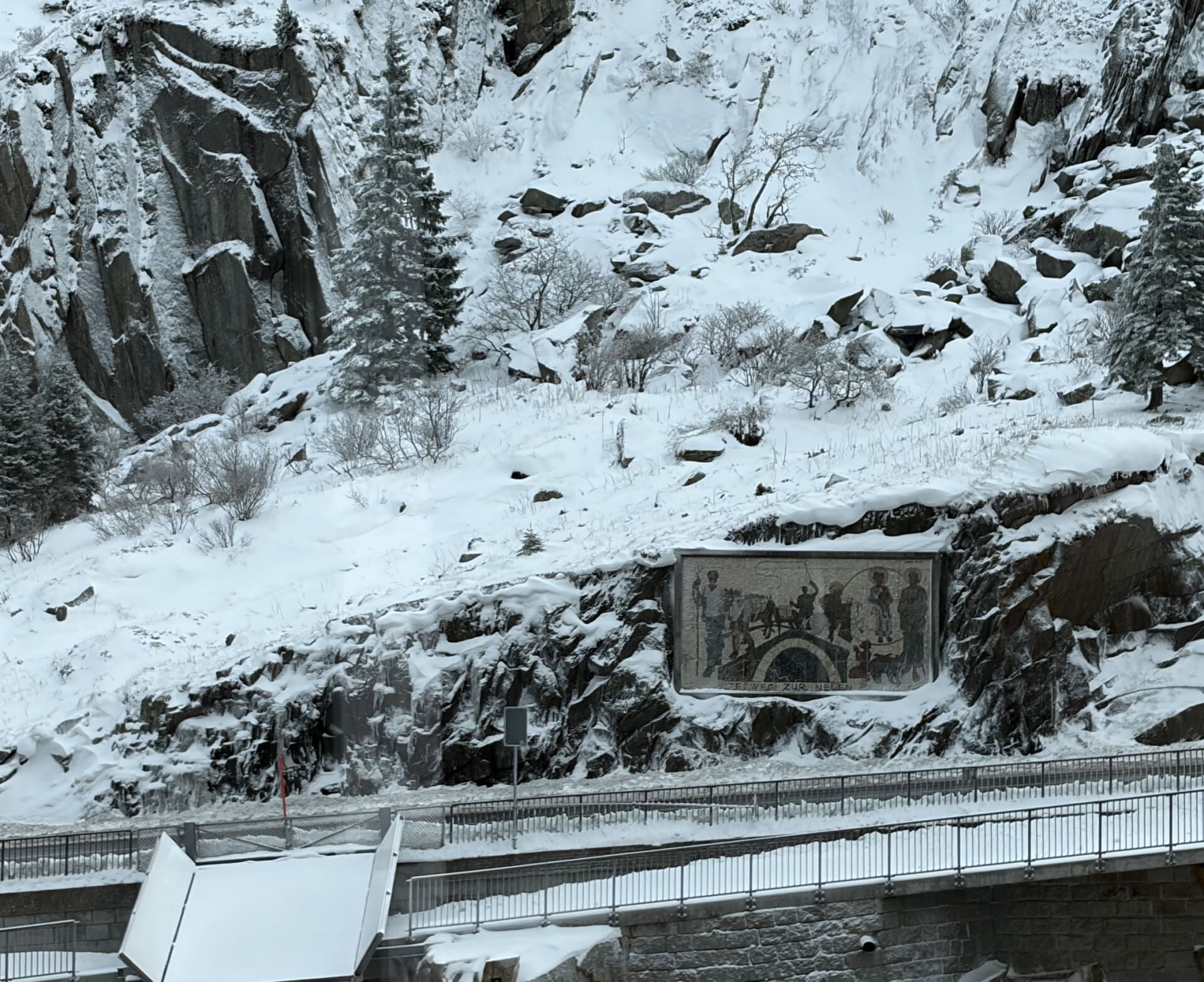
Situated near the Devil’s Bridge is a mosaic (pictured above) titled ‘Der alte Weg zur neuen Zeit’, which translates to ‘The Old Path to the New Era’. Created in 1956, the mosaic depicts the transition from an earlier era, when merchants transported their goods across the Alps along mule tracks, to the age of modern transport and the development of the Gotthard Tunnel.
Göschenen
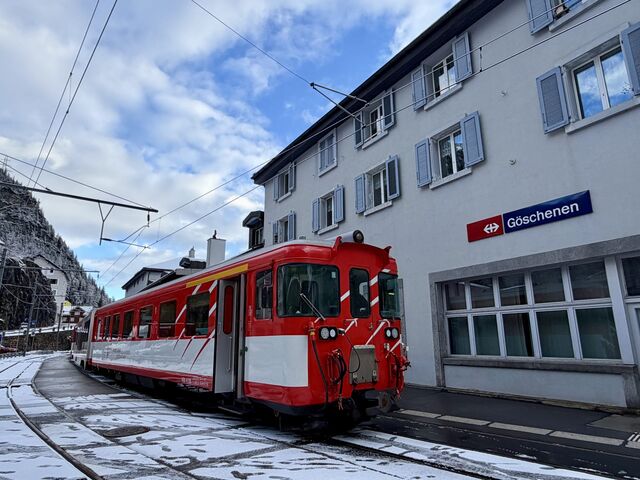
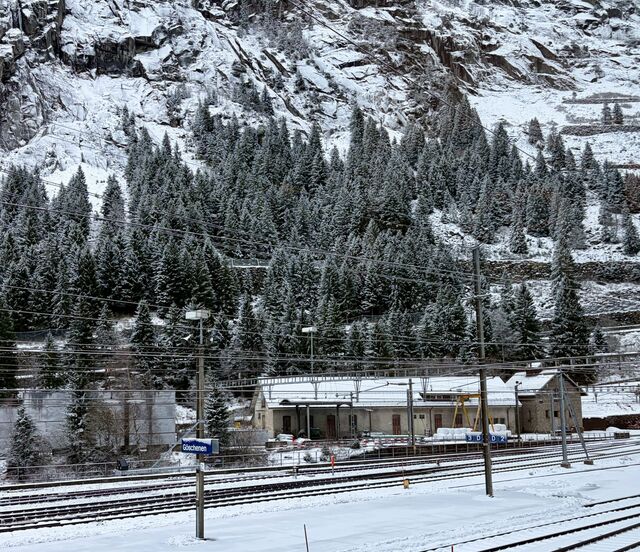
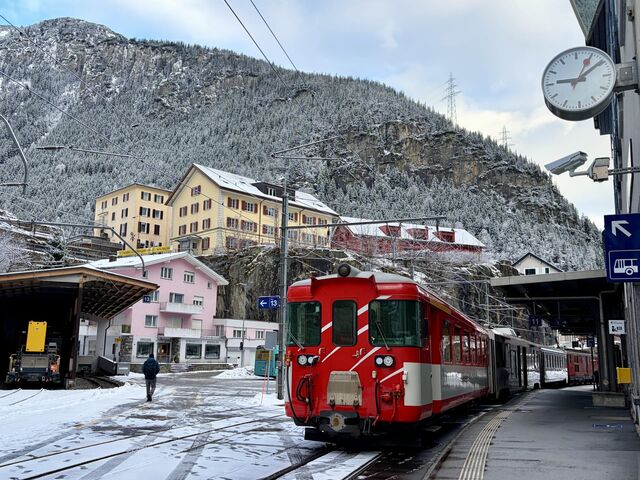
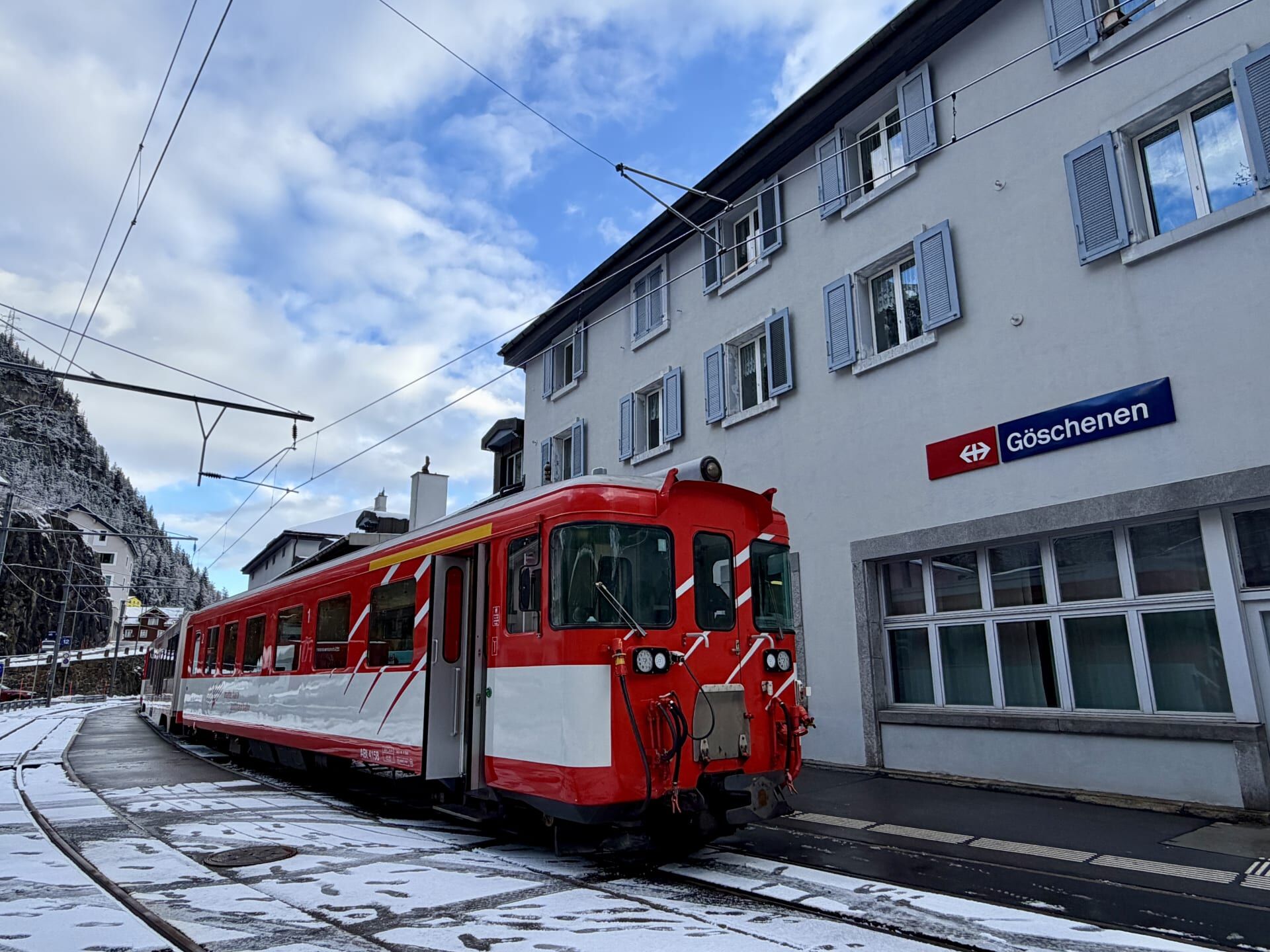
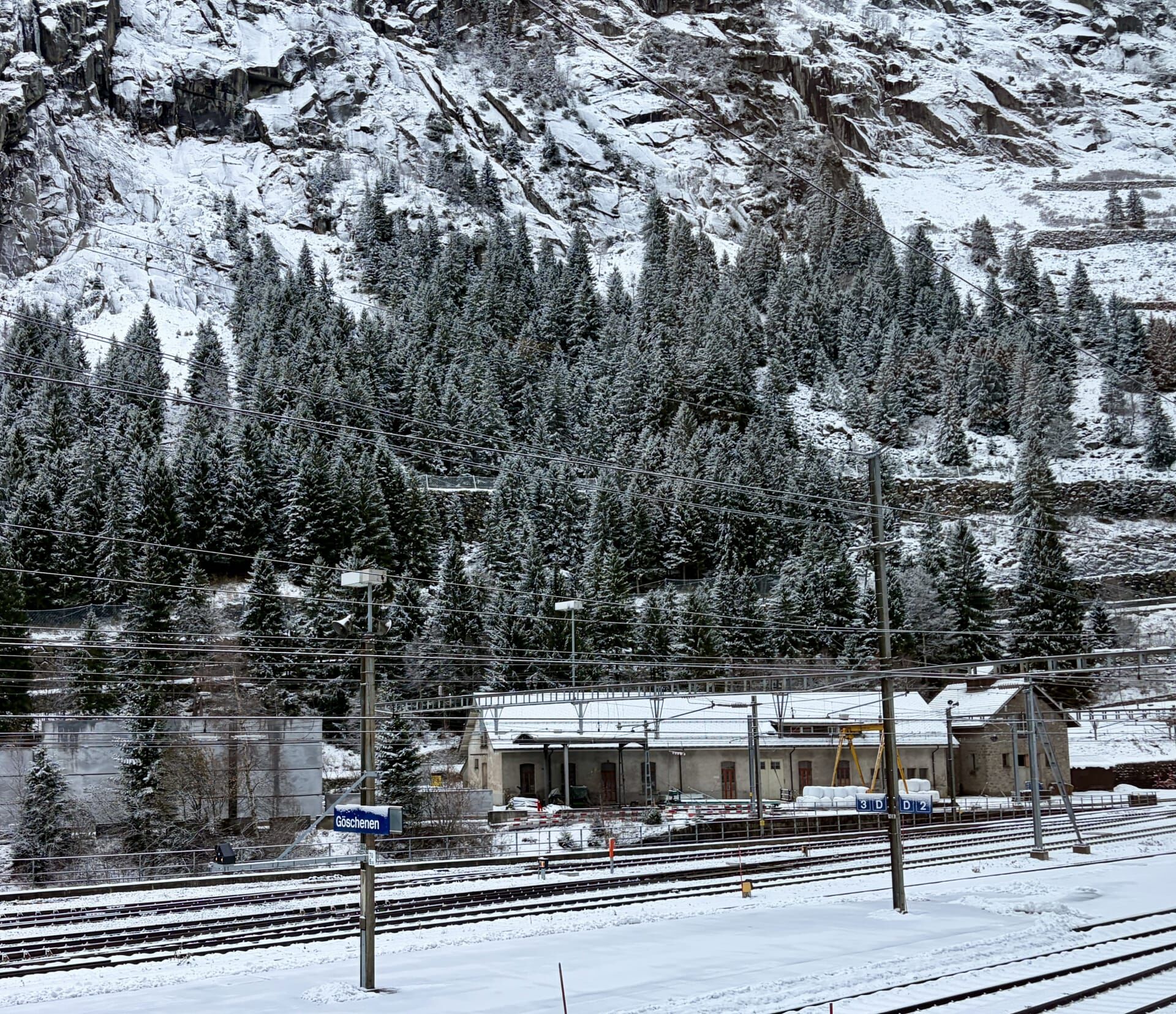
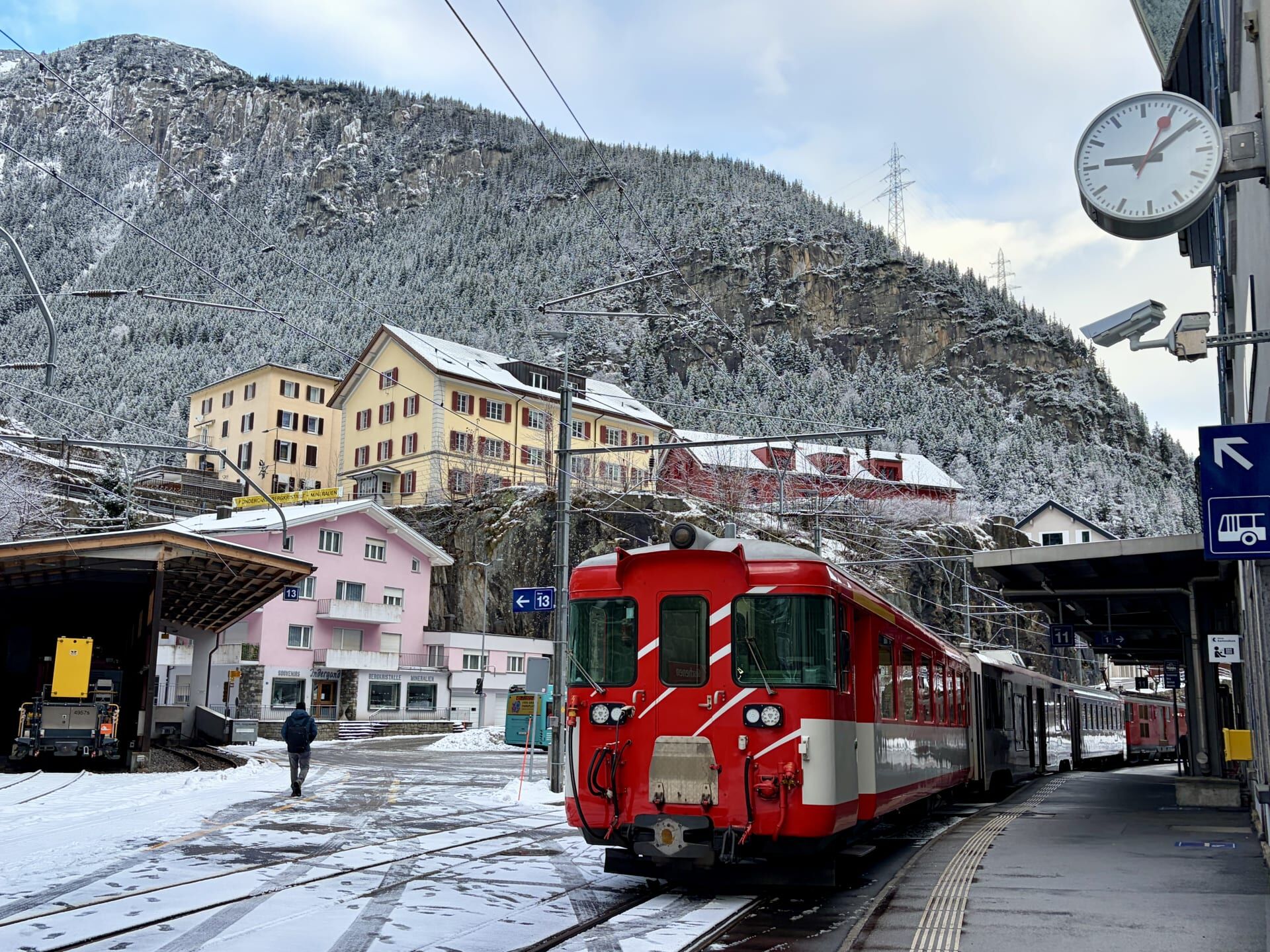
After a 15 minute journey, we arrived in the village of Göschenen, where I boarded a return train back to Andermatt. Göschenen is notable for its riots of 1875, where troops opened fire on Italian miners who were striking for better working conditions and higher wages during the construction of the Gotthard Tunnel.5
SRF Swiss Radio and Television, ‘A train has been running through the Schöllenen Gorge for 100 years’ (online, 13 July 2017). ↩︎
Ibid. ↩︎
Ibid. ↩︎
Anthony Lambert, Switzerland: A guide to exploring the country by public transport (Brandt Travel Guides, 7th ed, 2023) 323. ↩︎
Hansjürg Zumstein, SRF Swiss Radio and Television, ‘A secret report exposed the exploitation at the Gotthard Pass’ (online, 10 December 2016). ↩︎