My Route
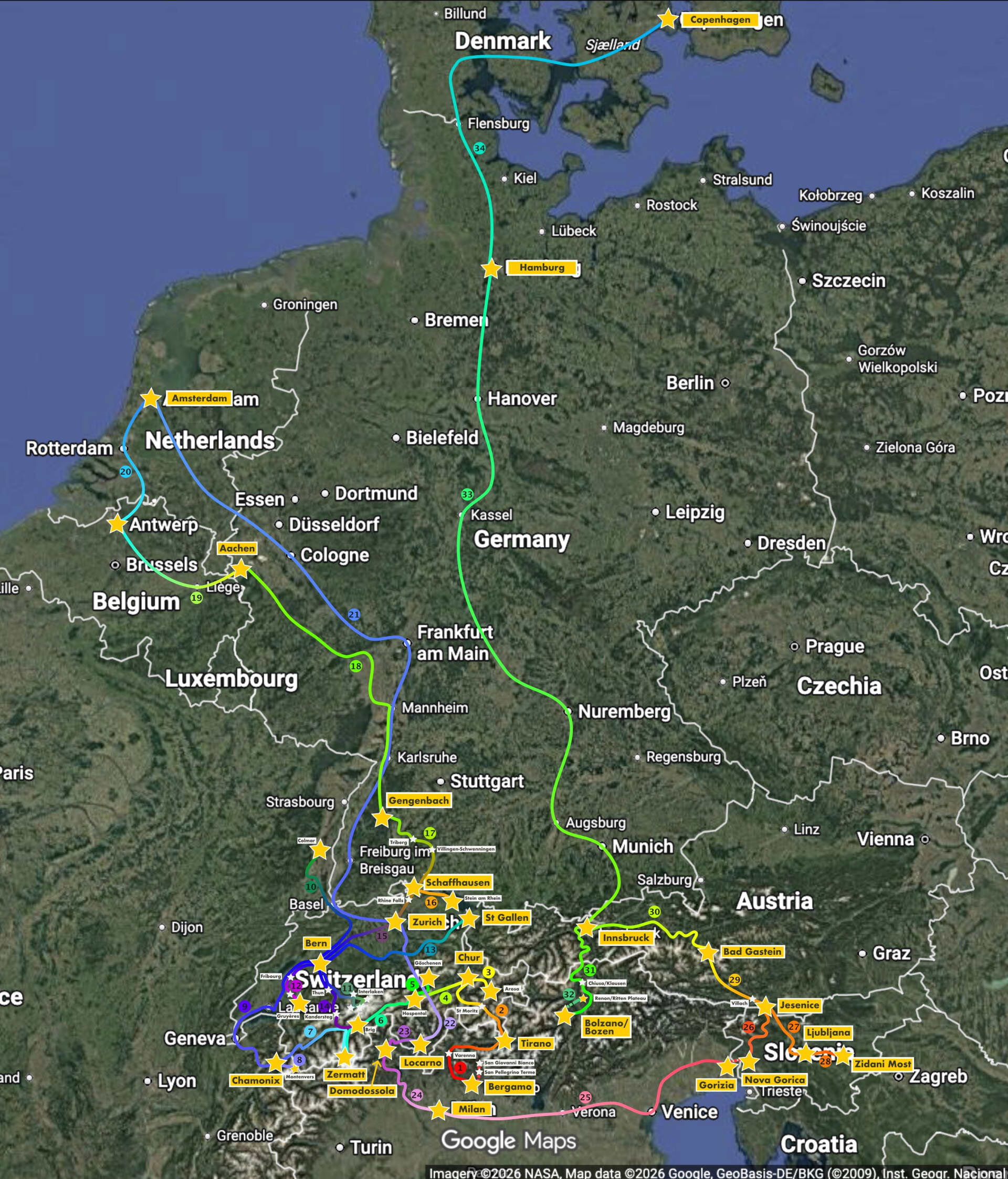
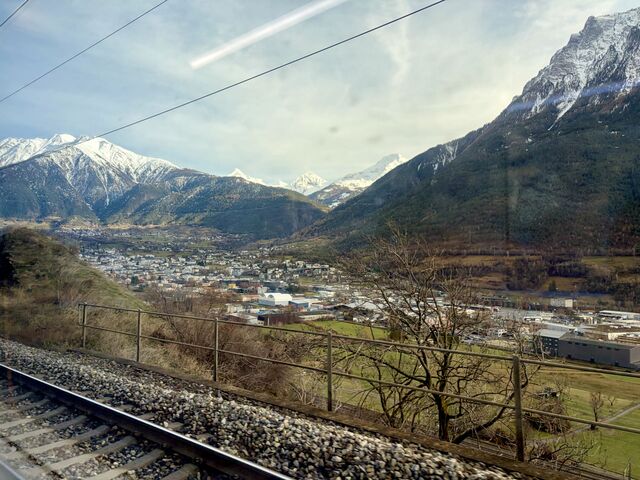
In November–December 2025, I travelled approximately 6,700 kilometres around Europe on 100 different trains. For this adventure, I purchased a 22-day Eurail pass and spent a total of around 112 hours on the rails, which works out to be between 4.5–5 hours per day on trains. While this might not be everyone’s idea of a holiday, I can’t imagine a better way to spend my time. The route for my journey is shown below and I will be posting about each segment over the coming months.
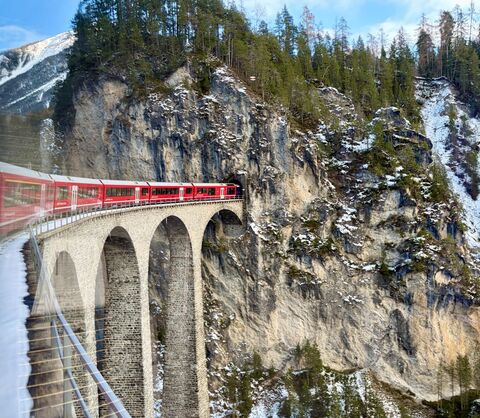
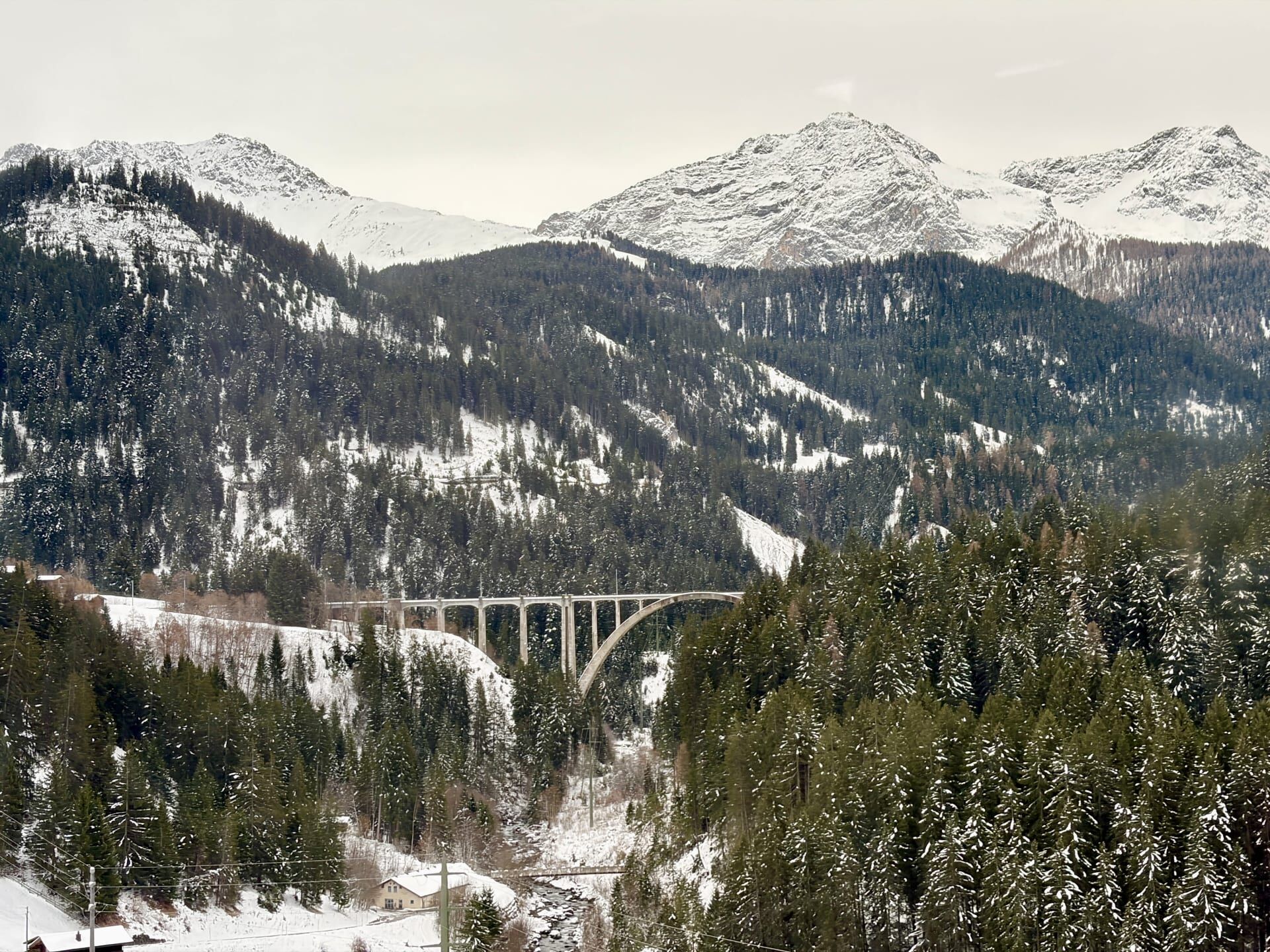
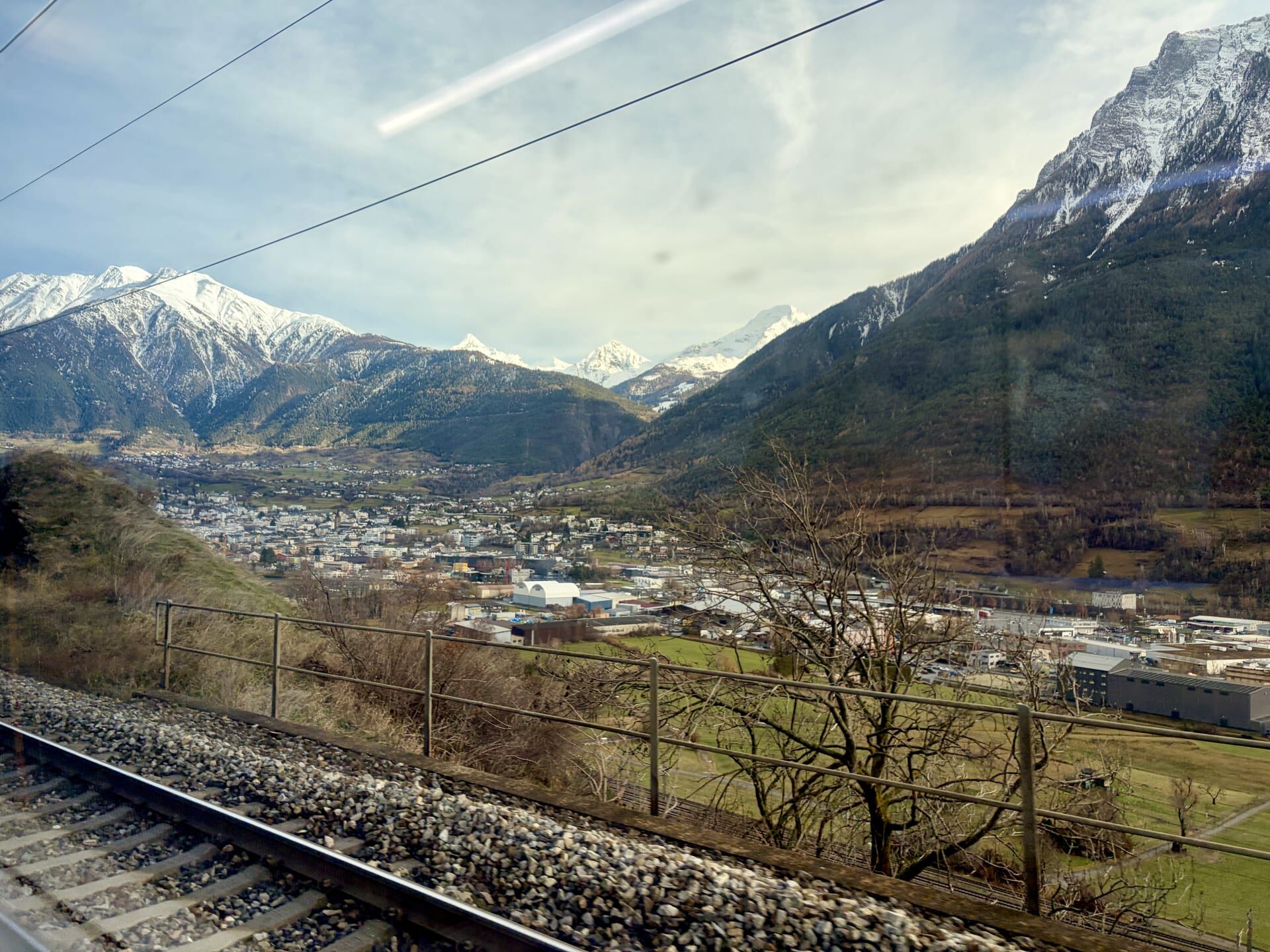
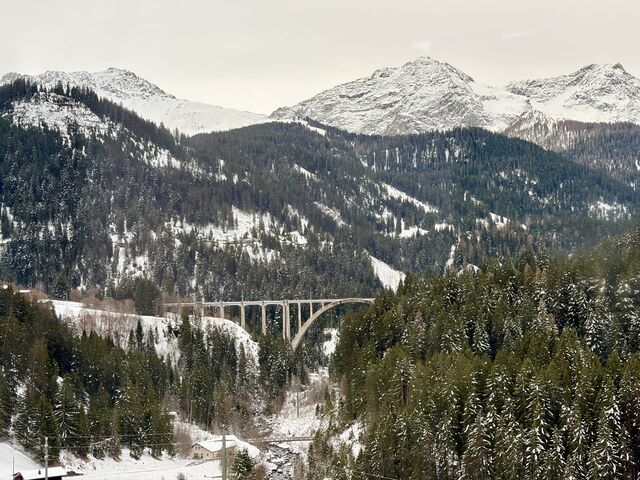
As part of my journey, I travelled on a number of well-known (and lesser-known) scenic rail routes, many of which I had been wanting to take for a very long time. These included:
- Tirano–Lecco Railway (Italy)
- Bernina Railway (Italy–Switzerland) and Albula Railway (Switzerland)
- Arosa Railway (Switzerland)
- Glacier Express Route (Switzerland) (Rhaetian & Matterhorn Gotthard Bahn Railways).
- Schöllenen Railway (Switzerland)
- Mont-Blanc Express (Switzerland–France)
- Montenvers Railway (France)
- Lake Thun Railway (Switzerland)
- Wengernalp Railway (Switzerland)
- Voralpen-Express (Switzerland)
- Lötschberg Railway (Switzerland)
- Rheinfall Railway (Switzerland)
- Black Forest Railway (Germany)
- Rhine Valley Railway (Germany)
- Gotthard Railway (Switzerland)
- Centovalli Railway (Italy–Switzerland)
- Domodossola–Milan Railway (Italy)
- Bohinj Railway (Transalpina) (Slovenia)
- Ljubljana–Zidani Most Line (Slovenia)
- Tauern Railway (Austria)
- Salzburg-Tyrol Railway (Austria)
- Brenner Railway (Austria–Italy)
- Ritten/Renon Railway (Italy)
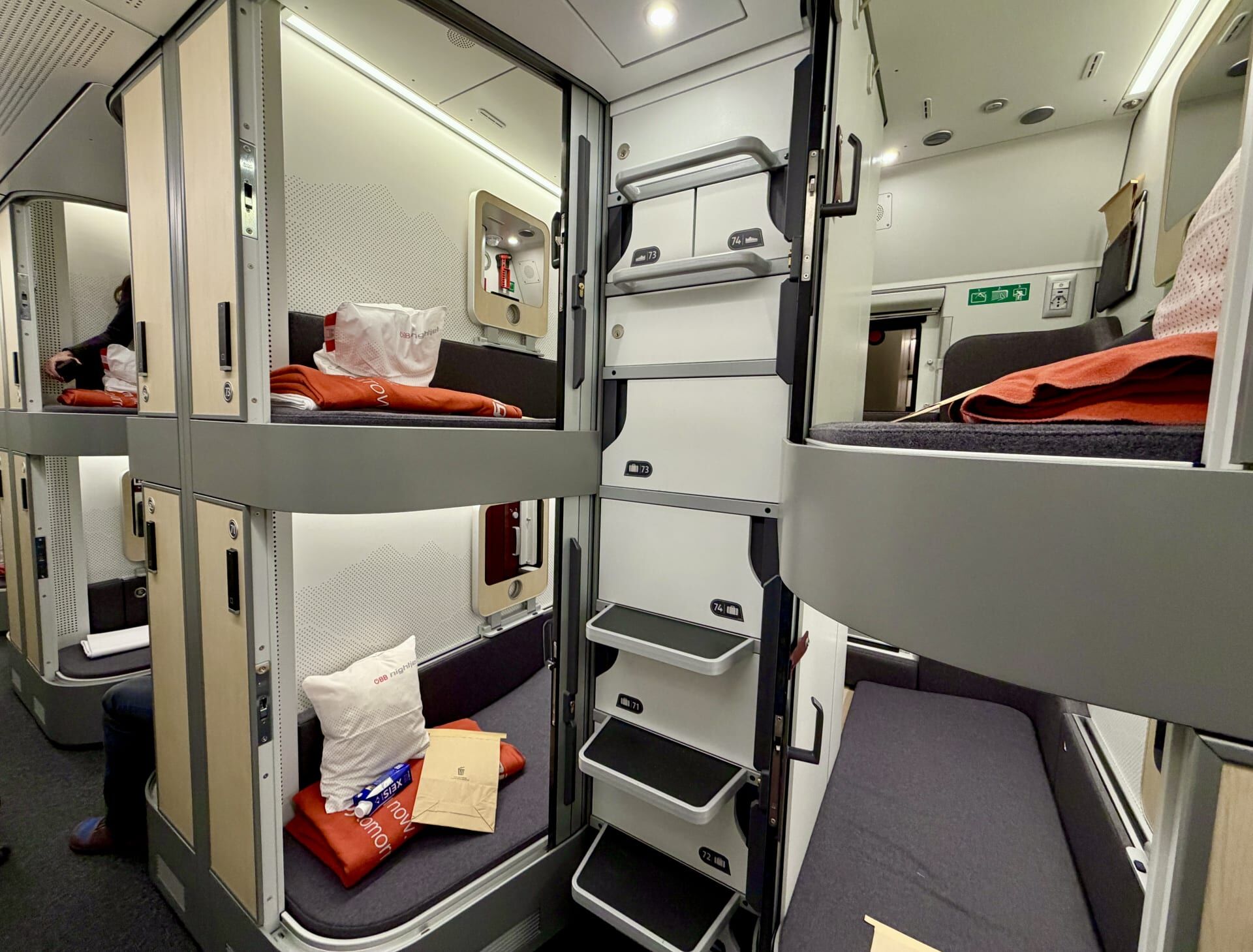
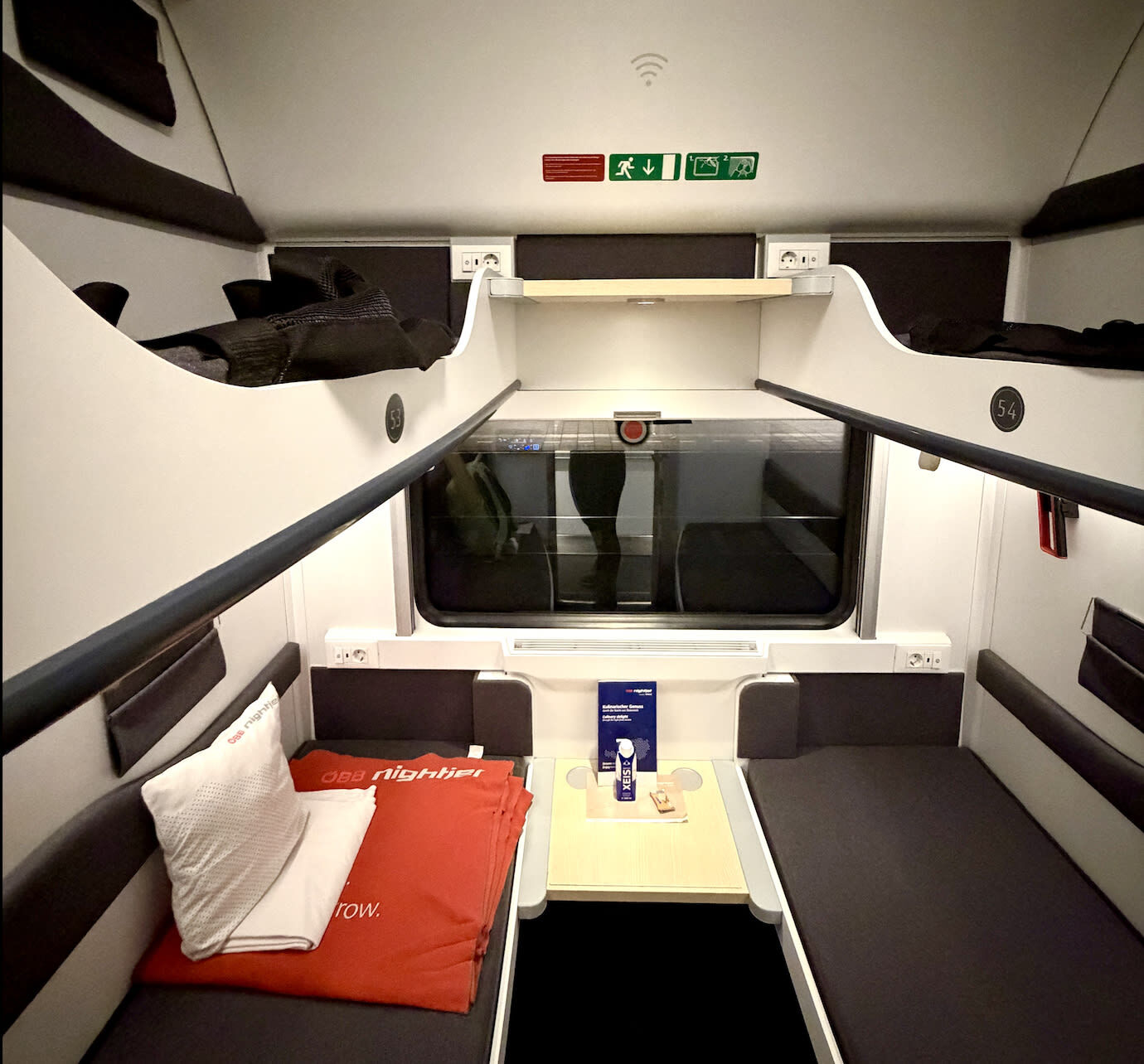
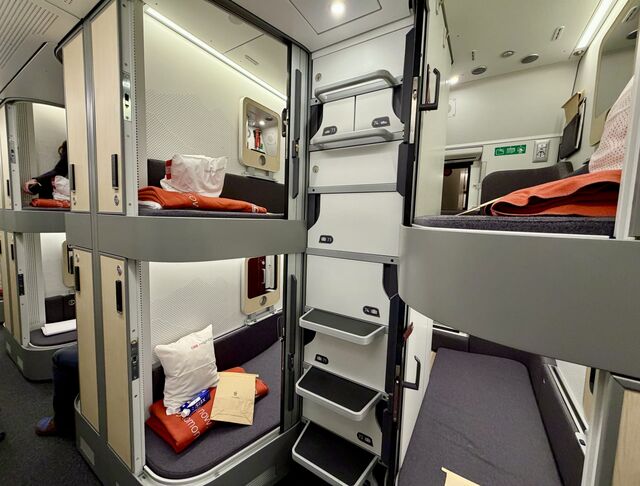
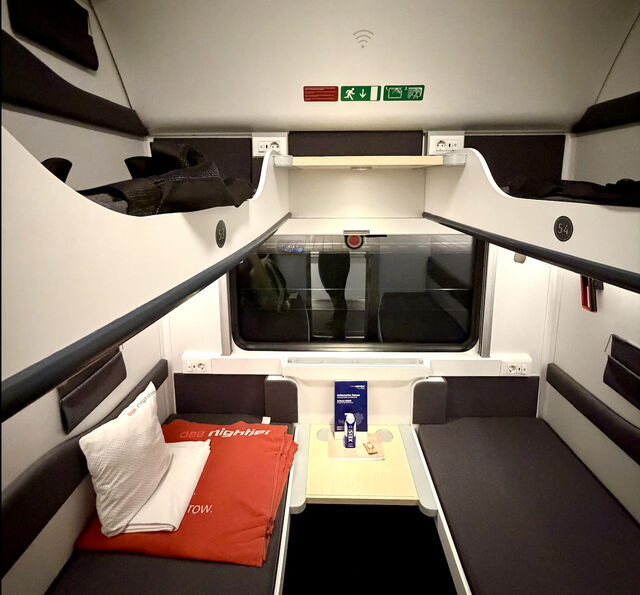
I also had the opportunity to travel in both a Nightjet couchette compartment and a new generation Nightjet mini cabin.
While I had a loose plan for the stops along my journey, one of the joys of travelling with a Eurail/Interrail Pass is that you don’t need to book any trains in advance. I could simply turn up at train stations across Europe and hop on whichever train I felt like taking. There are, of course, some exceptions. Certain high-speed routes require you to book seat reservations, and in some countries (mainly Spain, and on some routes in France), reservations are mandatory on many services. However, I did not take any routes or high-speed trains that would require bookings. Most of my accommodation was booked in advance, but with free cancellation until 6PM on the day of arrival, which is often possible through sites such as Booking.com. This flexibility allowed me to change my route whenever I wanted, and in those instances, finding an affordable last-minute hotel was never a problem.
Is a Eurail/Interrail Pass worth it?
Cost-wise, whether a Eurail/Interrail Pass is worth it can depend on the countries you’re travelling in. In Eastern Europe, for instance, train fares are often very affordable, so buying individual tickets will often work out cheaper. For my journey through Western and Central Europe, however, I saved a significant amount of money by purchasing a pass. Had I bought tickets individually, I would have spent more than the cost of my 22-day pass in just two days of train travel in Switzerland alone! To be sure, these were fairly long 5+ hour cross-country travel days. Even so, Swiss trains in particular are so expensive that a rail pass will almost always be worthwhile. The pass also covers many night trains, allowing you to sleep on board, and if you choose to upgrade to a sleeper cabin or couchette carriage, the pass will provide significant discounts (often 50%). It’s also worth noting that Eurail/Interrail run sales several times a year, and I was able to purchase my pass at a significant discount.
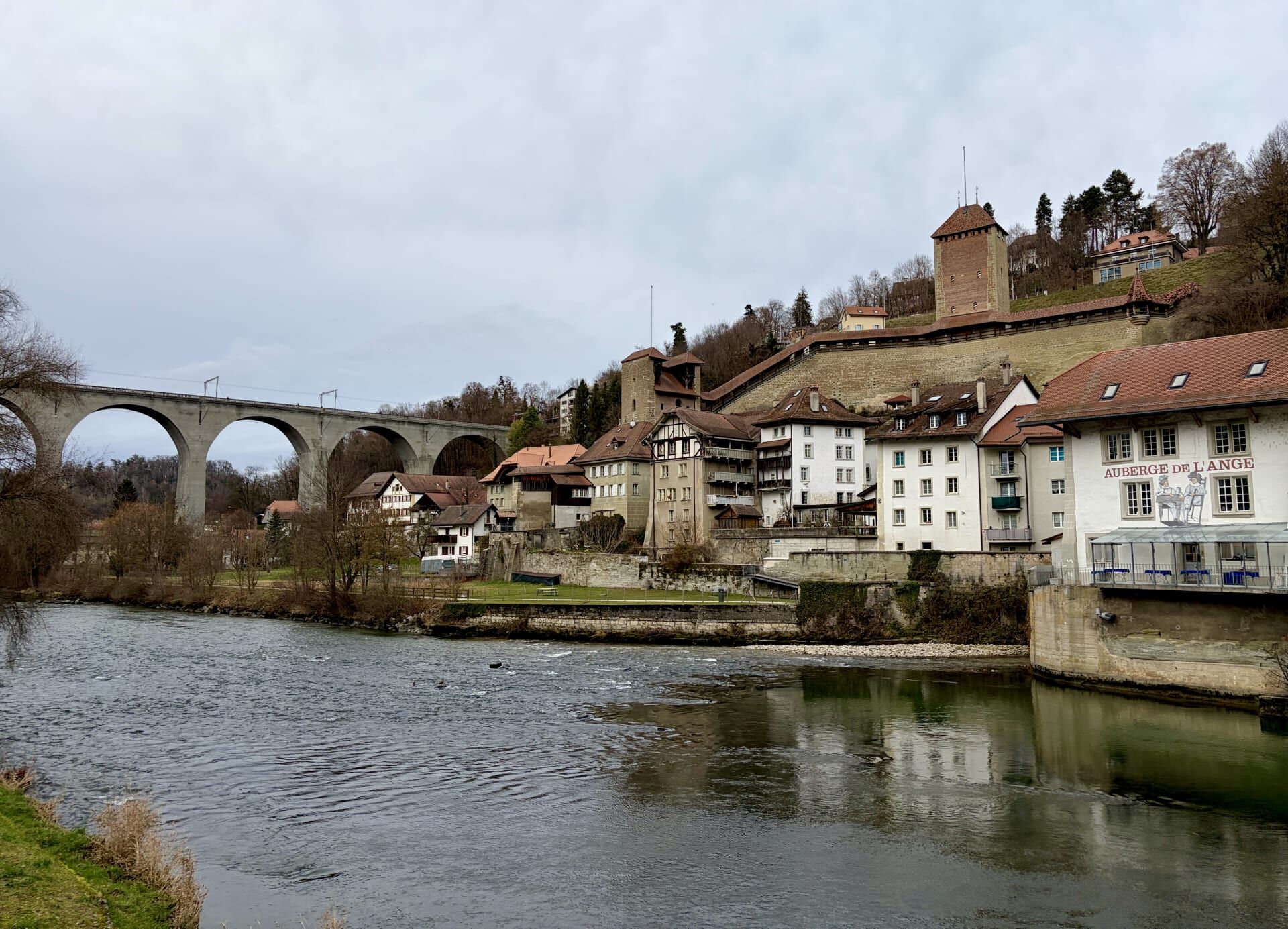
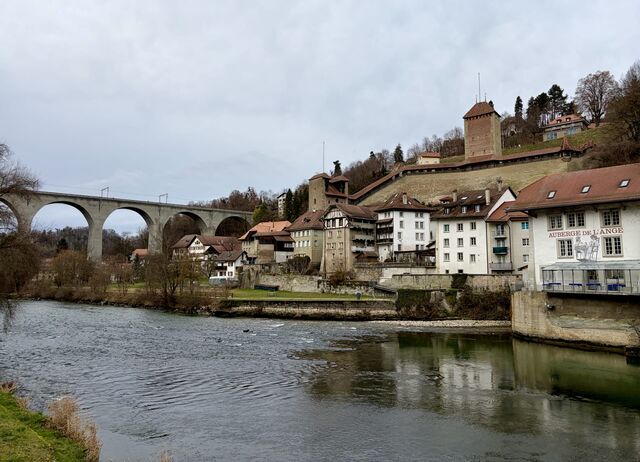
Cost savings aside, I think the best reason to get a rail pass is the flexibility it offers. As mentioned before, there’s no need to book trains in advance, so you can simply turn up at the station and board whichever train you want. For part of my trip, I based myself in Bern for 6 days and decided each morning which rail journey to take, based on the weather in different parts of the country. Having a pass also allows you to alight whenever you want, such as when an interesting place catches your eye out the train window, knowing you can simply hop back on any other train at a later stage. This meant, for instance, that when changing trains in Fribourg, I was able to spontaneously decide to explore the city for a few hours, before continuing my journey later, on any train I wanted.
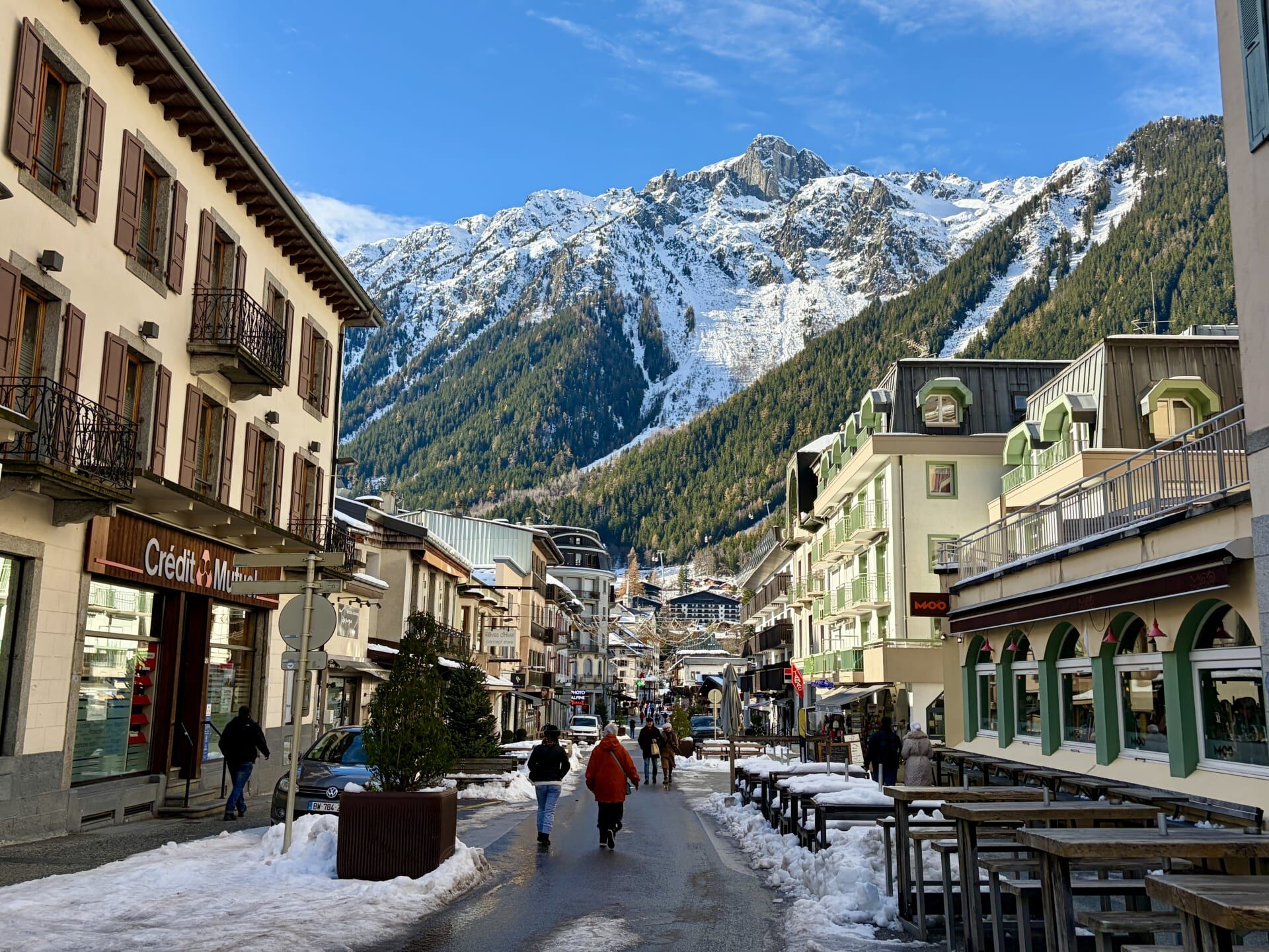
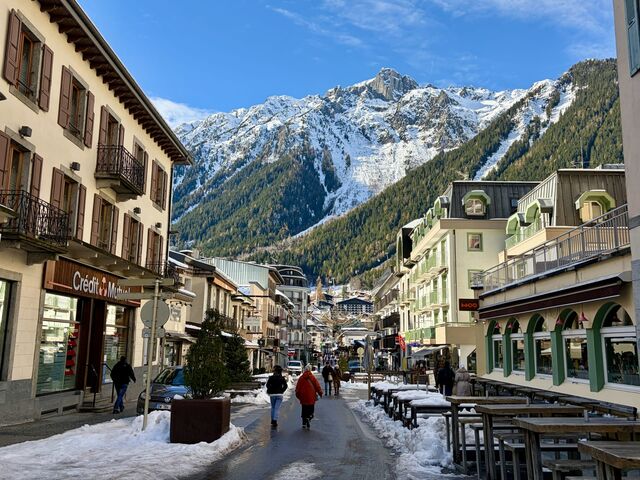
Not having to worry about train bookings also makes it easy to change your itinerary (provided of course your accommodation bookings are also flexible or you arrange this at the last minute). For example, when I was really enjoying my time in Chamonix, France, I was able to easily stay an extra day. Or, when I wasn’t particularly enjoying Domodossola in Italy where I had planned to stay the night, I was able to just head back to the station and travel onwards with no problem.
In my view, having a rail pass also reduces stress. There’s no need to be at a station or platform at a particular time and if you miss a connecting train, it’s not a big deal, you can just catch the next one or take a different route, without having to worry about whether your existing ticket is still valid.
Upgrading to a First-Class Pass
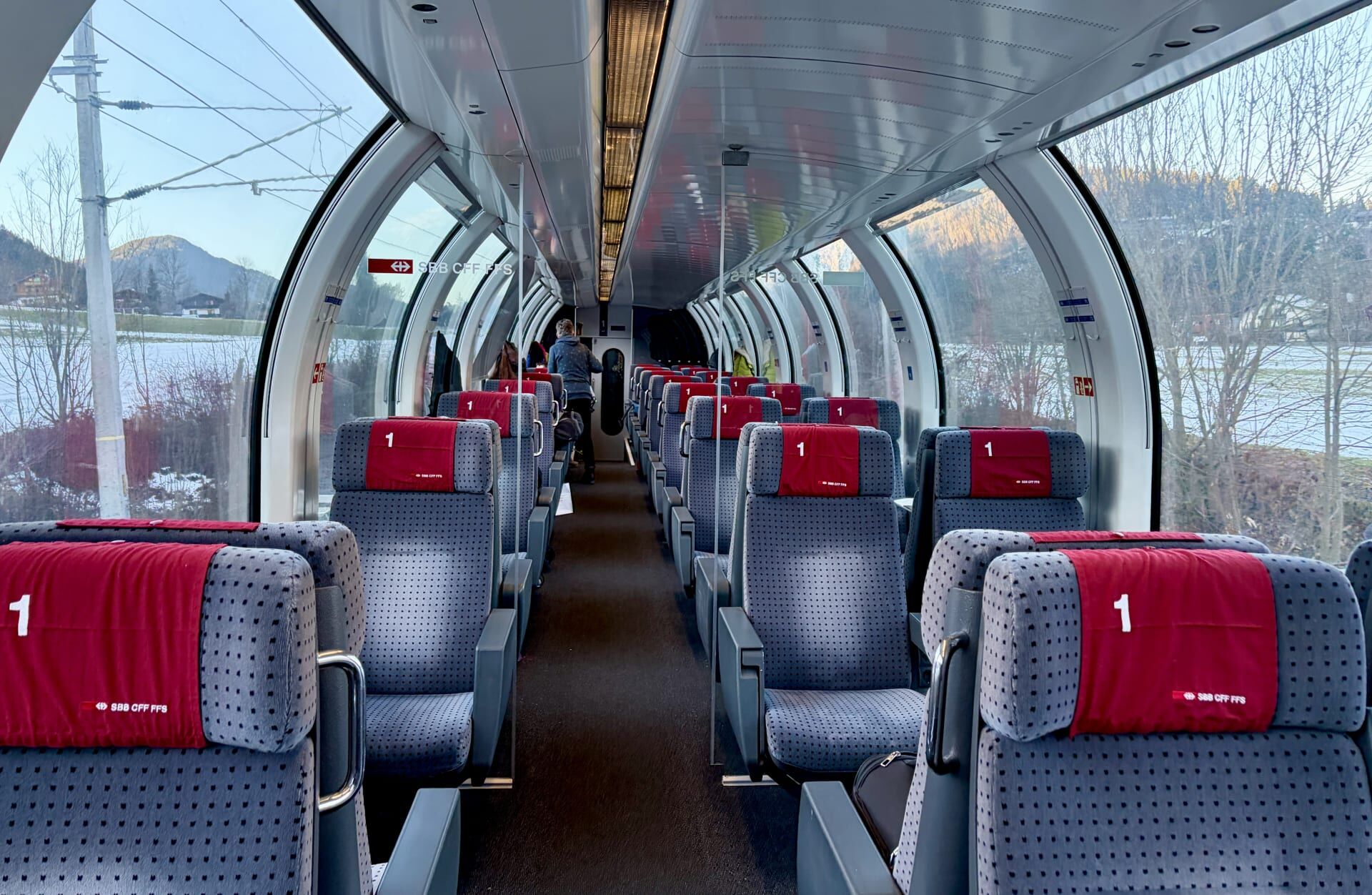
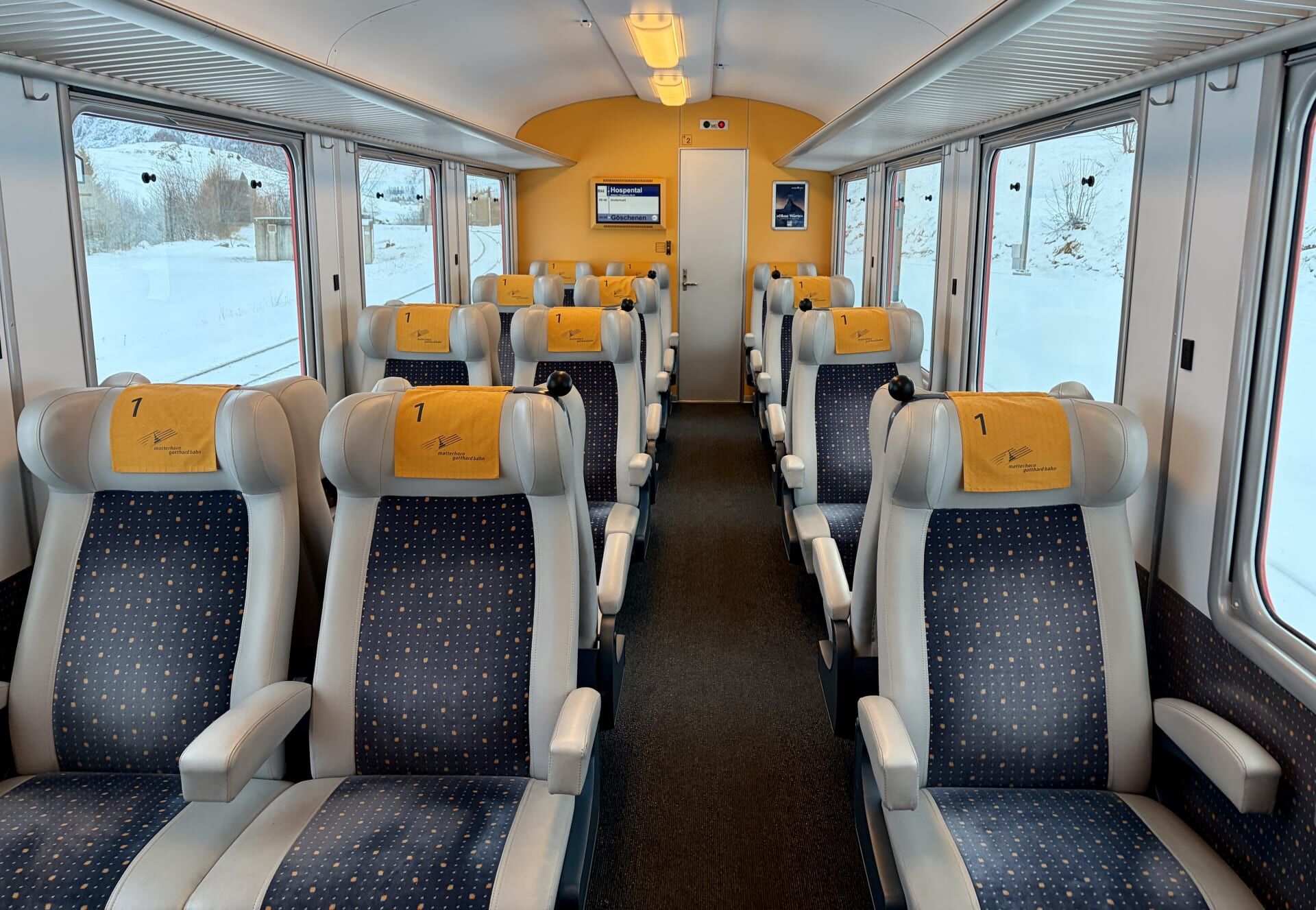
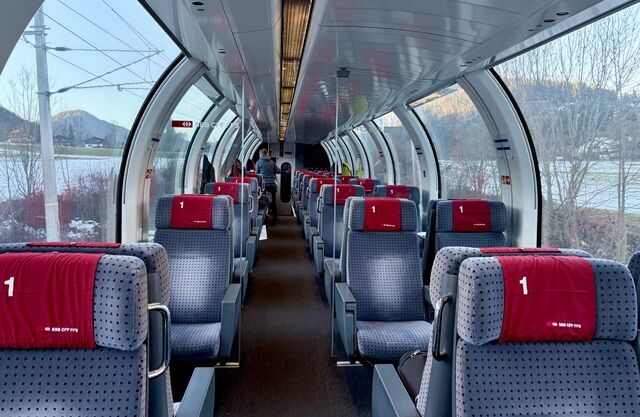
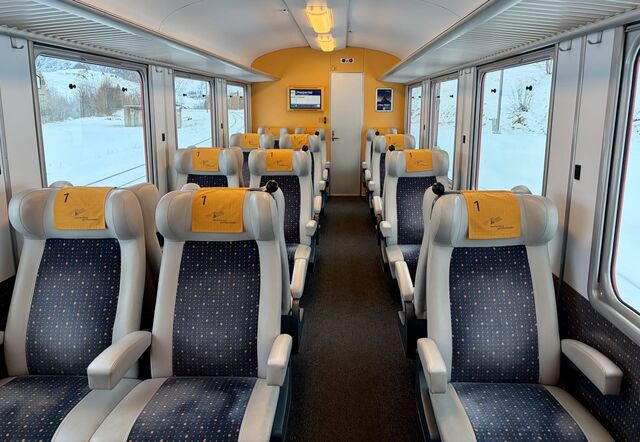
Usually, a first-class pass costs about 20-30% more than a second-class pass. In my opinion, it’s absolutely worth upgrading if your focus is on the train routes themselves. The first-class carriages are typically very empty, or at least significantly quieter than second class. You’re basically guaranteed a window seat, as well as the freedom to move easily from side to side to capture photos from both sides of the train. However, if you are riding the trains to simply get from point A to point B and you are not particularly interested in the journeys themselves, then upgrading is not necessary.
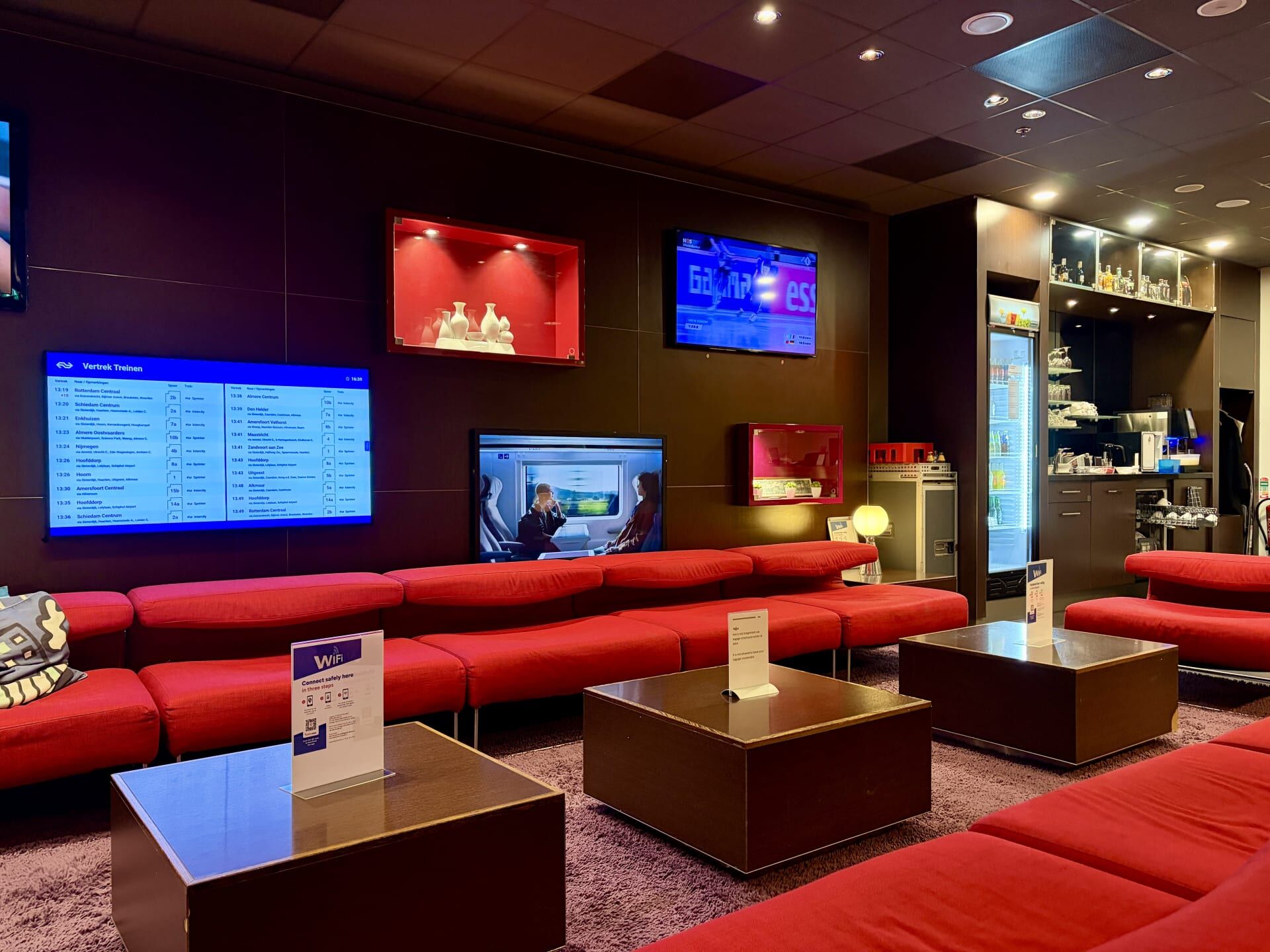
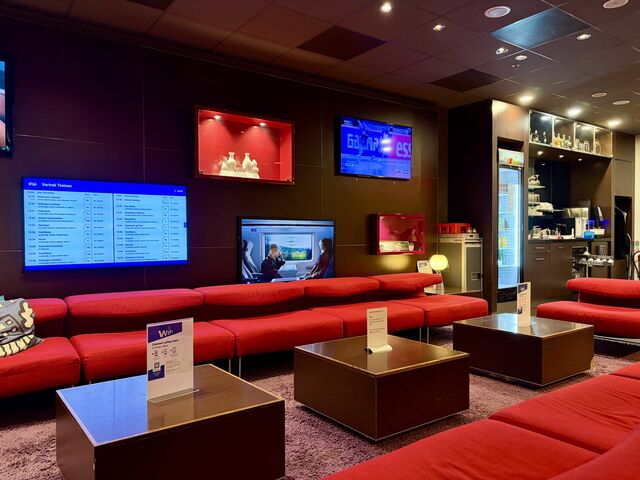
There are a few extra perks that come with a first-class pass. For one, it grants access to the first-class lounges at train stations, which offer a comfortable place to wait for your train, along with complimentary tea, coffee, soft drinks, pastries, and other snacks. I only used these lounges twice, while waiting for night trains in Amsterdam and Innsbruck. In Innsbruck, I witnessed one man go absolutely crazy with the free drinks. In the space of about 90 minutes, he downed two cups of tea, four bottles of Coke, and shoved another two Coke bottles into his backpack.
On the trains themselves, the first-class carriages are more spacious, with more comfortable seats. However, I personally didn’t care too much about the lounge access or the extra comfort. For me, it was the emptier carriages and ability to easily move from side to side that made the upgrade entirely worth it.
Tips for Railway Adventures
Below are some tips for readers planning to take a railway-focused holiday. Here, I’m specifically talking about trips where the focus and priority is the train journeys themselves, rather than just using trains to get from one destination to another.
Say goodbye to window reflections
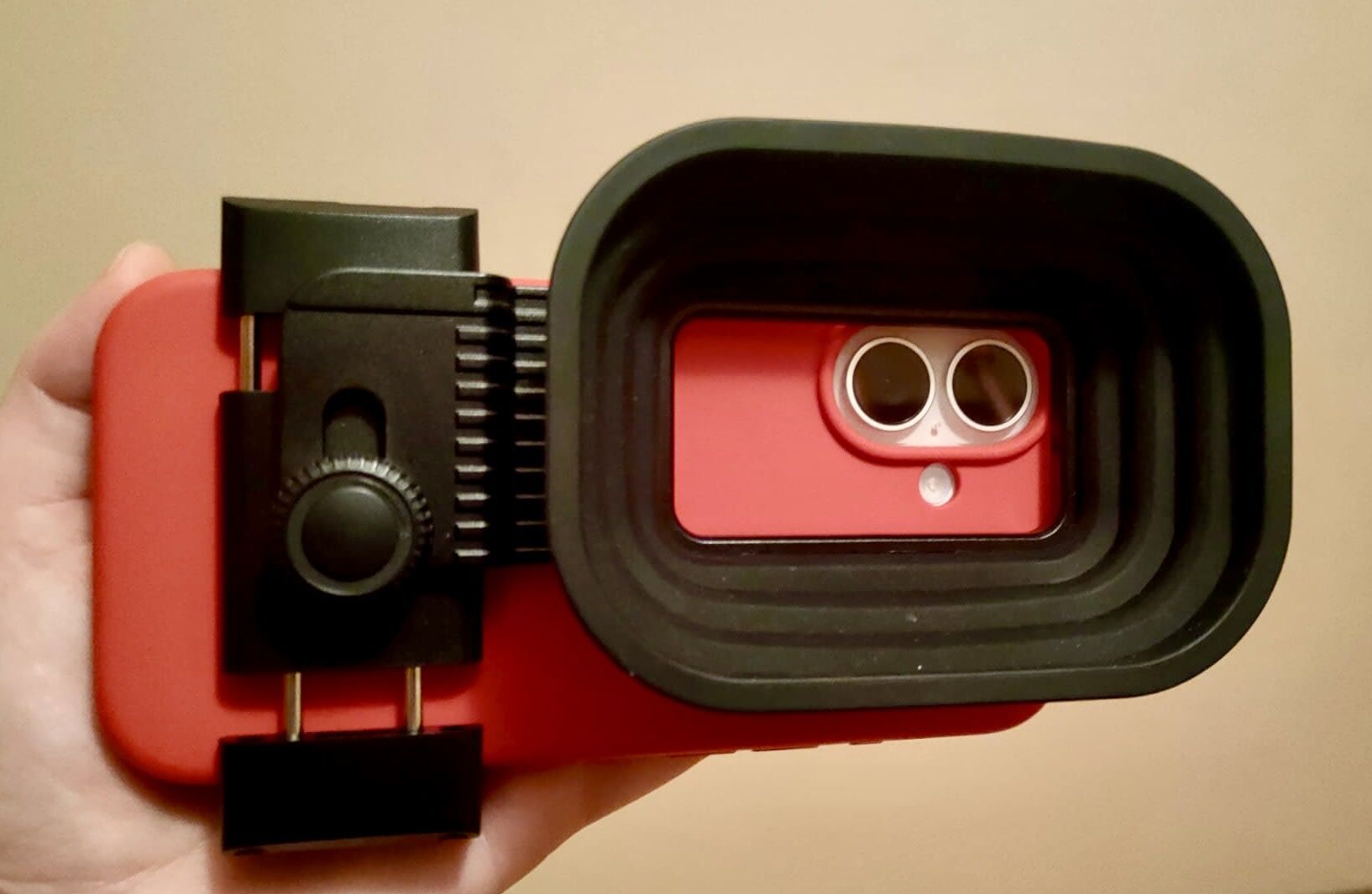
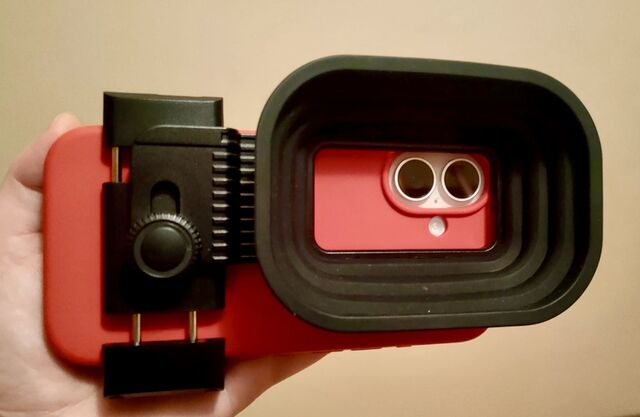
First, you can purchase a device that easily attaches to your phone to eliminate reflections when taking photos out the train window. These are often called ‘anti-reflection hoods’ or ‘silicone lens hoods.’ I’ve had mine for years and definitely recommend it. On my trip, I ended up speaking with several fellow passengers who were curious about the device.
Which side of the train?
Second, you should research the best side of the train to sit on for each journey. Even in first class where it’s easy to move from side to side, it is better to set yourself up on the side with the more impressive views. Just as important is knowing when to switch sides. It is worth saving key landmarks, such as gorges, castles, or notable stations (whatever you might be interested in) on your map app. This will allow you to easily keep one eye on the train’s progress and switch sides when something special is approaching.
Pick the slower train
Third, it’s important to research the most scenic train route to take you from A to B. This often means searching for a route that goes via a specific station, even though this may make the journey quite a bit longer. For example, when travelling on Switzerland’s famous Gotthard Railway, journey planners will default to the faster service through the Gotthard Base Tunnel unless you intentionally search for a slow train that takes the scenic Gotthard Mountain route. The same applies to Switzerland’s Lötschberg Railway–most trains run through the Lötschberg Base Tunnel, saving around 25 minutes, but bypassing the most impressive scenery entirely. If you’re not aware of the different routes and fail to search for a specific (often older) line, you’ll almost always be routed through the much quicker tunnel sections.
Use actual rail network maps
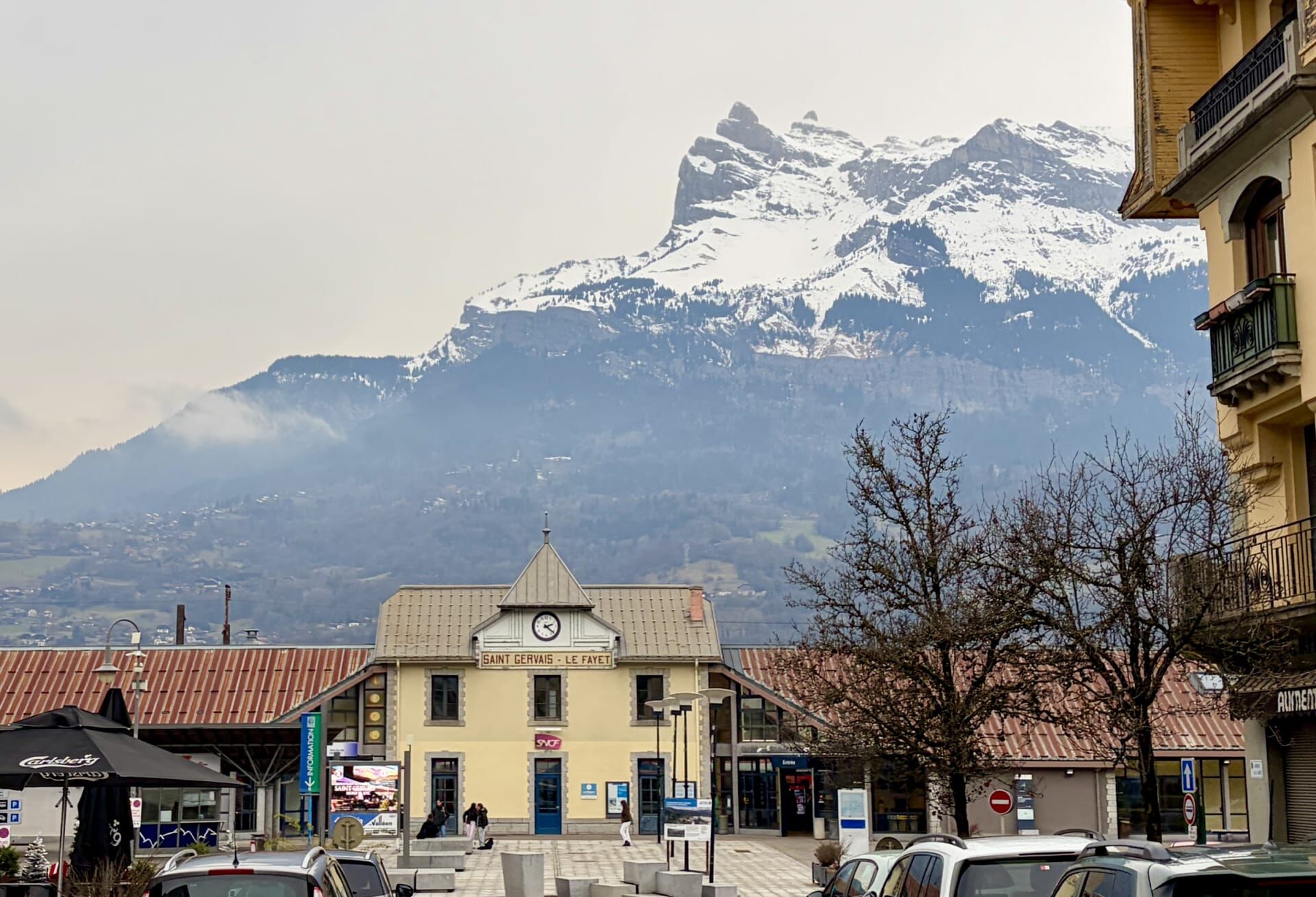
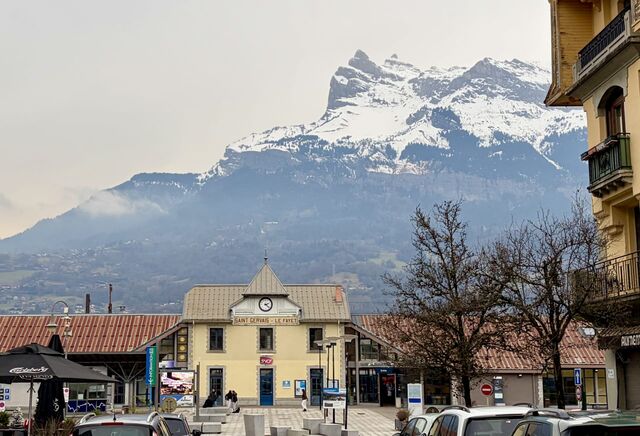
Fourth, you should also be aware that occasional quirks can sometimes make a train journey appear impossible if you rely solely on a mapping app or the Interrail/Eurail apps to plan your routes. For instance, in France there is one little station with two different names: Saint-Gervais-les-Bains and Saint-Gervais-les-Bains–Le Fayet. Depending on whether you are travelling east or west, you will need to enter the correct version of the station name and if you fail to do so, the apps will incorrectly tell you that your planned route is not possible. To avoid this issue, it’s worth looking at an actual rail network map instead of relying solely on the apps.
Consider the position of the sun
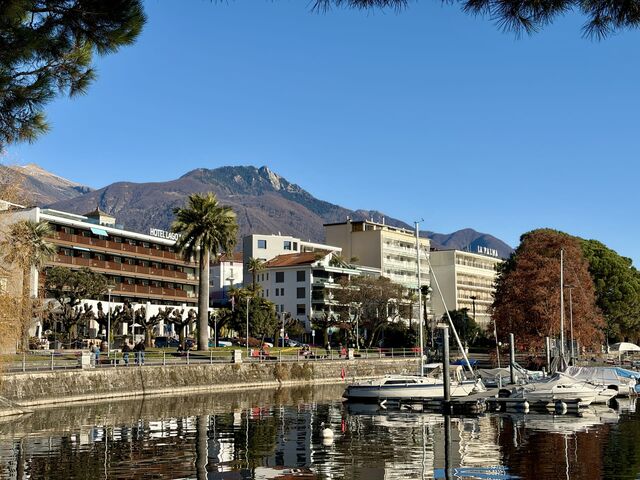
Fifth, you should think about the position of the sun when timing your train journeys. On my trip, I became interested in spending some time in Locarno, Switzerland, after alighting and realising it looked like a beautiful place to explore. However, I ultimately decided to leave so I could catch the midday Centovalli Railway service, rather than the train 2.5 hours later. I knew that if I waited, the afternoon sun would be much lower, which would ruin the views from one side of the train, and for me, being able to properly enjoy the scenery from the train journey mattered more than exploring a single town.
Pack light (under 5KG)
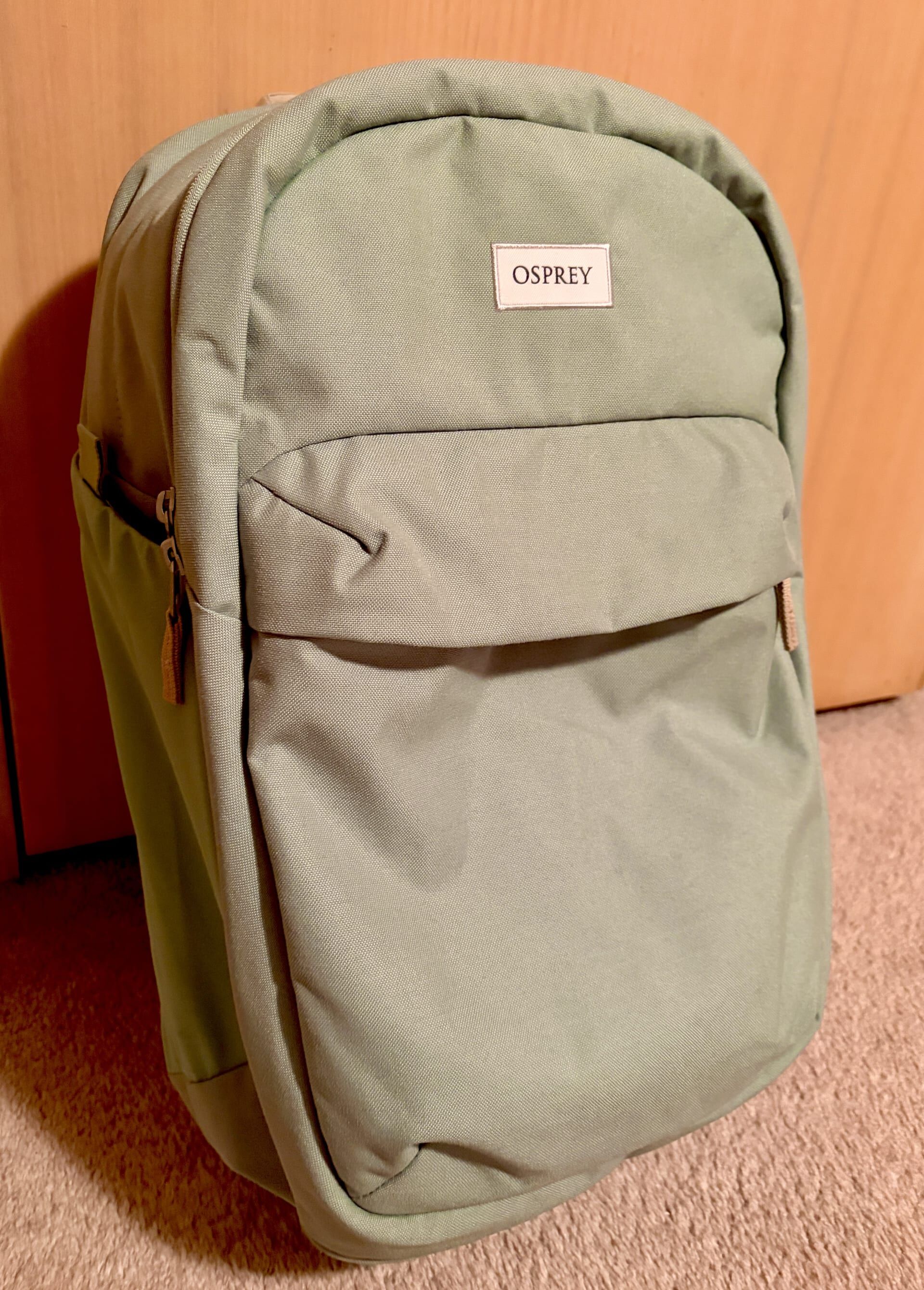
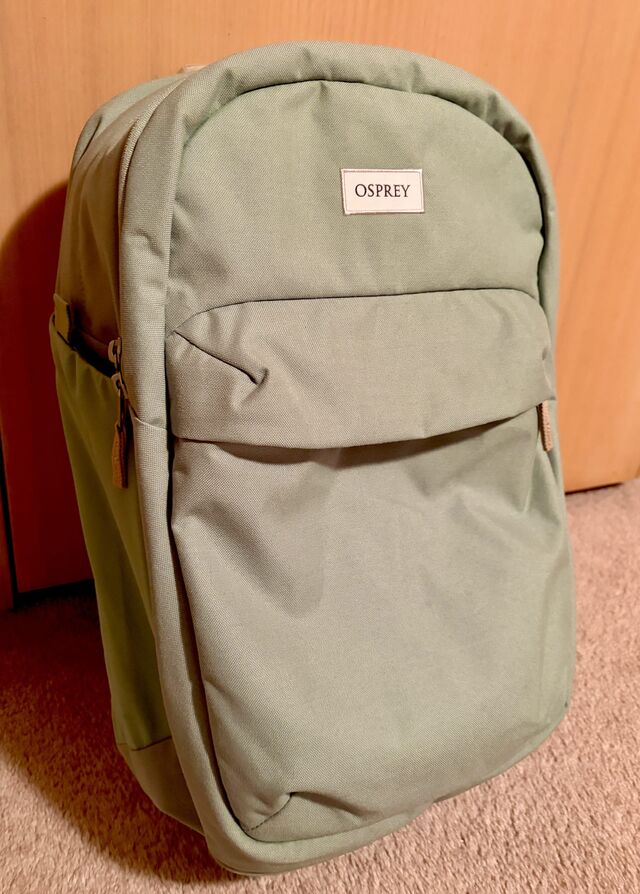
Finally, resist the temptation to bring too much luggage. For my month long trip, I brought only a small backpack weighing just 5kg in total. This included my laptop and conference clothing, as I had a work commitment immediately prior to my rail adventure. Without the laptop and business clothing, I could easily have kept my bag closer to 3kg. That may not sound like much, but the weight adds up quickly. You will likely pick up souvenirs and gifts along the way, and your bag will inevitably start to feel heavier after weeks of carrying it. On previous trips, such as my Japan 2025 rail adventure and my USA 2019 rail trip, I travelled with a 40L bag, but have since decided that this is unnecessarily large for a journey of this nature. For this trip, I instead opted for my Osprey 28L backpack.
For context, a typical checked suitcase can hold up to about 130 litres. While that may sound like a massive difference, consider the following. When travelling from Ljubljana to Bad Gastein, I was supposed to have a 20 minute connection in Villach, but a delay on the train from Ljubljana meant I missed the connecting service. Many other passengers were in the same position and had to wait an hour for the next train travelling further north into Austria. I watched people running around the station, stressed about whether their tickets would still be valid for the next service (not an issue with a Eurail or Interrail Pass), while others were stuck standing around with their large suitcases. But with just a small backpack, I could walk straight into town and spend an hour wandering around a lovely place I never would have seen if I’d been worrying about tickets or hauling a large suitcase. Situations like this arose multiple times on my trip, and having minimal baggage made it easy to turn any delays or time spent waiting for connections into opportunities to easily explore a random town.